
Filter
3067
Text search:
children
in
conflict
Featured
272
830
Language
2936
85
61
60
37
20
19
16
12
6
5
5
4
4
4
4
4
3
3
3
3
3
3
3
2
2
2
2
2
2
2
2
2
2
2
1
1
1
1
1
1
1
1
1
1
1
1
1
1
1
1
Document type
1633
655
295
171
136
64
46
45
10
8
2
1
Countries
198
131
100
80
74
69
67
64
60
55
54
53
52
52
48
46
45
41
31
31
31
29
25
24
24
23
23
22
21
21
19
19
17
17
17
17
16
16
15
15
15
15
14
14
13
12
12
12
11
11
11
11
10
9
9
8
8
8
8
8
7
7
7
7
6
5
5
5
4
4
4
4
4
4
4
3
3
3
3
3
3
2
2
2
2
2
2
2
2
2
1
1
1
1
1
1
1
1
1
1
1
1
1
1
1
1
1
1
1
1
1
1
1
1
1
1
1
1
1
1
Authors & Publishers
318
105
89
86
84
64
63
59
43
34
29
28
28
27
23
23
21
21
21
20
18
17
17
15
15
14
14
12
12
11
11
10
10
9
9
9
9
9
8
8
8
8
8
8
8
8
8
8
7
7
7
7
7
7
7
7
7
7
7
7
7
7
6
6
6
6
6
6
6
6
6
6
5
5
5
5
5
5
5
5
5
5
5
5
5
5
5
5
5
5
5
5
5
5
5
5
5
4
4
4
4
4
4
4
4
4
4
4
4
4
4
4
4
4
4
4
4
4
4
4
4
4
4
4
4
4
4
4
4
4
4
4
3
3
3
3
3
3
3
3
3
3
3
3
3
3
3
3
3
3
3
3
3
3
3
3
3
3
3
3
3
3
3
3
3
3
3
3
3
3
3
3
3
3
3
3
3
3
3
3
3
3
3
3
3
3
3
3
3
2
2
2
2
2
2
2
2
2
2
2
2
2
2
2
2
2
2
2
2
2
2
2
2
2
2
2
2
2
2
2
2
2
2
2
2
2
2
2
2
2
2
2
2
2
2
2
2
2
2
2
2
2
2
2
2
2
2
2
2
2
2
2
2
2
2
2
2
2
2
2
2
2
2
2
2
2
2
2
2
2
2
2
2
2
2
2
2
2
2
2
2
2
2
2
2
2
2
2
2
2
2
2
2
2
2
2
2
2
2
2
2
2
2
2
2
2
2
2
2
2
2
2
2
2
2
2
2
2
2
2
2
2
2
2
2
2
2
2
2
2
2
2
2
2
2
2
2
2
2
2
2
2
2
2
2
2
2
2
2
2
2
2
2
2
2
2
2
2
2
2
2
2
2
2
2
2
2
2
2
2
2
2
2
2
2
2
2
2
1
1
1
1
1
1
1
1
1
1
1
1
1
1
1
1
1
1
1
1
1
1
1
1
1
1
1
1
1
1
1
1
1
1
1
1
1
1
1
1
1
1
1
1
1
1
1
1
1
1
1
1
1
1
1
1
1
1
1
1
1
1
1
1
1
1
1
1
1
1
1
1
1
1
1
1
1
1
1
1
1
1
1
1
1
1
1
1
1
1
1
1
1
1
1
1
1
1
1
1
1
1
1
1
1
1
1
1
1
1
1
1
1
1
1
1
1
1
1
1
1
1
1
1
1
1
1
1
1
1
1
1
1
1
1
1
1
1
1
1
1
1
1
1
1
1
1
1
1
1
1
1
1
1
1
1
1
1
1
1
1
1
1
1
1
1
1
1
1
1
1
1
1
1
1
1
1
1
1
1
1
1
1
1
1
1
1
1
1
1
1
1
1
1
1
1
1
1
1
1
1
1
1
1
1
1
1
1
1
1
1
1
1
1
1
1
1
1
1
1
1
1
1
1
1
1
1
1
1
1
1
1
1
1
1
1
1
1
1
1
1
1
1
1
1
1
1
1
1
1
1
1
1
1
1
1
1
1
1
1
1
1
1
1
1
1
1
1
1
1
1
1
1
1
1
1
1
1
1
1
1
1
1
1
1
1
1
1
1
1
1
1
1
1
1
1
1
1
1
1
1
1
1
1
1
1
1
1
1
1
1
1
1
1
1
1
1
1
1
1
1
1
1
1
1
1
1
1
1
1
1
1
1
1
1
1
1
1
1
1
1
1
1
1
1
1
1
1
1
1
1
1
1
1
1
1
1
1
1
1
1
1
1
1
1
1
1
1
1
1
1
1
1
1
1
1
1
1
1
1
1
1
1
1
1
1
1
1
1
1
1
1
1
1
1
1
1
1
1
1
1
1
1
1
1
1
1
1
1
1
1
1
1
1
1
1
1
1
1
1
1
1
1
1
1
1
1
1
1
1
1
1
1
1
1
1
1
1
1
1
1
1
1
1
1
1
1
1
1
1
1
1
1
1
1
1
1
1
1
1
1
1
1
1
1
1
1
1
1
1
1
1
1
1
1
1
1
1
1
1
1
1
1
1
1
1
1
1
1
1
1
1
1
1
1
1
1
1
1
1
1
1
1
1
1
1
1
1
1
1
1
1
1
1
1
1
1
1
1
1
1
1
1
1
1
1
1
1
1
1
1
1
1
1
1
1
1
1
1
1
1
1
1
1
1
1
1
1
1
1
1
1
1
1
1
1
1
1
1
1
1
1
1
1
1
1
1
1
1
1
1
1
1
1
1
1
1
1
1
1
1
1
1
1
1
1
1
1
1
1
1
1
1
1
1
1
1
1
1
1
1
1
1
1
1
1
1
1
1
1
1
1
1
1
1
1
1
1
1
1
1
1
1
1
1
1
1
1
1
1
1
1
1
1
1
1
1
1
1
1
1
1
1
1
1
1
1
1
1
1
1
1
1
1
1
1
1
1
1
1
1
1
1
1
1
1
1
1
1
1
1
1
1
1
1
1
1
1
1
1
1
1
1
1
1
1
1
1
1
1
1
1
1
1
1
1
1
1
1
1
1
1
1
1
1
1
1
1
1
1
1
1
1
1
1
1
1
1
1
1
1
1
1
1
1
1
1
1
1
1
1
1
1
1
1
1
1
1
1
1
1
1
1
1
1
1
1
1
1
1
1
1
1
1
1
1
1
1
1
1
1
1
1
1
1
1
1
1
1
1
1
1
1
1
1
1
1
1
1
1
1
1
1
1
1
1
1
1
1
1
1
1
1
1
1
1
1
1
1
1
1
1
1
1
1
1
1
1
1
1
1
1
1
1
1
1
1
1
1
1
1
1
1
1
1
1
1
1
1
1
1
1
1
1
1
1
1
1
1
1
1
1
1
1
1
1
1
1
1
1
1
1
1
1
1
1
1
1
1
1
1
1
1
1
1
1
1
1
1
1
1
1
1
1
1
1
1
1
1
1
1
1
1
1
1
1
1
1
1
1
1
1
1
1
1
1
1
1
1
1
1
1
1
1
1
1
1
1
1
1
1
1
1
1
1
1
1
1
1
1
1
1
1
1
1
1
1
1
1
1
1
1
1
1
1
1
1
1
1
1
1
1
1
1
1
1
1
1
1
1
1
1
1
1
1
1
1
1
1
1
1
1
1
1
1
1
1
1
1
1
1
1
1
1
1
1
1
1
1
1
1
1
1
1
1
1
1
1
1
1
1
1
1
1
1
1
1
1
1
1
1
1
1
1
1
1
1
1
1
1
1
1
1
1
1
1
1
1
1
1
1
1
1
1
1
1
1
1
1
1
1
1
1
1
1
1
1
1
1
1
1
1
1
1
1
1
1
1
1
1
1
1
1
1
1
1
1
1
1
1
1
1
1
1
1
1
1
1
1
1
1
1
1
1
1
1
1
1
1
1
1
1
1
1
1
1
1
1
1
1
1
1
1
1
1
1
1
1
1
1
1
1
1
1
1
1
1
1
1
1
1
1
1
1
1
1
1
1
1
1
1
1
1
1
1
1
1
1
1
1
1
1
1
1
1
1
1
1
1
1
1
1
1
1
1
1
1
1
1
1
1
1
1
1
1
1
1
1
1
1
1
1
1
1
1
1
1
1
1
1
1
1
1
1
1
1
1
1
1
1
1
1
1
1
1
1
1
1
1
1
1
1
1
1
1
1
1
1
1
1
1
1
1
1
1
1
1
1
1
1
1
1
1
1
1
1
1
1
1
1
1
1
1
1
1
1
1
1
1
1
1
1
1
1
1
1
1
1
1
1
1
1
1
1
1
1
1
1
1
1
1
1
1
1
1
1
1
1
1
1
1
1
1
1
1
1
1
1
1
1
1
1
1
1
1
1
1
1
1
1
1
1
1
1
1
1
1
1
1
1
1
1
1
1
1
1
1
1
1
1
1
1
1
1
1
1
1
1
1
1
1
1
1
1
1
1
1
1
1
1
1
1
1
1
1
1
1
1
1
1
1
1
1
1
1
1
1
1
1
1
1
1
1
1
1
1
1
1
1
1
1
1
1
1
1
1
1
1
1
1
1
1
1
1
1
1
1
1
1
1
1
1
1
1
1
1
1
1
1
1
1
1
1
1
1
1
1
1
1
1
1
1
1
1
1
1
1
1
1
1
1
1
1
1
1
1
1
1
1
1
1
1
1
1
1
1
1
1
1
1
1
1
1
1
1
1
1
1
1
1
1
1
1
1
1
1
1
1
1
1
1
1
1
1
1
1
1
1
1
1
1
1
1
1
1
1
1
1
1
1
1
1
1
1
1
1
1
1
1
1
1
1
1
1
1
1
1
1
1
1
1
1
1
1
1
1
1
1
1
1
1
1
1
1
1
1
1
1
1
1
1
1
1
1
1
1
1
1
1
1
1
1
1
1
1
1
1
1
1
1
1
1
1
1
1
1
1
1
1
1
1
1
1
1
1
1
1
1
1
1
1
1
1
1
1
1
1
1
1
1
1
1
1
1
1
1
1
1
1
1
1
1
1
1
1
1
1
1
1
1
1
1
1
1
1
1
1
1
1
1
1
1
1
1
1
1
1
1
1
1
1
1
1
1
1
1
1
1
1
1
1
1
1
1
1
1
1
1
1
1
1
1
1
1
1
1
1
1
1
1
1
1
1
1
1
1
1
1
1
1
1
1
1
1
1
1
1
1
1
1
1
1
1
1
1
1
1
1
1
1
1
1
1
1
1
1
1
1
1
1
1
1
1
1
1
1
1
1
1
1
1
1
1
1
1
1
1
1
1
1
1
1
1
1
1
1
1
1
1
1
1
1
1
1
1
1
1
1
1
1
1
1
1
1
1
1
1
1
1
1
1
1
1
1
1
1
1
1
1
1
1
1
1
1
1
1
1
1
1
1
1
1
1
1
1
1
1
1
1
1
1
1
1
1
1
1
1
1
1
1
1
1
1
1
1
1
1
1
1
1
1
1
1
1
1
1
1
1
1
1
1
1
1
1
1
1
1
1
1
1
1
1
1
1
1
1
1
1
1
1
1
1
1
1
1
1
1
1
1
1
1
1
1
1
1
1
1
1
1
1
1
1
1
1
1
1
1
1
1
1
1
1
1
1
1
1
1
1
1
1
1
1
1
1
1
1
1
1
1
1
1
1
1
1
1
1
1
1
1
1
1
1
1
1
1
1
1
1
1
1
1
1
1
1
1
1
1
1
1
1
1
1
1
1
1
1
1
1
1
1
1
1
1
1
1
1
1
1
1
1
1
1
1
1
1
1
1
1
1
1
1
1
1
1
1
1
1
1
1
1
1
1
1
1
1
1
1
1
1
1
1
1
1
1
1
1
1
1
1
1
1
1
1
1
1
1
1
1
1
1
1
1
1
1
1
1
1
1
1
1
1
1
1
1
1
1
1
1
1
1
1
1
1
1
1
1
1
1
1
1
1
1
1
1
1
1
1
1
1
1
1
1
1
1
1
1
1
1
1
1
1
1
1
1
1
1
1
1
1
1
1
1
1
1
1
1
1
1
1
1
1
1
1
1
1
1
1
1
1
1
1
1
1
1
1
1
1
1
1
1
1
1
1
1
1
1
1
1
1
1
1
1
1
1
1
1
1
1
1
1
1
1
1
1
1
1
1
1
1
1
1
1
1
1
1
1
1
1
1
1
1
1
1
1
1
1
1
1
1
1
1
1
1
1
1
1
1
1
1
1
1
1
1
1
1
1
1
1
1
1
1
1
1
1
1
1
1
1
1
1
1
1
1
1
1
1
1
1
1
1
1
1
1
1
1
1
1
1
1
1
1
1
1
1
Publication Years
1
973
1829
242
20
1
1
Category
979
319
225
142
142
59
6
3
Toolboxes
389
320
228
177
156
134
78
78
69
68
65
59
57
50
44
34
34
31
30
24
23
22
21
17
3
2
2

front cover © Hannah Maule-Ffinch/Save the Children
Action on behalf of unaccompanied and separated children should be guided by principles enshrined in international standards. The validity of these principles has been confirmed by experience and le
...
ssons learnt from conflicts and natural disasters in recent years. The objective of the present publication is to outline the guiding principles which form the basis for action in this regard.
more
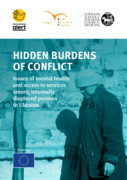
Some 32% of internally displaced persons (IDPs) in Ukraine suffer from post-traumatic stress disorder (PTSD) as a result of the conflict in the eas
...
t.
Among the 2,203 respondents surveyed across Ukraine, the study also found a high prevalence of mental disorders such as depression (22%) and anxiety (17%), particularly among women. This has a significant effect on family and community relations, the ability to work or even do basic tasks such as walking.
Moreover, the study noted that 74% of respondents in need of psychiatric care do not receive it, mainly due to a high cost of mental healthcare and medicine.
more
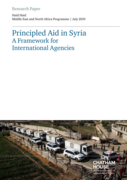
Research Paper.
As the fighting in Syria winds down, international humanitarian organisations (IHOs) operating from Damascus are hopeful that the Syrian government’s interference in their work wi
...
ll decrease. However, the government is attempting to formalise its influence over humanitarian operations.
Throughout the Syrian conflict, the government has imposed multiple administrative processes on humanitarian organisations to limit their ability to operate independently. This includes restricting the operational environment; undermining organisational independence; imposing local partners; influencing procurement procedures; and preventing direct monitoring and evaluation.
While some level of coordination with the government might be a pragmatic necessity to ensure the safety of operations in regime-controlled areas, this cooperation should not enable the government to use aid for military or political purposes. Consequently, international humanitarian organisations have an ethical dilemma in how they provide aid in these areas without undermining their principles of humanity, independence, impartiality and neutrality.
more

Health needs of displaced Syrians in refugee hosting countries have become increasingly complex in light of the protracted Syrian conflict. The pri
...
mary aim of this study was to identify the primary health needs of displaced Syrians in Iraq, Jordan, Lebanon, Turkey, and Syria.
more

Women and children, especially pregnant girls and women, infants and young children and postpartum women, are populations that are extremely vulnerable in
...
emergencies. Breastfeeding provides children with hydration, comfort, connection, high quality nutrition and protection against disease, shielding them from the worst of emergency conditions. This ability has been described as empowering and healing by some breastfeeding women.
more
Conflict and Health 2015, 9:8 doi:10.1186/s13031-015-0035-8
The following document outlines the principles, objectives and strategies of a national policy for the protection of orphans and other vulnerable children in Rwanda. The propositions constitute a fi
...
rst step towards a comprehensive framework, which will assist the Government and its partners to plan, implement and monitor projects and programmes in favour of orphans and other vulnerable children.
more
Key messages
● Pre-crisis Infant and Young Child Feeding (IYCF) Practices:
The Code has not been adequately implemented and enforced in Ukraine.
Multiple Indicator Cluster Survey (MCIS) data from 2012: Child ever breastfed (95.4%)
...
; early initiation of breastfeeding (EIBF) within 1 hr of birth (65.7%); children under 6 months exclusively breastfed (EBF)(19.7%); continued breastfeeding at 1 (37.9%) and 2 years of age (22%); children under 6 months predominantly breastfed (51.6%); children 0-23 months bottle fed (66.6%); introduction of solid, semi-solid or soft foods for children 6-8 months (43.2%).
more
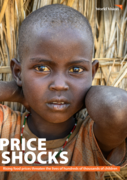
Conflict, climate change, the COVID-19 pandemic, and the economic effects of the Ukraine crisis are interacting to create new and worsen existing hunger hotspots, reversing the gains families had made to escape poverty.
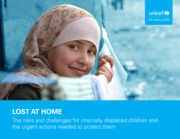
Today, more children than ever before are displaced within their own countries. Their harrowing stories of displacement are unfolding every day, and with increasing frequency. At the end of 2019, approximately 45.7 million people were internally dis
...
placed by conflict and violence (Fig. 1.1). Nearly half – 19 million – were estimated to be children. And millions more are displaced every year by natural disasters.
more
In the area of nutrition and HIV, children deserve special attention because of their additional needs to ensure growth and development and their dependency on adults for adequate care. It was ther
...
efore proposed to first develop guidelines for children and thereafter consider a similar approach for other specific groups.
The content of these guidelines acknowledges that wasting and undernutrition in HIV-infected children reflect a series of failures within the health system, the home and community and not just a biological process related to virus and host interactions. In trying to protect the nutritional well-being or reverse the undernutrition experienced by infected children, issues of food insecurity, food quantity and quality as well as absorption and digestion of nutrients are considered. Interventions are proposed that are practical and feasible in resource-poor settings and offer a prospect for clinical improvement.
The guidelines do not cover the feeding of infants 0 to 6 months old, because the specialised care in this age group is already addressed in other WHO guidelines and documents.
more
Rwanda 2010: A Dramatic Change in Reproductive Behavior
Westoff, C.F., F. Ngabo, C. Munyanshongore, M.A. Umubyeyi, and E. Kagame
Calverton, Maryland, USA: ICF International.
(2013)
C2
DHS Further Analysis Reports No. 90 - In Rwanda, between 2005 and 2010, there have been radical declines in the desired number of children, actual
...
fertility, and child mortality along with a large increase in contraceptive prevalence. This study reviews trends in some of these measures. Multivariate analyses evaluate the relative importance for
the desired number of children of years of schooling, wealth, urban residence, media exposure, child mortality, and attitudes toward gender equality. Variations in reproductive preferences, the total fertility rate, and unmet need for family planning are mapped for the 30 districts of Rwanda. The explanations for the rapid changes in reproductive attitudes and behavior are clearly related to the concerns of the country, the rapid rate of population growth, and its implications for economic development and reproductive health.
more
This report serves as a background paper to five short studies Yemeni-international researcher tandems will jointly develop in the course of 2019. It places a particular focus on ‘peace requirements’, a term that seeks to draw attent
...
ion to the manifold challenges to establishing stability and building peace in Yemen and the resulting efforts which will be required. This report analyzes the current situation in Yemen by looking at social structures, current conflict dynamics, the role and situation of state institutions and external factors, and then moves on to focus on what is required to build peace in Yemen. In laying out these peace requirements, the report focuses on the following relevant sectors: economy, politics, culture and society, as well as security and justice. In a last step, it takes a look at the challenges to and capacities of five different actor groups in Yemen to address these needs: civil society, women, youth, the media and the private sector
more
In this course you will examine the interconnections between poverty, development and violent conflict. This is one of seven Medical Peace Work courses.

Based on the Vulnerability Index developed in this review, an estimated 22.7 million persons in Myanmar, or 44% of the population, were found to have some form of vulnerability related to human deve
...
lopment and/or exposure to active conflict/violence. These people experience varying combinations of poor housing, lack of education, poor educational attainment, lack of access to safe sanitation and improved drinking water, and direct exposure to conflict.
Shan and Ayeyarwady have the largest populations of vulnerable persons, a function of both their size and relative vulnerability in comparison to other States and Regions. Yangon and Shan show the widest variation in vulnerability across townships (in terms of the number of vulnerable persons and their level of vulnerability), followed by Mandalay, Chin and Rakhine.
Original file: 15 MB more
Shan and Ayeyarwady have the largest populations of vulnerable persons, a function of both their size and relative vulnerability in comparison to other States and Regions. Yangon and Shan show the widest variation in vulnerability across townships (in terms of the number of vulnerable persons and their level of vulnerability), followed by Mandalay, Chin and Rakhine.
Original file: 15 MB more
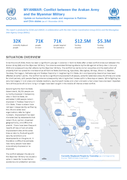
Since the end of 2018, there has been a significant upsurge in violence in Rakhine State after armed conflict broke out between the Arakan Army (AA
...
) and the Myanmar Military. The violence escalated following attacks by the AA against military sites in January 2019 and subsequent counter-attacks by the Myanmar Military. The conflict has led to civilian casualties and the destruction of property that has spread to nine townships of Rakhine State (Buthidaung, Kyauktaw, Maungdaw, Minbya, Mrauk-U, Myebon, Pauktaw, Ponnagyun, Rathedaung) and Paletwa Township in neighboring Chin State. Ann and Kyaukphyu townships have been affected at certain points. The conflict has led to a significant displacement of people, some for extended amounts of time and some for short periods, with people fleeing violence subsequently returning to their homes within a few days or weeks. While fighting has occurred largely in rural areas and remote locations, key transport routes and urban and semi-urban areas have also been impacted. Tens of thousands of civilians living in villages have been caught in the middle of intense armed conflict.
more

Conflict, climate crisis and COVID-19 pose great threats to the health of women and children.

Fragile Beginnings. The Fragile Beginnings series examines the growing body of research on the unique vulnerabilities of children: in utero and at birth, during infancy and childhood and throughout
...
adolescence. Its purpose is to enable evidence-based advocacy and action on children’s environmental health
more
The report examines some of the underlying causes of domestic violence and the impact on children of being exposed to violence in the home.
