Filter
498
Text search:
Office
for
the
Coordination
of
Humanitarian
Affairs
OCHA
Featured
53
194
Language
Document type
261
65
52
43
25
18
12
11
5
3
2
1
Countries / Regions
50
28
25
22
21
19
15
13
13
12
11
11
9
9
9
8
8
8
8
6
6
6
6
6
6
5
5
5
5
5
5
5
4
4
4
4
4
4
3
3
3
3
3
3
3
3
3
2
2
2
2
2
2
2
2
2
1
1
1
1
1
1
1
1
1
1
1
1
1
1
1
1
1
1
1
1
1
1
Authors & Publishers
Publication Years
Category
235
103
7
6
4
3
Toolboxes
111
76
61
18
14
10
8
8
7
6
5
4
4
4
3
3
3
2
2
2
Since the first edition of the CDAC snapshot of communication, community engagement and accounta
...
This guidelines is aimed at humanitarian and human rights actors engaged in protection work, and is intended to act as an easy reference to the minimum standards to be met and
...
Professional Standards for Protection Work
recommended
Carried out by humanitarian and human rights actors in armed conflict and other situations of violence
This guideline (third edition) constitutes a set o
...

The Handbook is primarily addressed to child protection coordination teams, which may include coordinators, co-leads and information managers, the
...
The Facilitator’s Guide for the basic-needs based Response Options Analysis and Planning (ROAP) is a step-by-step guide comprising tools and temp
...
The Standard consists of nine key inclusion standards, and seven sets of sector-specific inclusion standards
...
This report used the results of the Tracker’s first two years to examine the general trends
...
World Humanitarian Data and Trends presents global- and country-level data-and-trend analysis about humanitarian
crises and assistance. Its purpose is to consolidate this information and present it
...
Needs assessment is essential for programme planning, monitoring and evaluation, and accountability, however needs assessment is still a critical weakness of
...

Specific action sheets offer useful guidance on mental health and psychosocial support and cover the following areas coordination assessment monitoring and evaluation protection and human rights sta
...

The first section highlights knowledge and questions regarding security incidents, trends, and causes of violence, including around causes and motives for
...

How should humanitarian organisations prepare and respond to COVID-19 in humanitarian settings in low- and middle-income countries?
This Rapid Learning Review outlines 14 actions, insights and id
...
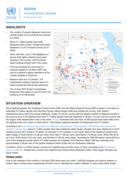
Since fighting between the Sudanese Armed Forces (SAF) and the Rapid Support Forces (RSF) erupted in mid-April, an estimated 6.3 million people have fled their homes, taking refuge inside and outsid
...
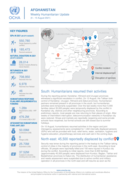
During the reporting period, 5,068 people were identified as being displaced by conflict and in need of humanitarian aid. In addition, 434 people w
...
This report assesses the impact of the conflict in Ukraine and its implications for organized cr
...
This brief summarises key considerations about the social, political and economic context of Goma in relation to the outbreak
...
Globally, it is estimated that 128.6 million people are currently in need of humanitarian assistance. Of these individuals, approximately one-fourt
...
Thailand is exposed to flooding, landslides, drought, earthquakes, tsunamis, heat waves, forest fires, and epidemics. Thailand is also exposed to technological hazards such as chemical accidents. Flooding is the natural hazard with
...

Climate change is a growing concern for Bangladesh because 90 percent of the country is approximately 10 feet above sea level. An evaluation was co
...