
Filter
817
Text search:
International
Food
Policy
Research
Institute
Featured
Recommendations
60
New Publications
208
Language
Document type
No document type
414
Studies & Reports
211
Guidelines
75
Strategic & Response Plan
40
Manuals
38
Fact sheets
14
Training Material
11
Resource Platforms
5
Situation Updates
4
Brochures
2
App
1
Infographics
1
Online Courses
1
Countries / Regions
Global
37
Kenya
31
India
23
Nepal
21
Latin America and the Carribbean
19
Liberia
16
Myanmar / Burma
16
South Africa
15
Uganda
14
Zambia
14
Ghana
13
Western and Central Europe
13
Ethiopia
12
Syria
12
Tanzania
12
Rwanda
12
Malawi
11
Philippines
10
Africa
9
Sierra Leone
7
Nigeria
7
Bangladesh
7
South–East Asia Region
7
Indonesia
6
South Sudan
5
Brazil
5
Eastern Europe
5
Lebanon
4
Cambodia
4
Namibia
4
Yemen
4
West and Central Africa
4
Asia
4
Vietnam
4
Guinea
3
Congo, Democratic Republic of
3
USA
3
Zimbabwe
3
Haiti
3
Mozambique
3
Sudan
3
East and Southern Africa
3
Middle East and North Africa
3
Venezuela
3
Tajikistan
3
Russia
3
Iran
3
Burkina Faso
2
Senegal
2
Mali
2
Cameroon
2
Pakistan
2
Jordan
2
Afghanistan
2
Germany
2
Turkey
2
China
2
North Macedonia
2
Croatia
2
Ukraine
2
Lesotho
2
Bhutan
2
Moldova
2
Kazakhstan
2
Turkmenistan
2
Portugal
2
Spain
2
Niger
1
Thailand
1
Papua New Guinea
1
Benin
1
Central African Republic
1
Peru
1
Serbia
1
Hungary
1
Botswana
1
Greece
1
Sri Lanka
1
Chile
1
Western Pacific Region
1
Eastern Europe and Central Asia
1
Poland
1
Southern Africa
1
Laos
1
Estonia
1
Kyrgyzstan
1
North America
1
Japan
1
Denmark
1
France
1
Mauritius
1
United Kingdom
1
Azerbaijan
1
Bosnia and Herzegovina
1
Authors & Publishers
Publication Years
Category
Countries
302
Key Resources
69
Women & Child Health
50
Public Health
44
Clinical Guidelines
44
Capacity Building
10
Pharmacy & Technologies
8
Toolboxes
Planetary Health
85
COVID-19
60
Mental Health
49
HIV
48
AMR
42
TB
41
Global Health Education
28
Disability
25
Conflict
21
Refugee
21
Caregiver
19
Ebola & Marburg
15
NCDs
15
NTDs
14
Natural Hazards
11
Rapid Response
11
Specific Hazards
9
2.0 Rapid Response
9
Pharmacy
8
Health Financing Toolbox
8
Social Ethics
6
Cholera
4
Malaria
4
Polio
3
Zika
3
Typhoon
1
This timely report comes at a decisive moment in history where
we can reshape urban environments and health systems for the
majority of the world’s population that live in cities. Enabling
this transformation are the SDGs, which have reconfigured how
governments and the
...
The Government of Republic of Zambia reported the first confirmed cases of COVID-19 on 18th March 2020. As of April 27th, 2020, there were 89 confirmed cases, three deaths and 42 recoveries. Confirmed cases are located in three provinces: Lusaka (83 cases), Copperbelt province (5 cases) and Central
...

Rwanda’s fourth health sector strategic plan (HSSP4) is meant to provide the health sector with a Strategic Plan that will highlight its commitments and priorities for the coming 6 years. It will be fully integrated in the overall economic development plan of the Government. HSSP4 will fulfill the
...
Over the past two decades, Afghanistan has depended on international donor support to fund essential services like health care. But this donor support has been falling for years and will likely to continue do so—perhaps precipitously—following t
...
The United Nations Development Assistance Framework (UNDAF) 2018-2022 sets out the UN partnership aiming to support Nepal as it carves out its development agenda over the next five years. At the core of this new UNDAF are the SDGs, the Government of Nepal’s Fourteenth Plan, and
...
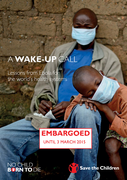
Almost 30 countries vulnerable to a new Ebola-style Epidemic, jeopardising the future of millions of Children. The report ranks the world’s poorest countries on the state of their public health systems, finding that 28 have weaker defences in place than Liberia where, alongside Sierra Leone and Gu
...
This guideline provides evidence-informed guidance on the use of non-sugar sweeteners to reduce the risk of unhealthy weight gain and diet-related noncommunicable diseases in adults and children. The guidance in this guideline is not based on toxicological assessments of the safety of individual no
...
More than three months since the start of the war in Ukraine, people globally are facing a cost-of-living crisis not seen in more than a generation, with escalating price shocks in the global food, energy and fertilizer markets - in a world already
...
Vitamin D deficiency is thought to be common among pregnant women, particularly during the winter months, and has been found to be associated with an increased risk of pre-eclampsia, gestational diabetes mellitus, preterm birth, and other tissue-specific conditions.
This guideline is intended for
...
The portable diagnostic imaging technology covered by this document will serve not only the pressing demands for tuberculosis screening and triage but also other diseases. Therefore, the requirements, accessories, hardware and software packages listed in the following specifications are described in
...
A comprehensive briefing by Half of Syria
April 2020
A comprehensive briefing on the critical challenges of the COVID-19 pandemic to Syrians, as reported by Syrian civil society organisations. These challenges have been collated following extensive interviews with the teams of member and partner
...
This manual describes methods for investigating clusters or outbreaks that may be of chemical origin and describes the importance of a structured, coordinated, collaborative multidisciplinary, multi-agency approach at local, regional, national and internat
...
Noncommunicable diseases (NCDs) such as cancer, cardiovascular diseases, diabetes and chronic respiratory diseases and their risk factors are an increasing public health and development challenge in Turkey. This report provides evidence through three analyses that NCDs reduce economic output, and di
...
The framework is to be used as a reference guide, applied according to local priorities and needs, and targeted at academic institutions, educators, accreditation bodies, regulatory agencies and other users. The ultimate aim is to ensure that all health workers are equipped with the requisite compet
...
The WHO European Office for the Prevention and Control of Noncommunicable Diseases organized an expert meeting on monitoring of digital marketing of unhealthy products to children and adolescents in June 2018. Based on that meeting, this report aims to provide a tool to support Member States in moni
...
Noncommunicable diseases (NCDs) such as cancer, cardiovascular disease, diabetes and chronic respiratory diseases and their risk factors are an increasing public health and development challenge in Kazakhstan. This report provides evidence through three analyses that NCDs reduce economic output and
...

Tuberculosis continues to represent a severe public health problem in the Region of the Americas, even more so in the case of indigenous peoples, whose TB incidence is much higher than that of the general population. To achieve tuberculosis control in these communities, it is necessary to respond t
...
BUKO Pharma-Kampagne has investigated the causes and consequences of antibiotic resistance in India, South Africa, Tanzania and Germany. Together with our partners we collected data and did interviews with numerous stakeholders. The outcome is presented in a brochure that is now available in English
...

Over 6 million people worldwide are infected with Trypanosoma cruzi, the protozoan that causes Chagas disease
(CD). T. cruzi is transmitted by triatomine insects, congenitally, through uncontrolled blood donations and organ transplants,
and via consumption of
...
In this report, potential reasons for this apparent
contradiction between cherished human values
and observed social actions are explored with a
view to better formulating concrete steps that
governments and other stakeholders can take to
reshape social attitudes and public
...
