
Filter
2815
Text search:
COVID-19
Prevention
Featured
417
36
Language
Document type
857
812
277
269
237
96
53
52
48
48
25
22
12
3
2
Countries
247
120
99
93
91
83
74
73
70
62
58
56
56
55
52
45
43
41
39
36
30
26
26
25
24
24
20
19
19
18
18
17
16
16
15
15
15
15
14
14
13
13
13
11
11
11
11
11
11
10
10
10
10
10
10
10
10
10
10
10
9
9
9
9
8
8
8
8
8
7
7
7
7
7
7
7
6
6
6
6
6
6
6
6
5
5
5
5
5
5
5
4
4
4
4
4
4
4
4
4
4
4
3
3
3
3
3
3
3
3
3
3
3
3
2
2
2
2
2
2
2
2
2
2
2
2
2
2
2
2
2
2
2
1
1
1
1
1
1
1
1
1
1
1
1
1
1
Authors & Publishers
Publication Years
Category
1161
159
140
99
93
45
27
2
Toolboxes
1586
104
88
87
85
82
79
77
69
67
56
53
53
42
41
36
22
21
12
11
5
5
4
1

Al afrontar la amenaza común que supuso el coronavirus del síndrome respiratorio agudo severo de tipo 2 (SARS CoV 2), los países y las instituciones de todo el mundo se vieron rápidamente desbordados por la monumental tarea de responder a un problema que avanzaba rápidamente y que les obligó a
...

The 2022 report reviews the global malaria diagnostics market and technological landscape to support Unitaid’s 2023–2027 strategy for quality malaria case management. The report highlights the stalled progress of malaria control efforts, the gaps in access to diagnostics and the public health im
...

This guidance synthesizes current evidence on dengue laboratory testing and diagnostics and provides practical recommendations for laboratories, clinicians, public health officials, and programme managers involved in dengue diagnosis, surveillance, and control, in the context of the global emergency
...

On Global Handwashing Day, WHO and UNICEF have released the first-ever global Guidelines on Hand Hygiene in Community Settings to support governments and practitioners in promoting effective hand hygiene outside health care – across households, public spaces and institutions. Framing hand hygiene
...
HUMANITIES AND SOCIAL SCIENCES COMMUNICATIONS | (2022)9:295 | https://doi.org/10.1057/s41599-022-01312-3 .
Sub-Saharan Africa (SSA), particularly Southern and East Africa, has the highest AIDS deaths
and HIV-infected people in the world. Even though considerable effort has been made over
the yea
...

The ILO has joined forces with Gallup to carry out a groundbreaking global survey covering 50 countries that sheds further light on the causes of the persistence of HIV-related stigma and discrimination in the world of work.
Adapting HIV testing services in the context of reduced and declining funding. Presentation May 2025
ATIC Newsletter, Vol 15, Issue 1,
February 2022.
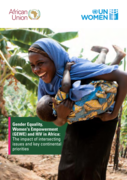
The impact of intersecting issues and key continental priorities

Background Note: Briefing to the Executive Board, First Regular Session 2025
Progress on the sustainable development goals.
Tuberculosis (TB) remains a serious public health threat in South Africa and is the
leading cause of death in people living with HIV (PWH). Pre-hospital and early in-
hospital mortality is of particular concern in PWH. Significant progress has been made
to date, but a monumental effort is require
...

A Clinical Guideline for the Diagnosis and Treatment of Drug-susceptible TB in Children and Adolescents
in South Africa. This new guidance is aligned with the updated WHO guidelines but has been adapted specifically for the South African context.
The intention of this publication is to provide g
...

This report describes efforts in nine countries, supported by the 2gether 4 SRHR programme and other partners, highlighting the results achieved and learning on improving the health and wellbeing of adolescent and young mothers and their families. Key insights include the importance of responsive se
...

This technical brief describes promising models that demonstrate how FBOs could contribute to expanded access to improved HIV and other services for men. These models incorporate a range of WHO-recommended interventions and highlights operational considerations and key success factors. By capitalizi
...

The Global Aids Strategy 2026-2031
recommended
United- Towards Ending AIDS. The Global AIDS Strategy 2026-2031 focuses global efforts for the future of the AIDS response to end AIDS as a public health threat by 2030 and sustain the HIV response after 2030. This is a strategy uniting the world.
The Strategy will shape the June 2026 United Natio
...

The guide presents a structured framework covering assessment and planning, service delivery models, integration with broader health and social services, monitoring, and sustainability. It emphasizes community leadership, human rights, equitable access and adaptation to local contexts, including clo
...

El “Libro de bolsillo sobre atención primaria de salud para niños, niñas y adolescentes: orientaciones sobre promoción de la salud, prevención y manejo de enfermedades desde el período neonatal hasta la adolescencia” está destinado a profesionales de medicina y enfermería, así como a ot
...
Esta guía de adaptación y traducción forma parte del paquete de materiales de las Escalas mundiales de medición del desarrollo en la primera infancia (GSED) v. 1.0 (GSED, por su sigla en inglés). El GSED es un conjunto de instrumentos de acceso abierto que constituyen un método estandarizado p
...
