
Filter
3443
Text search:
annex
Featured
451
972
Language
3296
125
72
57
40
22
19
18
5
4
3
3
3
3
3
2
2
2
2
2
2
2
2
2
2
2
2
2
2
1
1
1
1
1
1
1
1
1
1
1
1
1
1
1
1
1
1
1
1
Document type
1674
632
522
297
174
84
42
10
3
1
1
1
Countries
203
98
83
80
79
78
76
76
71
70
53
50
49
43
40
40
37
36
35
33
33
31
29
27
26
25
23
22
21
21
21
20
20
18
18
17
17
16
16
15
15
14
14
13
12
12
11
11
10
9
9
9
8
8
8
7
7
7
6
6
6
6
6
5
4
4
4
4
4
3
3
3
3
3
3
3
3
3
3
2
2
2
2
2
2
2
2
2
2
2
2
2
2
2
2
2
1
1
1
1
1
1
1
1
1
1
1
1
1
1
1
1
1
1
1
1
1
1
1
1
1
1
1
1
1
1
Authors & Publishers
782
214
120
117
89
88
64
57
46
32
31
27
26
23
21
20
18
17
15
15
14
14
14
13
13
13
12
12
12
11
11
11
11
10
10
10
10
10
9
9
9
9
9
9
9
8
8
8
8
8
8
8
7
7
7
7
7
7
7
7
7
7
7
6
6
6
6
6
6
5
5
5
5
5
5
5
5
5
5
5
5
5
5
5
5
5
5
5
5
5
5
5
5
5
4
4
4
4
4
4
4
4
4
4
4
4
4
4
4
4
4
4
4
4
4
4
4
4
4
4
4
4
4
4
4
4
4
4
4
4
4
4
4
4
3
3
3
3
3
3
3
3
3
3
3
3
3
3
3
3
3
3
3
3
3
3
3
3
3
3
3
3
3
3
3
3
3
3
3
3
3
3
3
3
3
3
3
3
3
3
3
3
3
3
3
3
3
3
3
3
3
3
3
3
3
3
2
2
2
2
2
2
2
2
2
2
2
2
2
2
2
2
2
2
2
2
2
2
2
2
2
2
2
2
2
2
2
2
2
2
2
2
2
2
2
2
2
2
2
2
2
2
2
2
2
2
2
2
2
2
2
2
2
2
2
2
2
2
2
2
2
2
2
2
2
2
2
2
2
2
2
2
2
2
2
2
2
2
2
2
2
2
2
2
2
2
2
2
2
2
2
2
2
2
2
2
2
2
2
2
2
2
2
2
2
2
2
2
2
2
2
2
2
2
2
2
2
2
2
2
2
2
2
2
2
2
2
2
2
2
2
2
2
2
2
2
2
2
2
2
2
2
2
2
2
2
2
2
1
1
1
1
1
1
1
1
1
1
1
1
1
1
1
1
1
1
1
1
1
1
1
1
1
1
1
1
1
1
1
1
1
1
1
1
1
1
1
1
1
1
1
1
1
1
1
1
1
1
1
1
1
1
1
1
1
1
1
1
1
1
1
1
1
1
1
1
1
1
1
1
1
1
1
1
1
1
1
1
1
1
1
1
1
1
1
1
1
1
1
1
1
1
1
1
1
1
1
1
1
1
1
1
1
1
1
1
1
1
1
1
1
1
1
1
1
1
1
1
1
1
1
1
1
1
1
1
1
1
1
1
1
1
1
1
1
1
1
1
1
1
1
1
1
1
1
1
1
1
1
1
1
1
1
1
1
1
1
1
1
1
1
1
1
1
1
1
1
1
1
1
1
1
1
1
1
1
1
1
1
1
1
1
1
1
1
1
1
1
1
1
1
1
1
1
1
1
1
1
1
1
1
1
1
1
1
1
1
1
1
1
1
1
1
1
1
1
1
1
1
1
1
1
1
1
1
1
1
1
1
1
1
1
1
1
1
1
1
1
1
1
1
1
1
1
1
1
1
1
1
1
1
1
1
1
1
1
1
1
1
1
1
1
1
1
1
1
1
1
1
1
1
1
1
1
1
1
1
1
1
1
1
1
1
1
1
1
1
1
1
1
1
1
1
1
1
1
1
1
1
1
1
1
1
1
1
1
1
1
1
1
1
1
1
1
1
1
1
1
1
1
1
1
1
1
1
1
1
1
1
1
1
1
1
1
1
1
1
1
1
1
1
1
1
1
1
1
1
1
1
1
1
1
1
1
1
1
1
1
1
1
1
1
1
1
1
1
1
1
1
1
1
1
1
1
1
1
1
1
1
1
1
1
1
1
1
1
1
1
1
1
1
1
1
1
1
1
1
1
1
1
1
1
1
1
1
1
1
1
1
1
1
1
1
1
1
1
1
1
1
1
1
1
1
1
1
1
1
1
1
1
1
1
1
1
1
1
1
1
1
1
1
1
1
1
1
1
1
1
1
1
1
1
1
1
1
1
1
1
1
1
1
1
1
1
1
1
1
1
1
1
1
1
1
1
1
1
1
1
1
1
1
1
1
1
1
1
1
1
1
1
1
1
1
1
1
1
1
1
1
1
1
1
1
1
1
1
1
1
1
1
1
1
1
1
1
1
1
1
1
1
1
1
1
1
1
1
1
1
1
1
1
1
1
1
1
1
1
1
1
1
1
1
1
1
1
1
1
1
1
1
1
1
1
1
1
1
1
1
1
1
1
1
1
1
1
1
1
1
1
1
1
1
1
1
1
1
1
1
1
1
1
1
1
1
1
1
1
1
1
1
1
1
1
1
1
1
1
1
1
1
1
1
1
1
1
1
1
1
1
1
1
1
1
1
1
1
1
1
1
1
1
1
1
1
1
1
1
1
1
1
1
1
1
1
1
1
1
1
1
1
1
1
1
1
1
1
1
1
1
1
1
1
1
1
1
1
1
1
1
1
1
1
1
1
1
1
1
1
1
1
1
1
1
1
1
1
1
1
1
1
1
1
1
1
1
1
1
1
1
1
1
1
1
1
1
1
1
1
1
1
1
1
1
1
1
1
1
1
1
1
1
1
1
1
1
1
1
1
1
1
1
1
1
1
1
1
1
1
1
1
1
1
1
1
1
1
1
1
1
1
1
1
1
1
1
1
1
1
1
1
1
1
1
1
1
1
1
1
1
1
1
1
1
1
1
1
1
1
1
1
1
1
1
1
1
1
1
1
1
1
1
1
1
1
1
1
1
1
1
1
1
1
1
1
1
1
1
1
1
1
1
1
1
1
1
1
1
1
1
1
1
1
1
1
1
1
1
1
1
1
1
1
1
1
1
1
1
1
1
1
1
1
1
1
1
1
1
1
1
1
1
1
1
1
1
1
1
1
1
1
1
1
1
1
1
1
1
1
1
1
1
1
1
1
1
1
1
1
1
1
1
1
1
1
1
1
1
1
1
1
1
1
1
1
1
1
1
1
1
1
1
1
1
1
1
1
1
1
1
1
1
1
1
1
1
1
1
1
1
1
1
1
1
1
1
1
1
1
1
1
1
1
1
1
1
1
1
1
1
1
1
1
1
1
1
1
1
1
1
1
1
1
1
1
1
1
1
1
1
1
1
1
1
1
1
1
1
1
1
1
1
1
1
1
1
1
1
1
1
1
1
1
1
1
1
1
1
1
1
1
1
1
1
1
1
1
1
1
1
1
1
1
1
1
1
1
1
1
1
1
1
1
1
1
1
1
1
1
1
1
1
1
1
1
1
1
1
1
1
1
1
1
1
1
1
1
1
1
1
1
1
1
1
1
1
1
1
1
1
1
1
1
1
1
1
1
1
1
1
1
1
1
1
1
1
1
1
1
1
1
1
1
1
1
1
1
1
1
1
1
1
1
1
1
1
1
1
1
1
1
1
1
1
1
1
1
1
1
1
1
1
1
1
1
1
1
1
1
1
1
1
1
1
1
1
1
1
1
1
1
1
1
1
1
1
1
1
1
1
1
1
1
1
1
1
1
1
1
1
1
1
1
1
1
1
1
1
1
1
1
1
1
1
1
1
1
1
1
1
1
1
1
1
1
1
1
1
1
1
1
1
1
1
1
1
1
1
1
1
1
1
1
1
1
1
1
1
1
1
1
1
1
1
1
1
1
1
1
1
1
1
1
1
1
1
1
1
1
1
1
1
1
1
1
1
1
1
1
1
1
1
1
1
1
1
1
1
1
1
1
1
1
1
1
1
1
1
1
1
1
1
1
1
1
1
1
1
1
1
1
1
1
1
1
1
1
1
1
1
1
1
1
1
1
1
1
1
1
1
1
1
1
1
1
1
1
1
1
1
1
1
1
1
1
1
1
1
1
1
1
1
1
1
1
1
1
1
1
1
1
1
1
1
1
1
1
1
1
1
1
1
1
1
1
1
1
1
1
1
1
1
1
1
1
1
1
1
1
1
1
1
1
1
1
1
1
1
1
1
1
1
1
1
1
1
1
1
1
1
1
1
1
1
1
1
1
1
1
1
1
1
1
1
1
1
1
1
1
1
1
1
1
1
1
1
1
1
1
1
1
1
1
1
1
1
1
1
1
1
1
1
1
1
1
1
1
1
1
1
1
1
1
1
1
1
1
1
1
1
1
1
1
1
1
1
1
1
1
1
1
1
1
1
1
1
1
1
1
1
1
1
1
1
1
1
1
1
1
1
1
1
1
1
1
1
1
1
1
1
1
1
1
1
1
1
1
1
1
1
1
1
1
1
1
1
1
1
1
1
1
1
1
1
1
1
1
1
1
1
1
1
1
1
1
1
1
1
1
1
1
1
1
1
1
1
1
1
1
1
1
1
1
1
1
1
1
1
1
1
1
1
1
1
1
1
1
1
1
1
1
1
1
1
1
1
1
1
1
1
1
1
1
1
1
1
1
1
1
1
1
1
1
1
1
1
1
1
1
1
1
1
1
1
1
1
1
1
1
1
1
1
1
1
1
1
1
1
1
1
1
1
1
1
1
1
1
1
1
1
1
1
1
1
1
1
1
1
1
1
1
1
1
1
1
1
1
1
1
1
1
1
1
1
1
1
1
1
1
1
1
1
1
1
1
1
1
1
1
1
1
1
1
1
1
1
Publication Years
1169
1923
328
21
1
1
Category
1121
330
305
275
209
79
61
Toolboxes
281
192
192
130
117
115
114
112
109
108
93
88
86
85
83
67
59
58
45
43
34
32
27
21
2
1
Social distancing is an action taken to minimise contact with other individuals; social distancing measures comprise one category of non-pharmaceutical countermeasures (NPCs)1 aimed at reducing disease transmission and thereby also reducing pressure on health services.
This document builds upon exi
...
sting ECDC documents, including guidelines for the use of non-pharmaceutical measures to delay and mitigate the impact of 2019-nCoV, a rapid risk assessment: outbreak of novel coronavirus disease – 5th update, a technical report on the use of evidence in decision-making during public health emergencies, and a guidance document on community engagement for public health events caused by communicable disease threats in the EU/EEA.
more

Appui au Comité de Coordination Nationale des Programmes de Santé
Interim Version 24, February 2020
This checklist has been prepared with the aim of supporting hospital managers and emergency planners in achieving the above by defining and initiating actions needed to ensure a rapid response to the COVID-19 outbreak. The checklist is structured on eleven key co
...
mponents; under each component, there is a list of questions regarding the status of implementation of the recommended action specific to that component. Hospitals at risk of increased health service demand should be prepared to initiate the implementation of each action promptly. The section on “Recommended reading” lists selected tools, guidelines and strategies relevant to each component, as well as other supporting documentation.
more
The animal health subsector within the agriculture sector is the gatekeeper of antimicrobial resistance (AMR) in livestock, aquaculture, animal products, and the immediate animal environment. In support of member countries taking responsibility for and moving forward with putting AMR monitoring and
...
surveillance in place for the animal sector, the Food and Agriculture Organization of the United Nations Regional Office for Asia and the Pacific (FAO-RAP) developed a regional AMR surveillance framework, each pillar of which is complemented by a guideline to reinforce its progressive implementation. The first of this series, Volume 1: Monitoring and surveillance of antimicrobial resistance in bacteria from healthy food animals intended for consumption, is centered on healthy animals reaching consumers and on the protection of public health.
more
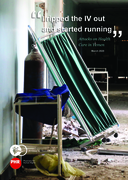
Indiscriminate attacks on health care have contributed to an epic humanitarian catastrophe in Yemen. A new report tracks these attacks in the hope of holding perpetrators on all sides accountable.
It details how both Houthi forces—with their use of wide-area impact weapons—and the Saudi-Emir
...
ati coalition—with their aerial attacks—have flagrantly disregarded the special status of health facilities and personnel in conflict zones.
more

How we respond both now and going forward will help mitigate the impact of COVID-19, and to the extent possible preserve children’s rights to Survive, Learn, and Be Protected. We will focus our efforts on the most critical work essential to maintaining these commitments to the extent possible.
The WHO CIA List should be used as a reference to help formulate and prioritize risk assessment and risk management strategies for containing antimicrobial resistance. The WHO CIA List supports strategies to mitigate the human health risks associated with antimicrobial use in
...
food-producing animals and has been used by both public and private sector organizations. The list helps regulators and stakeholders know which types of antimicrobials used in animals present potentially higher risks to human populations and how use of antimicrobials might be managed to minimize antimicrobial resistance of medical importance. The use of the WHO CIA List, in conjunction with the OIE list of antimicrobials of veterinary importance (1) and the WHO Model Lists of Essential Medicines (2) , will allow for prioritization of risk management strategies in the human sector, the food animal sector, inagriculture (crops) and horticulture, through a coordinated multisectoral One Health approach.
more
Das Management von Krisen hat in den letzten Jahren erheblich an Bedeutung gewonnen, insbesondere auch im Öffentlichen Gesundheitsdienst (ÖGD). Grundsätzlich liegt die Entscheidungshoheit im Rahmen des Krisenmanagements infektiologischer Gefahrenlagen bei den kommunalen Gesundheitsämtern. Aufgru
...
nd der aktuellen Lage (Stand 18. März 2020) in Zusammenhang mit der Verbreitung des neuen Coronavirus stellen wir hiermit in einer Vorabversion Auszüge unseres Lehrbuchs zur Verfügung.
more
This interim guidance has been updated with advice on safe and appropriate home care for patients with coronavirus disease 2019 (COVID-19) and on the public health measures related to the management of their contacts.
This interim guidance is for LTCF managers and corresponding infection prevention and control (IPC) focal persons in LTCF and updates the guidance published in March 2020. The objective of this document is to provide guidance on IPC in LTCFs in the context of COVID-19 to 1) prevent COVID-19-virus fr
...
om entering the facility and spreading within the facility, and 2) to support safe conditions for visiting through the rigorous application of IPC procedures for the residents’ well-being. WHO will update these recommendations as new information becomes available.
Availabel in English, French, Russian and Spanish
more

This handbook follows a comprehensive approach to health system strengthening at borders in order to support IHR national focal points and other national agencies in developing and implementing evidence-based action plans for IHR capacity development at ground crossings. The approach includes the mo
...
vement of travellers and baggage, cargo, containers, conveyances, goods and postal parcels across ground crossings, as well as the interaction with adjacent border communities. Other factors can be considered, if needed, throughout the risk assessment.
more

The ECDC, the EFSA and the EMA have for the first time jointly explored associations between consumption of antimicrobials in humans and food-producing animals, and antimicrobial resistance in bacteria from humans and food-producing animals, using 2011 and 2012 data currently available from their re
...
levant five EU monitoring networks. Combined data on antimicrobial consumption and corresponding resistance in animals and humans for EU MSs and reporting countries were analysed using logistic regression models for selected combinations of bacteria and antimicrobials. A summary indicator of the proportion of resistant bacteria in the main food-producing animal species was calculated for the analysis, as consumption data in food-producing animals were not available at the species level
more
The global emergence of antimicrobial resistance (AMR) is posing a threat to human health. Putting resources into the containment of AMR – including surveillance – is one of the highest-yield investments a country can make to mitigate its impact. In 2015, WHO launched the Global Antimicrobial Re
...
sistance Surveillance System (GLASS), the first global collaborative effort to foster AMR surveillance in bacteria causing acute infections. As of December 2018, 71 countries are enrolled in GLASS. The aim of this report is to document participation efforts and outcomes across these countries, and highlight differences and constraints identified to date. This report follows on from the first GLASS Report – Early implementation 2016-17, published in January 2018, and drawing on data from GLASS first data call in 2017.
more
Infectious diseases like COVID-19 can disrupt the environments in which children grow and develop. Disruptions to families, friendships, daily routines and the wider community can have negative consequences for children’s well-being, development and protection. In addition, measures used to preven
...
t and control the spread of COVID-19 can expose children to protection risks. Home-based, facility-based and zonal-based quarantine and isolation measures can all negatively impact children and their families.
The aim of this brief is to support child protection practitioners to better respond to the child protection risks during a COVID-19 pandemic. Part 1 presents the potential child protection risks COVID-19 can pose to children. Part 2 presents programmatic options in line with the 2019 Minimum Standards for Child Protection in Humanitarian Action (CPMS) and the Guidance Note: Protection of Children During Infectious Disease Outbreaks.
more
Event-based surveillance (EBS) is defined as the organized collection, monitoring, assessment and interpretation of mainly unstructured ad hoc information regarding health events or risks, which may represent an acute risk to health. Both indicator-based and event-based surveillance components serve
...
the early warning and response (EWAR) function of the public health surveillance system. The Framework for Event-based Surveillance offers guidance to public health practitioners seeking to implement EBS at each administrative level in their countries.
more

The objectives of NAP are aligned with the global action plan based on national needs and priorities. The emphasis is on One Health approach with all sectors especially human health, animal health and environment contributing towards minimizing the emergence and impact of AMR in Jordan.
The present National action plan on antimicrobial resistance (AMR) with component of antimicrobial consumption (AMC) covering both human and agriculture sectors was developed based on the World Health Organization's (WHO) Global plan on AMR dated 2015. With the purpose to develop this plan, in May 2
...
016 an intersectoral and interagency working group was established under coordination of the State Sanitary and Epidemiological Surveillance Service (SSESS), the Ministry of Health and Social Protection of Population (MoHSPP) of the Republic of Tajikistan. With technical as- sistance from the WHO a number of seminars, consultation meetings and workshops were conducted to identify country's priority areas and required actions for AMR con- tainment and AMC and control.
more
Antibiotics have been useful in fighting infectious diseases in our country for decades, but because of the overuse and misuse of these agents, an increasing number of organisms are now resistant to them. The Philippines, like other Southeast Asian countries, has already been encountering the many c
...
hallenges of antimicrobial resistance (AMR) which include increasing social and economic costs and rising patient mortality. Although considered a global threat, it is already an emerging local health concern which calls for an urgent collaboration among different sectors to provide solutions addressing this growing problem.
more
Scientific Brief 9 July 2020
Interium guidance, 25 June 2021Timely and accurate diagnostic testing is an essential tool in preventing and controlling the spread of COVID-19. This document describes recommendations for national testing strategies and the use of PCR and rapid antigen tests in different transmission scenarios of t
...
he COVID-19 outbreak, including how testing might be rationalized in low resource settings. All testing should be followed by a strong public health response including isolating those who test positive and providing them care, contact tracing and quarantine of contacts.
more
