
Filter
334
Text search:
DHS
India
Featured
Recommendations
12
New Publications
128
Language
Document type
No document type
238
Studies & Reports
63
Guidelines
16
Manuals
8
Strategic & Response Plan
4
Situation Updates
2
Fact sheets
2
Training Material
1
Countries / Regions
India
62
Nepal
34
Global
19
Ethiopia
16
Kenya
14
Bangladesh
13
Nigeria
11
Rwanda
10
Malawi
10
Myanmar / Burma
10
Zambia
9
Cambodia
7
Namibia
6
Uganda
5
Zimbabwe
5
Indonesia
5
South–East Asia Region
5
Sierra Leone
4
Congo, Democratic Republic of
4
Pakistan
4
Lesotho
4
Asia
4
Senegal
3
Philippines
3
South Africa
3
Haiti
2
Somalia
2
Tanzania
2
China
2
Mozambique
2
Liberia
1
Mali
1
Côte d’Ivoire / Ivory Coast
1
USA
1
Cameroon
1
Ghana
1
Jordan
1
Afghanistan
1
Egypt
1
Thailand
1
Eswatini/ Swaziland
1
Honduras
1
Bolivia
1
Sri Lanka
1
Latin America and the Carribbean
1
Africa
1
Venezuela
1
Albania
1
Laos
1
Timor Leste/ East Timor
1
Vietnam
1
Authors & Publishers
Publication Years
Category
Countries
209
Women & Child Health
45
Clinical Guidelines
17
Public Health
16
Key Resources
10
Capacity Building
4
Pharmacy & Technologies
1
Toolboxes
HIV
22
Global Health Education
12
TB
9
COVID-19
9
Planetary Health
6
AMR
5
Caregiver
5
Health Financing Toolbox
5
Disability
4
Mental Health
4
NCDs
3
NTDs
2
Malaria
2
Conflict
1
Rapid Response
1
Refugee
1
Specific Hazards
1
Pharmacy
1
Tools and practical guidance for achieving high uptake


The Democratic Republic of Timor-Leste has the highest TB incidence rate in the South East Asian Region - 498 per 100,000, which is the seventh highest in the world. In Timor-Leste TB is the eighth most common cause of death.
The salient observations are as follows:
In 2018, 487 (12.5%) of the
...
The Global Antibiotic Resistance Partnership (GARP)-Mozambique team, in partnership with the Center for Disease Dynamics, Economics & Policy (CDDEP), has produced this report as part of a solid com-mitment to develop actionable policy proposals to tackle antibiotic resistance and improve appropriate
...
The aim of this toolkit is to guide countries on how to best estimate their current burden of dengue by combining existing data from dengue surveillance systems with on-going research efforts to measure the community burden
of dengue.

Nepal is on target to meet the Millennium Development Goals for maternal and child health despite high levels of poverty, poor infrastructure, difficult terrain and recent conflict. Each year, nearly 35000 Nepali children die before their fifth birthday, with almost two-thirds of these deaths occurr
...

As our world changes, so too does the burden of disease. Globalisation, evolving trade and consumption patterns, and increased access to life-saving medical care are just some of the factors that have transformed the global health landscape.
This Technical Brief focuses on current principles and approaches to Moderate Acute Malnutrition (MAM) management, highlighting key constraints, gaps in knowledge and areas still lacking consensus. It is intended to inform ongoing debates among practitioners, national partners, donors and analysts o
...

Modelling the health impacts of disruptions to essential health services during COVID-19 Module 1
Several epidemiological models have been created to assess the potential impact of disruptions to essential health services caused by COVID-19 on morbidity and mortality from conditions other than COVI
...
This report presents country, regional and global estimates of low birth weight for 2000, together with a detailed description of the methods used in calculating the estimates. Some limited data on trends are also included. The limitations of low-birth-weight data are described and recommendations a
...
Children without access to safe water are more likely to die in infancy -- and throughout childhood -- from diseases caused by
water-borne bacteria, to which their small bodies are more vulnerable.
The COVID-19 pandemic led to school closures around the world, affecting almost 1.6 billion students. The effects of even short disruptions in a child’s schooling on their learning and well-being have been shown to be acute and long lasting. The capacities of education systems to respond to the cr
...
This report presents, for the first time, a global assessment of the extent to which health care facilities provide essential water, sanitation and hygiene (WASH) services. Drawing on data from 54 low- and middle-income countries, the report concludes that 38% lack access to even rudimentary levels
...
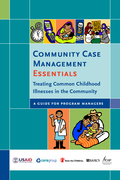
2nd edition. Known as “Community Case Management of Sick Children” (CCM), this approach sends community-based health workers out to find, diagnose, and successfully treat sick children, in partnership with their families. Inspired by the classic “Immunization Essentials”, this guide methodic
...
