
Filter
963
Text search:
A.
Bone
Featured
Recommendations
136
New Publications
243
Language
Document type
No document type
556
Guidelines
182
Studies & Reports
97
Manuals
57
Training Material
28
Fact sheets
20
Strategic & Response Plan
12
Brochures
4
Situation Updates
3
Infographics
2
Online Courses
1
Videos
1
Countries / Regions
India
95
Kenya
32
South Africa
29
Global
24
Ethiopia
23
Uganda
19
Nepal
16
Nigeria
15
Tanzania
14
Philippines
13
Bangladesh
13
Ghana
12
Western and Central Europe
12
Indonesia
11
Namibia
11
Rwanda
10
Africa
10
Latin America and the Carribbean
9
Zambia
8
Myanmar / Burma
8
South–East Asia Region
8
Liberia
6
Syria
6
Cambodia
6
Eswatini/ Swaziland
6
Sierra Leone
5
Brazil
4
Ukraine
4
Lesotho
4
Russia
4
USA
3
Haiti
3
Malawi
3
Botswana
3
Vietnam
3
Burkina Faso
2
Cameroon
2
Zimbabwe
2
Iraq
2
Turkey
2
Sudan
2
Argentina
2
Middle East and North Africa
2
Asia
2
Eastern Europe
2
Albania
2
Tajikistan
2
Moldova
2
North America
2
Senegal
1
Niger
1
Pakistan
1
Jordan
1
Germany
1
Lebanon
1
Thailand
1
Gambia
1
China
1
Papua New Guinea
1
Central African Republic
1
North Macedonia
1
Libya
1
Madagascar
1
Chile
1
Yemen
1
East and Southern Africa
1
Paraguay
1
Bhutan
1
Palestine
1
Mongolia
1
Southern Africa
1
Laos
1
Estonia
1
Georgia
1
Jamaica
1
United Kingdom
1
Latvia
1
Authors & Publishers
Publication Years
Category
Countries
363
Clinical Guidelines
164
Public Health
59
Women & Child Health
59
Key Resources
30
Capacity Building
29
Pharmacy & Technologies
11
Toolboxes
HIV
91
TB
64
NTDs
63
Disability
43
Caregiver
37
Pharmacy
37
Mental Health
31
AMR
31
COVID-19
26
Conflict
21
NCDs
20
Specific Hazards
19
Ebola & Marburg
16
Rapid Response
15
Refugee
15
Malaria
10
Natural Hazards
8
Planetary Health
7
Zika
6
Cholera
4
2.0 Rapid Response
4
Social Ethics
3
Polio
2
Global Health Education
1

Based on communication with the Ukrainian Ministry of Health WHO will continuously revise and publish a list of critical needs against which we are requesting support
WHO list of priority medical devices for management of cardiovascular diseases and diabetes
recommended
This publication was developed in response to the need for a reference list of priority medical devices required for management of noncommunicable diseases (NCDs), focusing on cardiovascular diseases and diabetes, especially for low- and middle-inco
...
Relapsing malaria caused by Plasmodium vivax parasites poses a significant challenge to global malaria elimination efforts. About one third of the population remains at risk of contracting P. vivax malaria, and 85% of P. vivax infections stem from r
...

The annual bulletin of the Mekong Malaria Elimination (MME) programme is a yearly report that reviews ongoing efforts to combat multidrug resistance and eliminate malaria in the 6 countries of the Greater Mekong subregion (GMS): Cambodia, China (Yun
...
The clinical guidelines and protocols for the practice of emergency medicine presented in this document are designed to be a useful resource not only for those wishing to become emergency medicine specialists, but also for general practitioners and
...
Essential medicines are those that satisfy the priority health care needs of a population. They are selected with due regard to disease prevalence and public health relevance, evidence of efficacy and safety and comparative cost-effectiveness. They
...
Este manual se ha elaborado en el marco de la Iniciativa Global de la Organización Mundial de la Salud (OMS) para el Cáncer Infantil, CureAll Americas, con el propósito de mejorar la situación de los niños, niñas y adolescentes con cáncer en todo el mundo, para que puedan tener las mejores po
...
Division of Noncommunicable Diseases | draft guidelines on diagnosis and management of a chronic immune-mediated enteropathy called celiac disease. This disease is caused is mainly caused in genetically susceptible individuals by ingestion of gluten
...
In recent decades, India has witnessed a rapidly exploding epidemic of diabetes.
Indeed, India today has the second largest number of people with diabetes in the
world. The International Diabetes Federation (IDF) estimates that there are 72.9 mill
...
The question of amnesties has come to the forefront once again as the Central African Republic (CAR) started a new round of African Union-mediated peace negotiations on 24 January 2019. While rebel groups demanded
...

3rd edition. In 2001, Uganda adapted the Integrated Disease Surveillance and Response (IDSR) developed by World Health Organization (WHO) for member states in African region. The Ministry of Health has been implementing the IDSR strategy since then with success across the country. This strategy prov
...
It provides selected illustrations and photographs of congenital anomalies that are severe enough to have a high probability of being captured during the first few days following birth
Cryptococcal disease, particularly cryptococcal meningitis is a significant cause of morbidity and mortality among people living with HIV with advanced HIV disease. It is estimated that it is responsible for nearly 19% of AIDS-related mortality, sec
...
The content of these guidelines acknowledges that wasting and undernutrition in HIV-infected children reflect a series of failures within the health system, the home and community and not just a bio
...

The increasing global trend of Antimicrobial resistance (AMR) has gradually emerged as a major public health challenge for the entire world. AMR has spread to almost all countries and regions, including Pakistan owing to the “misuse and overuse”
...
Acupuncture has been practised for more than 2500 years in the Western Pacific Region and has become a global therapeutic method in recent decades. However, it was reportedthat acupuncturists differed by up to 25% in the acupuncture points they used
...
WHO Recommended Surveillance Standards
recommended
Second editon. This document serves only as a guide to good practice and may help to harmonize surveillance activities. The purpose of this manual is to be a handy reference for key elements and con
...
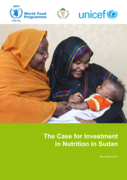
Over the period 2015 to 2019, scaling up a package of selected nutrition-specific and nutrition sensitive interventions to cover 90 per cent of Sudan would:
- Reduce the under-five mortality rate to 49/1,000 live births
- Reduce the preva ...
- Reduce the under-five mortality rate to 49/1,000 live births
- Reduce the preva ...

Tuberculosis (TB) is among the top ten most common causes of death globally and as a single infectious disease it top among infectious diseases. Furthermore, it is noted as the top causes of death among people infected with the human immunodeficienc
...
In the Region of the Americas, the leishmaniases are a group of diseases caused by various species of Leishmania, which cause a set of clinical syndromes in infected humans that can involve the skin
...
