
Filter
2473
Text search:
Nigeria
Featured
198
641
Language
2171
223
112
49
37
36
15
14
11
5
4
3
3
3
3
3
3
3
2
2
2
2
2
2
1
1
1
1
1
1
1
1
1
1
1
1
1
1
1
1
1
1
1
Document type
1195
690
198
106
99
65
48
25
15
12
9
5
3
1
Countries
405
164
149
141
115
74
69
61
60
60
57
56
56
48
47
46
40
39
33
33
32
32
29
29
27
25
22
21
20
19
17
16
16
16
16
13
13
13
12
12
12
12
12
11
10
10
9
9
9
8
7
7
7
7
6
6
5
5
5
4
4
4
4
4
4
3
3
3
3
3
3
3
3
3
2
2
2
2
2
2
2
2
2
2
2
2
1
1
1
1
1
1
1
1
1
1
1
1
1
1
1
1
1
1
1
1
1
1
1
1
1
1
1
Authors & Publishers
319
109
92
79
62
48
45
40
33
33
30
26
23
20
20
17
17
17
17
16
16
15
12
11
11
11
11
10
10
9
9
9
9
9
8
8
8
8
8
8
8
7
7
7
7
7
7
6
6
6
6
6
6
6
6
6
5
5
5
5
5
5
5
5
5
5
5
4
4
4
4
4
4
4
4
4
4
4
4
4
4
4
4
4
4
4
4
3
3
3
3
3
3
3
3
3
3
3
3
3
3
3
3
3
3
3
3
3
3
3
3
3
3
3
3
3
3
3
3
3
3
3
3
3
3
3
3
3
3
3
3
3
3
3
3
3
3
3
3
3
3
2
2
2
2
2
2
2
2
2
2
2
2
2
2
2
2
2
2
2
2
2
2
2
2
2
2
2
2
2
2
2
2
2
2
2
2
2
2
2
2
2
2
2
2
2
2
2
2
2
2
2
2
2
2
2
2
2
2
2
2
2
2
2
2
2
2
2
2
2
2
2
2
2
2
2
2
2
2
2
2
2
2
2
2
2
2
2
2
2
2
2
2
2
2
2
2
2
2
2
2
2
2
2
2
2
2
2
2
2
2
2
2
2
2
2
2
2
2
2
2
2
2
2
2
2
2
2
2
2
2
2
2
2
2
2
2
2
2
2
2
2
2
2
2
2
2
2
2
2
2
2
2
2
2
2
2
2
1
1
1
1
1
1
1
1
1
1
1
1
1
1
1
1
1
1
1
1
1
1
1
1
1
1
1
1
1
1
1
1
1
1
1
1
1
1
1
1
1
1
1
1
1
1
1
1
1
1
1
1
1
1
1
1
1
1
1
1
1
1
1
1
1
1
1
1
1
1
1
1
1
1
1
1
1
1
1
1
1
1
1
1
1
1
1
1
1
1
1
1
1
1
1
1
1
1
1
1
1
1
1
1
1
1
1
1
1
1
1
1
1
1
1
1
1
1
1
1
1
1
1
1
1
1
1
1
1
1
1
1
1
1
1
1
1
1
1
1
1
1
1
1
1
1
1
1
1
1
1
1
1
1
1
1
1
1
1
1
1
1
1
1
1
1
1
1
1
1
1
1
1
1
1
1
1
1
1
1
1
1
1
1
1
1
1
1
1
1
1
1
1
1
1
1
1
1
1
1
1
1
1
1
1
1
1
1
1
1
1
1
1
1
1
1
1
1
1
1
1
1
1
1
1
1
1
1
1
1
1
1
1
1
1
1
1
1
1
1
1
1
1
1
1
1
1
1
1
1
1
1
1
1
1
1
1
1
1
1
1
1
1
1
1
1
1
1
1
1
1
1
1
1
1
1
1
1
1
1
1
1
1
1
1
1
1
1
1
1
1
1
1
1
1
1
1
1
1
1
1
1
1
1
1
1
1
1
1
1
1
1
1
1
1
1
1
1
1
1
1
1
1
1
1
1
1
1
1
1
1
1
1
1
1
1
1
1
1
1
1
1
1
1
1
1
1
1
1
1
1
1
1
1
1
1
1
1
1
1
1
1
1
1
1
1
1
1
1
1
1
1
1
1
1
1
1
1
1
1
1
1
1
1
1
1
1
1
1
1
1
1
1
1
1
1
1
1
1
1
1
1
1
1
1
1
1
1
1
1
1
1
1
1
1
1
1
1
1
1
1
1
1
1
1
1
1
1
1
1
1
1
1
1
1
1
1
1
1
1
1
1
1
1
1
1
1
1
1
1
1
1
1
1
1
1
1
1
1
1
1
1
1
1
1
1
1
1
1
1
1
1
1
1
1
1
1
1
1
1
1
1
1
1
1
1
1
1
1
1
1
1
1
1
1
1
1
1
1
1
1
1
1
1
1
1
1
1
1
1
1
1
1
1
1
1
1
1
1
1
1
1
1
1
1
1
1
1
1
1
1
1
1
1
1
1
1
1
1
1
1
1
1
1
1
1
1
1
1
1
1
1
1
1
1
1
1
1
1
1
1
1
1
1
1
1
1
1
1
1
1
1
1
1
1
1
1
1
1
1
1
1
1
1
1
1
1
1
1
1
1
1
1
1
1
1
1
1
1
1
1
1
1
1
1
1
1
1
1
1
1
1
1
1
1
1
1
1
1
1
1
1
1
1
1
1
1
1
1
1
1
1
1
1
1
1
1
1
1
1
1
1
1
1
1
1
1
1
1
1
1
1
1
1
1
1
1
1
1
1
1
1
1
1
1
1
1
1
1
1
1
1
1
1
1
1
1
1
1
1
1
1
1
1
1
1
1
1
1
1
1
1
1
1
1
1
1
1
1
1
1
1
1
1
1
1
1
1
1
1
1
1
1
1
1
1
1
1
1
1
1
1
1
1
1
1
1
1
1
1
1
1
1
1
1
1
1
1
1
1
1
1
1
1
1
1
1
1
1
1
1
1
1
1
1
1
1
1
1
1
1
1
1
1
1
1
1
1
1
1
1
1
1
1
1
1
1
1
1
1
1
1
1
1
1
1
1
1
1
1
1
1
1
1
1
1
1
1
1
1
1
1
1
1
1
1
1
1
1
1
1
1
1
1
1
1
1
1
1
1
1
1
1
1
1
1
1
1
1
1
1
1
1
1
1
1
1
1
1
1
1
1
1
1
1
1
1
1
1
1
1
1
1
1
1
1
1
1
1
1
1
1
1
1
1
1
1
1
1
1
1
1
1
1
1
1
1
1
1
1
1
1
1
1
1
1
1
1
1
1
1
1
1
1
1
1
1
1
1
1
1
1
1
1
1
1
1
1
1
1
1
1
1
1
1
1
1
1
1
1
1
1
1
1
1
1
1
1
1
1
1
1
1
1
1
1
1
1
1
1
1
1
1
1
1
1
1
1
1
1
1
1
1
1
1
1
1
1
1
1
1
1
1
1
1
1
1
1
1
1
1
1
1
1
1
1
1
1
1
1
1
1
1
1
1
1
1
1
1
1
1
1
1
1
1
1
1
1
1
1
1
1
1
1
1
1
1
1
1
1
1
1
1
1
1
1
1
1
1
1
1
1
1
1
1
1
1
1
1
1
1
1
1
1
1
1
1
1
1
1
1
1
1
1
1
1
1
1
1
1
1
1
1
1
1
1
1
1
1
1
1
1
1
1
1
1
1
1
1
1
1
1
1
1
1
1
1
1
1
1
1
1
1
1
1
1
1
1
1
1
1
1
1
1
1
1
1
1
1
1
1
1
1
1
1
1
1
1
1
1
1
1
1
1
1
1
1
1
1
1
1
1
1
1
1
1
1
1
1
1
1
1
1
1
1
1
1
1
1
1
1
1
1
1
1
1
1
1
1
1
1
1
1
1
1
1
1
1
1
1
1
1
1
1
1
1
1
1
1
1
1
1
1
1
1
1
1
1
1
1
1
1
1
1
1
1
1
1
1
1
1
1
1
1
1
1
1
1
1
1
1
1
1
1
1
1
1
1
1
1
1
1
1
1
1
1
1
1
1
1
1
1
1
1
1
1
1
1
1
1
1
1
1
1
1
1
1
1
1
1
1
1
1
1
1
1
1
1
1
1
1
1
1
1
1
1
1
1
1
1
1
1
1
1
1
1
1
1
1
1
1
1
1
1
1
1
1
1
1
1
1
1
1
1
1
1
1
1
1
1
1
1
1
1
1
1
1
1
1
1
1
1
1
1
1
1
1
1
1
1
1
1
1
1
1
1
1
1
1
1
1
1
1
1
1
1
1
1
1
1
1
1
1
1
1
1
1
1
1
1
1
1
1
1
1
1
1
1
1
1
1
1
1
1
1
1
1
1
1
1
1
1
1
1
1
1
1
1
1
1
1
1
1
1
1
1
1
1
1
1
1
1
1
1
1
1
1
1
1
1
1
1
1
1
1
1
1
1
1
1
1
1
1
1
1
1
1
1
1
1
1
1
1
1
1
1
1
1
1
1
1
1
1
1
1
1
1
1
1
1
1
1
1
1
1
1
1
1
1
1
1
1
1
1
1
1
1
1
1
1
1
1
1
1
1
1
1
1
1
1
1
1
1
1
1
1
1
1
1
1
1
1
1
1
1
1
1
1
1
1
1
1
1
1
1
1
1
1
1
1
1
1
1
1
1
1
1
1
1
1
1
1
1
1
1
1
1
1
1
1
1
1
1
1
1
1
1
1
1
1
1
1
1
1
1
1
1
1
1
1
1
1
1
1
1
1
1
1
1
1
1
1
1
1
1
1
1
1
1
1
1
1
1
1
1
1
1
1
1
1
1
1
1
1
1
1
1
1
1
1
1
1
1
1
1
1
1
1
1
1
1
1
1
1
1
1
1
1
1
1
1
1
1
1
1
1
1
1
1
1
1
1
1
1
1
1
1
1
1
1
1
1
1
1
1
1
1
1
1
1
1
1
1
1
1
1
1
1
1
1
1
1
1
1
1
1
1
1
1
1
1
1
1
1
1
1
1
1
1
1
1
1
1
1
1
1
1
1
1
1
1
1
1
1
1
1
1
1
1
1
1
1
1
1
1
1
1
1
1
1
1
1
1
1
1
1
1
1
1
1
1
1
1
1
1
1
1
1
1
1
1
1
1
1
1
1
1
1
1
1
1
1
1
1
1
1
1
1
1
1
1
1
1
1
1
1
1
1
1
1
1
1
1
1
1
1
1
1
1
1
1
1
1
1
1
1
1
1
1
1
1
1
1
1
1
1
1
1
1
1
1
1
1
1
1
1
1
1
1
1
1
1
1
1
1
1
1
1
1
1
1
1
1
1
1
1
1
1
1
1
1
1
1
1
1
1
1
1
1
1
1
1
1
1
1
1
1
1
1
1
1
1
1
1
1
1
1
1
1
1
1
1
1
1
1
1
1
1
1
1
1
1
1
1
1
1
1
1
1
1
1
1
1
1
1
1
1
1
1
1
1
1
1
1
1
1
1
1
1
1
1
1
1
1
1
1
1
1
1
1
Publication Years
892
1438
135
7
1
Category
748
184
175
130
118
55
16
Toolboxes
220
197
192
118
103
96
90
80
79
74
67
67
66
61
46
46
46
44
36
36
17
16
10
10
7

The target audience of this document (and the associated online companion tool) includes WHO country offices in Member States of the African Region; Member States’ ministries of health and their public health emergency operation centres; relevant external assessment teams; and partners looking to
...
identify preparedness gaps and
support interventions that help address them. In the event of a suspected or confirmed VHF case, the document also serves to provide any intervening partner with a sense of what structures should be in place, in order to guide
scale-up activities in line with regional and national plans.
more

The present guidelines incorporate all these changes, leading to a substantial reconfiguration of therapeutic choices for both disease forms.
HAT is a serious, life-threatening disease and the efficacy of fexinidazole depends on swallowing the medicine after an appropriate intake of food as well as
...
on completing the full 10-day treatment schedule. Therefore, the recommendations regarding fexinidazole administration are considered key elements that must be carefully followed. When the conditions listed in these guidelines are not met for any individual patient, the alternative available treatments should be prescribed.
more

WHO guideline on contact tracing
recommended
This practical guideline establishes definitions for “contact”, “contact person”, “contact tracing” and other associated concepts. It allows for improvement of contact tracing strategies and provides recommendations attempting to answer some, though not all, questions that arose during t
...
he 2019 coronavirus pandemic and other outbreaks. The use of this guideline begins once people have been diagnosed and the potential for transmission exists. It is not, however, intended to assist with case investigation. The guideline empowers health workers, governments, and public health officials with the tools to implement effective contact tracing strategies.
more

PLOS Glob Public Health 4(12): e0004035. https://doi. org/10.1371/journal.pgph.0004035.
A new formulation of praziquantel, arpraziquantel (arPZQ), has been developed for preschool-
aged children (PSAC) to fill the treatment gap for this age group in schistosomiasis control and
elimination program
...
s. There is now a priority to ensure that the drug reaches all at-risk PSAC
in endemic areas, including hard-to-reach areas and populations. This study aimed to deter-
mine schistosomiasis treatment-related contextual factors among fishermen and island popu-
lations in Homa Bay County, Kenya, and to identify a suitable platform to deliver arPZQ.
more
PLoS Negl TropDis14(10): e0008837. https://doi.org/ 10.1371/journal.pntd.0008837.
We conducted alandscape analysis on parasitic and vector-borne disease elimination approaches with the aim toidentify evidence-based strategies, core components and key concepts for achieving and sustaining schistosom
...
iasis control and for progressing elimination efforts towards interruption oftransmission insubSaharan Africa.
more
Cogent Medicine, 7:1, 1794272,
PUBLIC HEALTH & PRIMARY CARE | RESEARCH ARTICLE
Edutainment and infographics for
schistosomiasis health education in Ndumo area,
Kwazulu-Natal, South Africa
Tafadzwa Mindu1*, Muhubiri Kabuyaya1 and Moses J. Chimbari1
Educational interventions targeting communiti
...
es which are at risk of contracting
schistosomiasis infection may empower them to develop capacity to minimize the
spread of the disease. We compared the effectiveness of health education inter-
ventions for schistosomiasis knowledge uptake among school-going children in
Ndumo area, KwaZulu-Natal using a quasi-experimental trial.
more

Addressing comorbidities and risk factors for tuberculosis (TB) is a crucial component of the World Health Organization (WHO)’s End TB Strategy. This WHO operational handbook on tuberculosis. Module 6: tuberculosis and comorbidities aims to support countries in scaling up people-centred care, base
...
d on the latest WHO recommendations on TB and key comorbidities, and drawing upon additional evidence, best practices and inputs from various experts and stakeholders obtained during WHO processes. It is intended for use by people working in ministries of health, particularly TB programmes and the relevant departments or programmes responsible for comorbidities and health-related risk factors for TB such as HIV, diabetes, undernutrition, substance use, and tobacco use, as well as programmes addressing mental health and lung health. This operational handbook is a living document and will include a separate section for each of the key TB comorbidities or health-related risk factors. The third edition includes guidance for HIV-associated TB, mental health conditions and diabetes, which are three conditions strongly associated with TB and which result in higher mortality, poorer TB treatment outcomes and negatively impact health-related quality of life. The operational handbook aims to facilitate early detection, proper assessment and adequate management of people affected by TB and comorbidities. Full implementation of this guidance is expected to have a significant impact on TB treatment outcomes and health-related quality of life for people affected by TB.
more

The development of the Country Cooperation Strategy (CCS) was based on a consultative and participatory process with strong commitment and support from the Ministry of Health of Ghana. The CCS draws on lessons from the implementation of the first, and second generation CCSs, the country focus strate
...
gy, and the United Nations Sustainable Development Cooperation Framework (2023–2025).
The strategic agenda of the CCS outlines three strategic priorities, which are:
1. improving universal access to essential health services through the primary health care approach.
2. health emergency preparedness and response: addressing gaps in IHR core capacities and strengthening national capacities to prevent, detect and respond appropriately to public health emergencies through a resilient health system.
3. addressing social, economic, and environmental determinants of health; promoting high-impact interventions to address public health risks using multisectoral approaches.
more

Lancet. 2014 June 28; 383(9936): 2253–2264. doi:10.1016/S0140-6736(13)61949-2. Review Article

This interim operational guide outlines infection prevention, control, and water, sanitation, and hygiene measures for home care and isolation of mpox in resource-limited settings. It focuses on practical strategies to manage and prevent the spread of the virus when persons with mpox are isolated at
...
home in settings with limited resources. This document is intended for health and care workers, caregivers, and public health authorities.
more
Digital health technology can make health systems more efficient and sustainable, facilitating the provision of high-quality
care across a wide range of contexts and for diverse population health needs. The pace of innovation in digital health is
rapid and constant, with new interventions bein
...
g developed, implemented, tested and refined against a diversity of contexts,
constraints and challenges to address a variety of health and health system needs.
more
Issue Brief NTDs Part 3 : Schistosomiasis
recommended
In this subsequent part of the issue brief on the NTD Toolbox you will learn about general strategies, roadmaps, key treatment guidelines, reports, and training material on Schistosomiasis

Buruli ulcer (BU), a neglected tropical disease (NTD), is an infection of the skin and subcutaneous tissue caused by Mycobacterium ulcerans. The disease has been documented in many South American, Asian, and Western Pacific countries and is widespread throughout much of Africa, especially in West
...
and Central Africa.
more

The aim of the meeting was to broaden the network’s initiatives. Preliminary work involved integrating laboratory testing for skin NTDs other than Buruli ulcer, such as cutaneous leishmaniasis, mycetoma, leprosy and yaws, while extending the network’s reach to encompass additional laboratories.

Tsetse traps and targets (insecticide-impregnated screens) function by attracting the flies to a device that collects and/or kills them. Traps can be used for entomological surveillance, and also for control. Targets are simpler than traps, but are not used for surveillance. They are impregnated wit
...
h biodegradable insecticides in order to kill any flies that alight on them. Traps can also be impregnated with insecticides. Traps and targets can both be used to eliminate a fraction of the tsetse population.
more
Parasites Vectors 14, 50 (2021). https://doi.org/10.1186/s13071-020-04555-8
PLoS Negl Trop Dis 16(11): e0010885. https://doi.org/10.1371/journal.pntd.0010885
HAT diagnosis in non-endemic countries is rare and can be challenging, but alertness and
surveillance must be maintained to contribute to WHO’s elimination goals. Early detection is
particularly important as it co
...
nsiderably improves the prognosis.
more
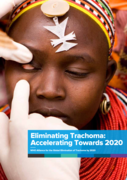
Trachoma is the world’s leading infectious cause of blindness. It is one of 18 neglected
tropical diseases (NTDs) that affect over one billion of the world’s poorest people.

ICTC’s 2022-2030 strategic plan spans the critical period running to the end of 2030, the year by which we are striving to achieve the elimination of trachoma as a public health problem. This strategic plan is in alignment with the NTD road map, Ending the neglect to attain the Sustainable Develop
...
ment Goals: a road map for neglected tropical diseases 2021−2030.
more
Plan stratégique 2022-2030 de l’ICTC
