
Filter
2342
Text search:
psychosocial
challenges
Featured
Recommendations
221
New Publications
581
Language
Document type
No document type
1373
Studies & Reports
380
Guidelines
213
Manuals
133
Strategic & Response Plan
111
Training Material
50
Situation Updates
38
Fact sheets
28
Resource Platforms
9
Brochures
2
Infographics
2
Online Courses
2
Videos
1
Countries / Regions
Global
96
Kenya
87
Syria
73
India
57
Liberia
55
Uganda
52
Sierra Leone
49
South Africa
49
Western and Central Europe
49
Myanmar / Burma
48
Nigeria
47
Bangladesh
44
Congo, Democratic Republic of
40
Zambia
39
Ethiopia
38
Malawi
38
Ukraine
38
Nepal
34
South Sudan
32
Latin America and the Carribbean
32
Rwanda
30
Africa
30
Namibia
24
Ghana
23
Tanzania
23
Guinea
22
Mozambique
22
Zimbabwe
21
Haiti
21
Eastern Europe
21
Philippines
17
Yemen
17
Jordan
16
Lebanon
16
South–East Asia Region
16
Indonesia
15
Asia
14
Afghanistan
13
Venezuela
13
Central African Republic
12
Lesotho
12
Pakistan
10
East and Southern Africa
10
West and Central Africa
10
Middle East and North Africa
10
Somalia
9
Botswana
9
Russia
9
Senegal
7
Brazil
7
Sri Lanka
7
Moldova
7
Burkina Faso
6
Iraq
6
Germany
6
Cambodia
6
China
6
Sudan
6
Eswatini/ Swaziland
6
Eastern Europe and Central Asia
6
Mali
5
Turkey
5
Thailand
5
Burundi
5
Colombia
5
Georgia
5
Vietnam
5
Cameroon
4
Benin
4
Peru
4
Palestine
4
Laos
4
USA
3
Niger
3
Papua New Guinea
3
Croatia
3
Albania
3
Canada
3
Tajikistan
3
Romania
3
Iran
3
Jamaica
3
Togo
2
Egypt
2
Gambia
2
Malaysia
2
Hungary
2
Greece
2
Libya
2
Angola
2
Mexico
2
Poland
2
Southern Africa
2
Estonia
2
Turkmenistan
2
Portugal
2
Guinea-Bissau
1
Côte d’Ivoire / Ivory Coast
1
Chad
1
Argentina
1
North Macedonia
1
Serbia
1
Ecuador
1
El Salvador
1
Bolivia
1
Nicaragua
1
Chile
1
Western Pacific Region
1
Fiji
1
Bhutan
1
Mongolia
1
Bulgaria
1
Lithuania
1
Kyrgyzstan
1
Kazakhstan
1
Japan
1
Mauritius
1
Tunisia
1
Spain
1
Algeria
1
Azerbaijan
1
Belarus
1
French Guyana
1
Bosnia and Herzegovina
1
Authors & Publishers
Publication Years
Category
Countries
813
Key Resources
146
Women & Child Health
118
Clinical Guidelines
102
Public Health
99
Capacity Building
83
Pharmacy & Technologies
3
Annual Report MEDBOX
2
Toolboxes
Mental Health
408
HIV
257
COVID-19
212
Disability
161
Conflict
155
Refugee
91
Ebola & Marburg
78
TB
70
Caregiver
58
Natural Hazards
47
Planetary Health
33
NCDs
28
Rapid Response
26
Global Health Education
24
NTDs
24
2.0 Rapid Response
18
Zika
8
Social Ethics
8
Health Financing Toolbox
7
Specific Hazards
6
Polio
5
Cholera
3
AMR
3
South Sudan
1
Typhoon
1
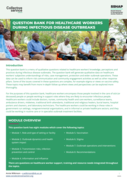
This question bank is a menu of qualitative questions related to healthcare workers’ knowledge, perceptions and practices during infectious disease outbreaks. The question bank will generate qualitative data on healthcare workers’ subjective understandings of risks, case management, protection a
...

These guidelines promote the delivery of people-centred health services for STIs by providing evidence-based recommendations related to decentralization, integration, task sharing and digital health. These recommendations complement existing WHO guidelines for STI testing, treatment and management,
...
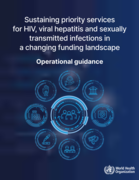
This operational guidance provides a structured approach to support countries in sustaining priority services for HIV, viral hepatitis and sexually transmitted infections in the context of reduced external funding. The guidance is intended for national governments, public health programmes, communit
...

The World Health Organization recently redefined leprosy elimination as a phased process, with the first milestone being the
interruption of transmission, achieved when no new child cases (defined as younger than 15 years) are reported for five consecutive years.
In Pakistan, the well-functioning
...

Early Adolescent Skills for Emotions (EASE) is an evidence-based group psychological intervention to help 10–15-year-olds affected by internalizing problems (e.g. stress and symptoms of anxiety, depression) in communities exposed to adversity. Published by the World Health Organization (WHO) and U
...

For education to be competency-based and effective, appropriate training methodologies have to be used to support the learner to have the appropriate knowledge and to translate this knowledge into skills and competencies. Such education and training should lead to a change in attitudes, beliefs a
...

The African Palliative Care Association is pleased to publish the first edition of Palliative Care Standards for Africa. The development of these standards was achieved through wide consultation with service beneficiaries and providers, and they have been developed to suit different levels of
...

The Guidelines for the Use of the APCA African Palliative Outcome Scale (POS) has been developed by the APCA, in collaboration with
stakeholders, to help appropriately trained health practitioners and researchers across the region to utilise the APCA African POS in their work place (Powell et
...

In the absence of a such a measure, and building on the success of developing the APCA African
Palliative Outcome Scale (POS) for adults, the African Palliative Care Association has developed the
APCA African Children’s POS. The tool has been validated across diseases, countries, settings and
...

WHO guideline on HIV service delivery
recommended
Updated guidance on the integration of diabetes, hypertension and mental health services, and interventions to support adherence to antiretroviral therapy. The guideline offers practical implementation guidance for countries and key stakeholders as well as outlining key research gaps. As life expec
...

PHSM are vital in reducing the risk and scale of infectious disease transmission and lowering hospitalization and deaths. Examples include contact tracing, quarantine and isolation, mask use, ventilation, school or workplace measures, mobility restrictions and travel requirements.
While these mea
...

Building on the WHO guidelines for disclosure to children up to age 12 in 2011, this implementation guidance provides evidence on existing interventions that support children and adolescents living with HIV in the process of disclosure. It includes interventions that focuses on safe disclosure, as w
...

Adolescents and young adults aged 10-24 remain underserved in the global response against HIV. Combination prevention, treatment and care programmes use a mix of evidence-based interventions to meet the current HIV prevention needs of adolescents and young adults. However, there needs to be a focus
...

Strengthening global health security to protect the world against future epidemics and pandemics requires well-tested and decentralized capacities for the local detection and rapid containment of outbreaks of infectious disease. For such capacities to translate into effective response actions, ind
...


This resource was written to support persons who seek to initiate a support group for suicide loss survivors. Suicide bereavement support groups offer a wide range of benefits that can help individuals to navigate the difficult time following a loss. First and foremost, a support group provides a ch
...

In an era of constrained resources and tightening budgets, strategic prioritization in tuberculosis (TB) programming is more critical than ever. Countries must make informed decisions to allocate limited resources effectively - maximizing impact, preventing avoidable deaths, and sustaining progress
...

Operational Guidance. This operational guidance provides a structured approach to support countries in sustaining priority services for HIV, viral hepatitis and sexually transmitted infections in the context of reduced external funding. The guidance is intended for national governments, public healt
...

Panel Recommendations

Program Considerations
