
Filter
3540
Filtered Results: 3540
Text search:
types
of
disability
Featured
Recommendations
343
New Publications
830
Language
Document type
No document type
2068
Studies & Reports
586
Guidelines
396
Manuals
234
Strategic & Response Plan
132
Training Material
61
Fact sheets
28
Situation Updates
20
Infographics
6
Resource Platforms
4
Brochures
3
App
1
Online Courses
1
Countries / Regions
Global
179
India
149
Kenya
97
Western and Central Europe
73
Myanmar / Burma
69
Ethiopia
67
Bangladesh
62
South Africa
62
Uganda
62
Nepal
60
Syria
54
Latin America and the Carribbean
54
Ukraine
47
Malawi
47
Ghana
43
Rwanda
43
Sierra Leone
42
Namibia
39
Zambia
39
Liberia
39
Nigeria
38
Philippines
37
Tanzania
33
Africa
31
Cambodia
24
South–East Asia Region
23
Indonesia
23
Congo, Democratic Republic of
22
Zimbabwe
21
Lebanon
21
Lesotho
20
Mozambique
19
Eastern Europe
19
South Sudan
16
Cameroon
14
Asia
14
Yemen
14
Botswana
14
Afghanistan
13
Haiti
12
Venezuela
12
Jordan
12
Western Pacific Region
12
Eastern Europe and Central Asia
12
Vietnam
12
Thailand
11
Germany
11
Colombia
10
Eswatini/ Swaziland
10
Pakistan
10
Laos
9
Sudan
9
Guinea
8
Brazil
8
Moldova
8
Russia
8
China
7
Sri Lanka
7
Senegal
6
Burkina Faso
6
Peru
6
USA
6
Middle East and North Africa
6
East and Southern Africa
6
Central African Republic
6
Iraq
6
Somalia
6
Turkey
5
North America
5
Tajikistan
4
Iran
4
West and Central Africa
4
United Kingdom
4
Papua New Guinea
4
Palestine
4
Timor Leste/ East Timor
3
Serbia
3
Kazakhstan
3
Turkmenistan
3
Egypt
3
Greece
3
North Macedonia
2
Mexico
2
Togo
2
Albania
2
Canada
2
Kyrgyzstan
2
Burundi
2
Lithuania
2
Paraguay
2
Jamaica
2
Portugal
2
Spain
2
Azerbaijan
2
Belarus
2
Southern Africa
2
Bolivia
2
Mali
2
Libya
2
Bhutan
2
Guatemala
2
Switzerland
1
El Salvador
1
Benin
1
Chile
1
Fiji
1
Singapore
1
Estonia
1
Uzbekistan
1
Malaysia
1
Qatar
1
Bulgaria
1
Armenia
1
Guinea-Bissau
1
Croatia
1
Hungary
1
Ireland
1
Saudi Arabia
1
Japan
1
Mauritius
1
Israel
1
Bosnia and Herzegovina
1
Latvia
1
Djibouti
1
Romania
1
Poland
1
Angola
1
Chad
1
Madagascar
1
Authors & Publishers
Publication Years
Category
Countries
1183
Clinical Guidelines
260
Public Health
251
Key Resources
240
Women & Child Health
219
Capacity Building
76
Pharmacy & Technologies
11
Annual Report MEDBOX
2
Toolboxes
Mental Health
497
Disability
476
COVID-19
212
Conflict
145
NTDs
144
HIV
136
Planetary Health
110
NCDs
94
TB
86
Refugee
82
Caregiver
80
Global Health Education
62
Natural Hazards
54
Rapid Response
38
2.0 Rapid Response
32
Health Financing Toolbox
31
AMR
29
Ebola & Marburg
25
Pharmacy
20
Specific Hazards
16
Zika
15
Malaria
14
Social Ethics
6
Cholera
5
Polio
5
Typhoon
2
South Sudan
1
The present Consolidated guidelines include a comprehensive set of WHO recommendations for the treatment and care of DR-TB, derived from these WHO guidelines documents. The consolidated guidelines include policy recommendations on treatment regimens for isoniazid-resistant TB (Hr-TB) and MDR/RR-TB, ...
Multilingual guide on the topic of protective vaccination for migrants in Germany.
The guide is available in 16 languages: Albanian, Arabic, Bulgarian, German, English, French,
Greek, Italian, Kurdish, Persian, Polish, Romanian,
Russian, Serbian, Croatian, Spanish, Turkish. For the versions i...
We need to be concerned about mental health in the context of climate change

The health impact of radiological and nuclear emergencies can last for decades. Lessons learned from past radiological and nuclear accidents have demonstrated that the mental health and psychosocial consequences can outweigh the direct physical health impacts of radiation exposure. International rad...
Guide for community-based management and care of people with dementia
Version 1.0
Mental Health and Substance Abuse
Division of NCD and Health through the Life-Course
World Health Organization Regional Office for the Western Pacific

This report is one of the first major products of the newly established Precision Public Health Metrics unit of the UCN cluster of the WHO Regional Office for Africa. The report presents national trends in communicable and non-communicable disease burden and control in the WHO African region. It tra...
This guide provides an overview of the major elements that must be considered before, during and after the implementation of antigen-detecting rapid diagnostic tests (Ag-RDTs) for SARS-CoV-2. This guide is complementary to policy guidance issued by the World Health Organization (WHO). The guide may ...
An analysis from the perspective of the health sector in Latin America and the Caribbean
Washington, D.C., 2017

This document synthesizes key elements of the World Health Organization (WHO) normative guidance on health policy and system support for community health worker (CHW) programmes and their application for HIV programmes. Building on relevant elements of HIV guidelines, tools and evidence identified b...
This manual provides information and guidance for individuals concerned with the mental health needs of children who experience major disasters. This background, training, and experience will vary and may include health and mental health professionals, professional and paraprofessional social servic...
March - December 2018
The Government of Bangladesh has kept its borders open to Rohingya refugees and leads the humanitarian response. The people of Bangladesh continue to show tremendous generosity and hospitality in the face of a massive influx. In keeping with its policies, the Government of Ban...

As a central component of the UNHCR Strategic Directions 2022-2026, UNHCR has identified eight focus areas for renewed attention and accelerated action, including Climate Action. This Focus Area Strategic Plan for Climate Action sets out a global roadmap for prioritized action, providing further cla...
Action on behalf of unaccompanied and separated children should be guided by principles enshrined in international standards. The validity of these principles has been confirmed by experience and lessons learnt from conflicts and natural disasters in recent years. The objective of the present public...

Breastfeeding is a cornerstone of healthy infant nutrition, development and survival. It is critical for countries* to improve breastfeeding rates in order to achieve global targets for newborn and child health and survival, as well as economic growth and environmental sustainability

The health impacts of climate change are no longer a distant threat. They are being felt here and now and becoming more extreme.
To address these threats, the WHO Asia-Pacific Centre for Environment and Health in the Western Pacific Region (ACE) was established in 2019 through a partnership with ...
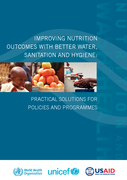
This document provides an overview of the evidence of nutrition gains that can be achieved with improved WASH, a description of key WASH practices, and practical knowledge and guidance on how to integrate WASH into nutrition programmes, including important monitoring and evaluation (M&E) aspects. Th...
WHO Guideline on self-care interventions for health and well-being, 2022 revision: executive summary
recommended
A global shortage of an estimated 18 million health workers is anticipated by 2030, a record 130 million people are in need of humanitarian assistance, and there is the global threat of pandemics such as COVID-19. At least 400 million people worldwide lack access to the most essential health service...

These country profiles present progress on implementation of policy recommendations of the Global Action Plan on Physical Activity (GAPPA) 2018-2030 in each country. They also present an estimate of the cost to health systems of not taking action to improve physical activity levels and reinforce th...

WHO Ghana 2022 annual report
recommended
“2022 was an eventful year for the WHO Country Office in Ghana,” says Dr Francis Kasolo, WHO Representative to Ghana.
In 2022, WHO Ghana collaborated with partners to deliver interventions in support of the Government of Ghana's health sector agenda to ensure healthy lives for all towards ach...

The annual bulletin of the Mekong Malaria Elimination (MME) programme is a yearly report that reviews ongoing efforts to combat multidrug resistance and eliminate malaria in the 6 countries of the Greater Mekong subregion (GMS): Cambodia, China (Yunnan province), Lao People's Democratic Republic, My...
