Filter
214
Text search:
non-endemic
countries
Featured
Recommendations
35
New Publications
42
Language
Document type
No document type
68
Studies & Reports
61
Guidelines
46
Manuals
14
Strategic & Response Plan
14
Fact sheets
5
Training Material
3
Dashboards/Maps
1
Situation Updates
1
Resource Platforms
1
Countries / Regions
Global
19
Latin America and the Carribbean
10
Congo, Democratic Republic of
6
India
6
Madagascar
6
Pakistan
5
South Africa
5
Ethiopia
4
Bangladesh
4
Guinea
3
Nigeria
3
Uganda
3
Afghanistan
3
West and Central Africa
3
Cameroon
2
Ghana
2
Zimbabwe
2
Philippines
2
Syria
2
Indonesia
2
Colombia
2
Botswana
2
Middle East and North Africa
2
Western and Central Europe
2
Africa
2
Venezuela
2
North America
2
Sierra Leone
1
Côte d’Ivoire / Ivory Coast
1
Somalia
1
Germany
1
Turkey
1
Chad
1
Rwanda
1
Mozambique
1
Central African Republic
1
Angola
1
Lesotho
1
Myanmar / Burma
1
Sri Lanka
1
East and Southern Africa
1
Eastern Europe
1
Authors & Publishers
Publication Years
Category
Countries
54
Clinical Guidelines
40
Public Health
16
Key Resources
10
Women & Child Health
5
Pharmacy & Technologies
3
Capacity Building
1
Toolboxes
NTDs
82
Rapid Response
28
Malaria
16
Cholera
8
Polio
7
Ebola & Marburg
5
2.0 Rapid Response
5
Planetary Health
4
Zika
2
Mental Health
2
Global Health Education
2
Disability
1
Conflict
1
Natural Hazards
1
Refugee
1
HIV
1
TB
1
Specific Hazards
1
AMR
1
Caregiver
1
Pharmacy
1
Health Financing Toolbox
1
The Sierra Leone National Infection Prevention and Control Guidelines were jointly developed and updated by the Ministry of Health and Sanitation in collaboration with the World Health Organization and the US Centers for Disease Control and Prevention.
La leishmaniasis es un problema creciente de salud pública en el contextomundial. En Colombia, la situación es de alarma debido al incremento de casos de leishmaniasis cutánea que se viene registrando desde 2003 y el cambio en el patrón epidemiológico dado por la aparición de nuevos focos, el
...
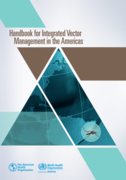
This document compiles the recommendations made by the World Health Organization (WHO) and the Pan American Health Organization (PAHO) to help professionals in charge of vector control programs in Latin America and the Caribbean at the national, subnational, and local level update their knowledge in
...
Early detection, assessment and response to acute public health events:
BMC Res Notes (2016) 9:182 DOI 10.1186/s13104-016-1993-7
El presente documento reúne un conjunto de recomendaciones formuladas por la Organización Mundial de la Salud (OMS) y la Organización Panamericana de la Salud (OPS) para ayudar, a los profesionales encargados de los programas de control de vectores de Latinoamérica y el Caribe a nivel nacional,
...

The main objective of the malaria prevention and control programme in Somalia is to prevent mortality and reduce morbidity due to malaria. The groups most vulnerable to the disease, children aged under 5 years and pregnant women, are especially targeted. Effective case management - early diagnosis a
...
This manual is intended to enable WASH practitioners
who work in Mozambique to contribute to the
reduction of WASH-preventable NTDs.
Indoor residual spraying (IRS) involves applying residual insecticide to potential vector resting sites on the interior surfaces of human dwellings or other buildings. The main aim of IRS is to kill vectors before they are able to transmit pathogens to humans. When carried out correctly, IRS has his
...