
Filter
286
Text search:
UNICEF
Bangladesh
Featured
Recommendations
35
New Publications
84
Language
Document type
No document type
166
Studies & Reports
51
Guidelines
34
Manuals
19
Strategic & Response Plan
5
Situation Updates
4
Training Material
3
Resource Platforms
2
Fact sheets
2
Countries / Regions
Global
24
Bangladesh
23
Nepal
14
Myanmar / Burma
11
India
7
Asia
6
South–East Asia Region
5
Ethiopia
4
Uganda
4
Zimbabwe
3
Tanzania
3
Senegal
2
Philippines
2
Pakistan
2
South Sudan
2
Kenya
2
Cambodia
2
Indonesia
2
Malawi
2
Mozambique
2
Sri Lanka
2
Guinea
1
Sierra Leone
1
Liberia
1
Nigeria
1
Niger
1
Haiti
1
Somalia
1
Afghanistan
1
Zambia
1
Syria
1
Thailand
1
Rwanda
1
Central African Republic
1
Eswatini/ Swaziland
1
Other region
1
Africa
1
Bhutan
1
Venezuela
1
Laos
1
Russia
1
Authors & Publishers
Publication Years
Category
Countries
71
Women & Child Health
46
Key Resources
39
Clinical Guidelines
23
Public Health
12
Capacity Building
5
Pharmacy & Technologies
2
Toolboxes
COVID-19
32
Disability
22
HIV
16
Mental Health
15
Planetary Health
14
Caregiver
13
Conflict
9
Global Health Education
9
Natural Hazards
8
TB
7
Health Financing Toolbox
7
Refugee
6
NTDs
4
Ebola & Marburg
3
AMR
3
2.0 Rapid Response
3
Pharmacy
2
Rapid Response
1
Zika
1
Specific Hazards
1
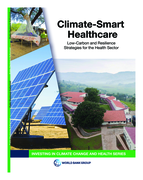
Climate change is damaging human health now and is projected to have a greater impact in the future. Low- and middle-income countries are seeing the worst effects as they are most vulnerable to climate shifts and least able to adapt given weak health systems and poor infrastructure. Low-carbon appro
...
La quatrième édition des Lignes directrices de l'OMS pour la qualité de l'eau potable s'appuie sur plus de 50 ans d'orientations sur la qualité de l'eau potable qui font autorité en matière de mesures de santé publique lorsqu’il s’agit de mettre en place des réglementations et des normes
...
Revised and expanded version of the Guidelines
Prise en charge clinique des troubles mentaux,
neurologiques et liés à l'utilisation de substances
psychoactives dans les situations d'urgence humanitaire
23 December 2020 This document summarizes WHO recommendations for the rational use of personal protective equipment (PPE) in health care settings and temporary strategies during acute supply shortages. This document also contains 2 Annex sections describing updated PPE use recommendations for health
...

In March 2020 the IASC Reference Group on Mental Health and Psychosocial Support uniting 57 humanitarian organizations as member issued the Interim Briefing Note Addressing Mental Health and Psychosocial Aspects of COVID-19 Outbreak. This document has proven to be very useful in the response and has
...

Developing countries face disastrous healthcare setbacks, hunger and huge international debt as covid-19’s ‘final wave’

The impact of disasters and crises on agriculture and food security: 2021
Food and Agriculture Organization of the United Nations


This situation analysis has gathered information about the current state of AMR, contributing factors and antimicrobial use in Zimbabwe from the human, animal, agricultural and environmental sectors. Data has been gathered from different sectors such as the general public, academia, the Ministry of
...
It will be updated continuously.
Details of COVID-19 availability in all ten ASEAN countries and another 30 Asian nations.
Due to the developing situation in China and Asia concerning the Coronavirus, we will be operating this article as a running live update service to keep businesses involved in
...
In most contexts, the social stigma surrounding mental health issues exists because of cultural norms and a lack of understanding of mental health’s complexities and realities, resulting in isolation, increased vulnerability, and lack of support for people with mental health problems.
This stig
...
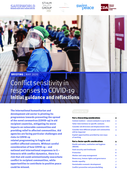
This paper aims to provide aid agencies with initial analysis and guidance to inform the design, implementation and adaptation of conflict-sensitive humanitarian and development responses to the COVID-19 pandemic. It presents a series of overarching considerations to take into account when determini
...
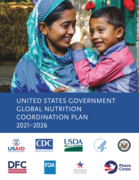
English Manual and Guideline on World about Food and Nutrition, Health and Epidemic; published on 30 Nov 2021 by USAID
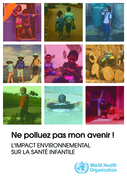
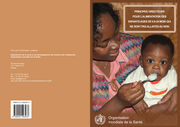
En 2015, 5,9 millions d'enfants de moins de cinq ans sont décédés (1). Les principales causes de mortalité infantile dans le monde sont la pneumonie, la prématurité, les complications durant l'accouchement, la septicémie néonatale, les anomalies congénitales, la diarrhée, les tra
...
