
Filter
426
Text search:
Road
map
2016
-2020
Featured
Recommendations
38
New Publications
130
Language
Document type
Studies & Reports
157
No document type
153
Strategic & Response Plan
50
Guidelines
34
Manuals
20
Situation Updates
5
Fact sheets
3
Training Material
2
Resource Platforms
1
Infographics
1
Countries / Regions
Global
30
Kenya
15
Myanmar / Burma
14
Tanzania
13
Latin America and the Carribbean
13
Uganda
12
Africa
11
Sierra Leone
10
Zambia
10
Nigeria
9
Nepal
9
Ethiopia
8
Ghana
8
South–East Asia Region
8
East and Southern Africa
7
Western and Central Europe
7
Congo, Democratic Republic of
6
India
6
South Africa
6
Bangladesh
6
Liberia
5
Haiti
5
Rwanda
4
Malawi
4
Namibia
4
Lesotho
4
West and Central Africa
4
Asia
4
Senegal
3
Cameroon
3
Zimbabwe
3
Philippines
3
South Sudan
3
Syria
3
Cambodia
3
Botswana
3
Eastern Europe and Central Asia
3
Timor Leste/ East Timor
3
Guinea
2
Somalia
2
Thailand
2
China
2
Central African Republic
2
Middle East and North Africa
2
Western Pacific Region
2
Venezuela
2
Moldova
2
Vietnam
2
Burkina Faso
1
Mali
1
Côte d’Ivoire / Ivory Coast
1
USA
1
Pakistan
1
Jordan
1
Afghanistan
1
Lebanon
1
Chad
1
Indonesia
1
Mozambique
1
Papua New Guinea
1
Sudan
1
Argentina
1
Peru
1
Eswatini/ Swaziland
1
North Macedonia
1
Croatia
1
Burundi
1
Ukraine
1
Colombia
1
Libya
1
Angola
1
Mexico
1
Yemen
1
Paraguay
1
Eastern Europe
1
Palestine
1
Armenia
1
Southern Africa
1
Laos
1
North America
1
Gabon
1
Authors & Publishers
Publication Years
Category
Countries
206
Public Health
25
Key Resources
22
Clinical Guidelines
20
Women & Child Health
15
Capacity Building
2
Pharmacy & Technologies
1
Toolboxes
Planetary Health
45
NTDs
41
HIV
30
COVID-19
19
Mental Health
16
Global Health Education
15
AMR
14
NCDs
13
TB
10
Health Financing Toolbox
10
Refugee
9
Caregiver
9
Disability
7
Natural Hazards
7
Malaria
6
Conflict
5
Cholera
3
Ebola & Marburg
2
Polio
2
Rapid Response
2
Zika
1
Pharmacy
1
2.0 Rapid Response
1
At least 2.2 million people were exposed to the earthquake, about 2,100 people have died, and more than 12,000 were injured as at 20 August. The death toll is expected to rise as the search for victims trapped under rubble continues. The Government has declared a month-long state of emergency for th
...
It provides insight into WHO’s work that aims to improve the health of the people of the United Republic of Tanzania in collaboration with key stakeholders.
The Zimbabwe Multi-Sectoral Cholera Elimination Plan (2018–2028) aims to eradicate cholera by improving water, sanitation, and healthcare infrastructure, strengthening disease surveillance, and expanding oral cholera vaccination (OCV). The strategy focuses on five pillars, including public health
...

Available in French and English
Ocean plastic pollution has reached crisis level: every minute, more than an entire garbage truck of plastic makes its way into the world’s oceans—roughly 11 million metric tons annually. While plastic waste presents an immediate threat to marine wildlife and ecosystems, this global challenge al
...

OECD Development Policy Tools
Recognising that donor policies and responses constantly evolve, this guidance recommends that donors operating in situations of forced displacement prioritise three broad areas of work, where they can best contribute to existing capacities at the national, regiona ...
Recognising that donor policies and responses constantly evolve, this guidance recommends that donors operating in situations of forced displacement prioritise three broad areas of work, where they can best contribute to existing capacities at the national, regiona ...

In 2009, WHO’s Second International Conference on Buruli Ulcer Control and Research resolved to strengthen the capacity of national laboratories to confirm cases of the disease, but advised that “efforts are still needed to develop simple diagnostic tools usable in the field as well as disabilit
...

In 2018, the Intergovernmental Panel on Climate Change announced that to restrict global temperature rise to 1·5°C, greenhouse gas emissions must decrease 45% by 2030 compared with 2010, and reach net zero by 2050.1

Country Strategic Plan Evaluations (CSPEs) encompass the WFP strategy and entirety of WFP activities during a specific period. Their purpose is twofold: 1) to provide evaluation evidence and learning on WFP's performance for country-level strategic decisions, specifically for developing the next Cou
...
The United Nations Development Assistance Framework (UNDAF) 2018-2022 sets out the UN partnership aiming to support Nepal as it carves out its development agenda over the next five years. At the core of this new UNDAF are the SDGs, the Government of Nepal’s Fourteenth Plan, and international commi
...

Reflecting its commitment to achieving the Sustainable Development Goals (SDGs), Namibia volunteered to undertake a second national review of the SDGs in 2021. The focus is on three SDG dimensions, namely, Economic, Social, and Environmental. These three dimensions are comprehensively integrated in
...
Tackling Tuberculosis in Under-Served Populations: A Resource for TB Control Boards and their partners

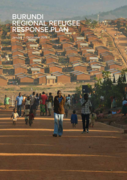
As the Burundi refugee crisis enters its fourth year, some 430,000 Burundian refugees are being hosted across the region by the governments and people of Tanzania, Rwanda, the Democratic Republic of the Congo, and Uganda. Although the spectre of mass violence in Burundi has receded, with the politic
...

Climate change is a growing concern for Bangladesh because 90 percent of the country is approximately 10 feet above sea level. An evaluation was completed which discovered that high tides in Bangladesh were increasing 10 times more rapidly than the global average. This predicted rapid increase in se
...
