
Filter
264
Text search:
Polio
Global
Eradication
Initiative
Featured
Recommendations
14
New Publications
91
Language
Document type
No document type
163
Studies & Reports
37
Guidelines
30
Strategic & Response Plan
19
Manuals
7
Fact sheets
3
Training Material
2
Situation Updates
2
Resource Platforms
1
Countries / Regions
Nigeria
17
Global
17
Pakistan
11
India
10
Afghanistan
10
Africa
7
Sierra Leone
6
Congo, Democratic Republic of
6
Nepal
6
Liberia
5
Ghana
5
Uganda
5
Namibia
5
Ukraine
5
Latin America and the Carribbean
5
Ethiopia
4
Philippines
4
Somalia
3
South Sudan
3
Kenya
3
South Africa
3
Myanmar / Burma
3
Guinea
2
Senegal
2
Germany
2
Zambia
2
Syria
2
Bangladesh
2
Chile
2
Middle East and North Africa
2
Niger
1
Zimbabwe
1
Tanzania
1
Indonesia
1
Malawi
1
Mozambique
1
Papua New Guinea
1
Central African Republic
1
Argentina
1
Peru
1
Eswatini/ Swaziland
1
Brazil
1
Colombia
1
Botswana
1
Bolivia
1
Angola
1
Madagascar
1
Lesotho
1
South–East Asia Region
1
Western and Central Europe
1
Venezuela
1
Mongolia
1
Russia
1
Authors & Publishers
Publication Years
Category
Countries
98
Clinical Guidelines
21
Women & Child Health
16
Public Health
12
Key Resources
7
Pharmacy & Technologies
4
Capacity Building
1
Toolboxes
Polio
62
COVID-19
25
Health Financing Toolbox
12
Rapid Response
10
Conflict
9
Global Health Education
9
Disability
5
Ebola & Marburg
5
NTDs
5
Refugee
4
HIV
4
Caregiver
4
2.0 Rapid Response
4
Cholera
2
TB
2
Planetary Health
2
Pharmacy
2
NCDs
2
Natural Hazards
1
Mental Health
1
Specific Hazards
1
AMR
1
Malaria
1
(Last Update: July 2022)

A Focus on the Journey to Self-Reliance for Preventing Child and Maternal Deaths . June 2018
The 2018 Acting on the Call report focuses on 25 countries’ journeys to self-reliance for preventing child and maternal deaths. Self-reliance is a country’s ability to finance and implement solution ...
The 2018 Acting on the Call report focuses on 25 countries’ journeys to self-reliance for preventing child and maternal deaths. Self-reliance is a country’s ability to finance and implement solution ...
WHO-2019-nCoV-genomic_sequencing

This document seeks to help health communication professionals working on the topic of immunization more effectively communicate about Events Supposedly Attributed to Vaccination and Immunization (ESAVI) by building trust in National Immunization Programs, understanding risk perceptions related to v
...
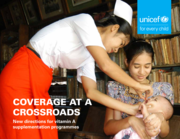
In where under-five mortality is high and vitamin A deficiency is a public health problem, two high-dose supplements of vitamin A per year, spaced four to six months apart, can strengthen children’s immune systems and improve their chances of survival.
During much of early childhood – from ...
During much of early childhood – from ...
Lancet Infect Dis 2020 Published Online May 5, 2020 https://doi.org/10.1016/ S1473-3099(20)30254-1
Early detection, assessment and response to acute public health events:
DHS Further Analysis Reports No. 103

The purpose of this booklet is to assist WHO and other
Public Health workers in the field when an emergency
occurs. The booklet provides technical hints on how to
carry out a rapid health assessment, how to facilitate
coordination, how departments in WHO can assist, etc.
Standard formats for re
...
Bull World Health Organ 2020;98:773–780
Universal health coverage (UHC) depends on a strong primary health-care
system. To be successful, primary health care must be expanded at community and household levels as much of the world’s population still lacks access to health facilities for basic
...


It provides insight into WHO’s work that aims to improve the health of the people of the United Republic of Tanzania in collaboration with key stakeholders.
Noma (cancrum oris) is a severe gangrenous disease of the mouth and face. It mostly affects children between the ages of 2 and 6 years living in extreme poverty. In addition to the known factors such as malnutrition, lack of vaccination in children and poor oral hygiene, several social and environme
...
