
Filter
1055
Text search:
Peripheral
blood
Featured
163
302
Language
Document type
565
239
121
68
23
22
13
2
1
1
Countries
141
48
44
31
28
22
19
19
18
16
16
15
15
15
14
13
13
12
10
10
7
7
7
6
6
6
6
5
5
5
5
5
5
5
4
4
3
3
3
3
3
3
2
2
2
2
2
2
2
2
1
1
1
1
1
1
1
1
1
1
1
1
1
1
1
1
1
1
1
1
1
1
1
1
1
1
1
1
1
1
1
1
1
1
1
1
1
1
Authors & Publishers
Publication Years
Category
459
198
79
40
33
24
19
Toolboxes
90
75
67
51
30
29
29
28
27
27
25
12
12
11
8
8
8
8
7
7
6
6
2
1
1

Accessed Febr. 6, 2020
The WHO COVID-19 LENS (Living Evidence Synthesis) working group consolidated available evidence, based on rapid reviews of the literature and results of a living systematic review on pregnancy and COVID-19 (up to October 7, 2020), on potential mechanisms of vertical transmission of infectious pathog
...
These guidelines are based on the 3rd Edition of the WHO Guidelines (Published 2015) World Health Organization’s Guidelines for the treatment of malaria. Additional literature surveys have been undertaken. Factors that were considered in the choice of therapeutic options included effectiveness, sa
...

Glob Heart . 2020 Oct 13;15(1):69. doi: 10.5334/gh.891.
Panels Recommendation Updated Dec 2024
Abstract: Chagas disease is caused by infection with the protozoan Trypanosoma cruzi, and although over 100 years have passed since the discovery of Chagas disease, it still presents an increasing problem for global public health. A plethora of information concerning the chronic phase of human Chaga
...

Revised and expanded version of the Guidelines
Research and Reports in Tropical Medicine 2022:13 25–40.
Chagas disease (CD) is caused by the parasite Trypanosoma cruzi, and it is endemic in Central, South America, Mexico and the South of the United States. It is an important cause of early mortality and morbidity, and it is associated with po
...
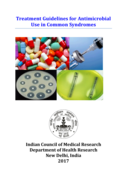
The publication of the of the Antimicrobial Treatment Guidelines represents the
culmination of the efforts of the Antimicrobial Stewardship Program of ICMR to publish treatment guidelines for common syndromes in India. These guidelines are targeted for the health care settings. It aims to rationali
...
Training in monitoring and epidemiological assessment of mass drug administration for eliminating lymphatic filariasis: learners’ guide. World Health Organization.
Journal of Computational Biophysics and ChemistryVol. 22, No. 01, pp. 31-41 (2023)
Front. Trop. Dis. , 09 May 2023 Sec. Neglected Tropical Diseases Volume 4 - 2023 | https://doi.org/10.3389/fitd.2023.1087003

The guidelines are primarily intended for health-care professionals working in first- or second-level health-care facilities, including emergency, inpatient and outpatient services. They are also directed at policy-makers, health-care planners and programme managers, academic institutions, non-gover
...

WHO guidelines on meningitis diagnosis, treatment and care. Web Annex C. Evidence-to-Decision frameworks
recommended
The guidelines are primarily intended for health-care professionals working in first- or second-level health-care facilities, including emergency, inpatient and outpatient services. They are also directed at policy-makers, health-care planners and programme managers, academic institutions, non-gover
...

WHO recommends artemisinin-based combination therapies for treating uncomplicated malaria, alongside studies to monitor treatment effectiveness. Given the threat of antimalarial resistance, including partial resistance in several African countries, molecular tools are vital for tracking resistance.
...
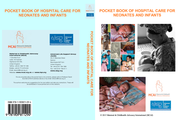
This 277 page pocketbook is a summary of the emergency components of basic neonatal and older infants hospital care from our 900 page textbook “International Maternal & Childhealth Care. A practical manual for hospitals worldwide”.
If you work in a hospital in a low income country - providin
...

Accessed Febr. 6, 2020
The Practical Approach to Emergencies in the Pregnant Mother, Newborn infant and Child. Provder Manual
