
Filter
1904
Text search:
Neglected
Diseases
Featured
174
371
Language
1763
148
132
57
51
33
33
26
3
2
1
1
1
1
1
1
1
1
1
1
1
1
1
1
1
1
1
1
1
1
Document type
689
529
195
105
103
82
73
41
24
19
16
10
9
7
2
Countries
241
52
43
36
35
32
31
30
28
26
25
22
21
19
18
16
16
16
16
15
14
14
13
12
11
11
11
10
10
10
9
9
8
8
8
7
7
7
6
6
6
6
5
5
5
4
4
4
4
4
4
3
3
3
3
2
2
2
2
2
2
2
2
2
2
2
2
2
2
2
2
2
1
1
1
1
1
1
1
1
1
1
1
1
1
1
1
1
1
1
1
1
1
1
1
1
1
1
1
1
1
1
1
1
1
1
Authors & Publishers
216
203
62
58
56
37
23
23
22
22
17
14
14
11
10
10
9
9
8
7
7
7
7
6
6
6
6
6
6
5
5
5
5
5
5
5
5
5
5
4
4
4
4
4
4
4
4
4
4
4
4
4
4
4
4
4
4
4
4
4
3
3
3
3
3
3
3
3
3
3
3
3
3
3
3
3
3
3
3
3
3
3
3
3
3
3
3
3
3
3
3
3
3
3
3
3
3
3
3
3
3
3
3
3
3
3
2
2
2
2
2
2
2
2
2
2
2
2
2
2
2
2
2
2
2
2
2
2
2
2
2
2
2
2
2
2
2
2
2
2
2
2
2
2
2
2
2
2
2
2
2
2
2
2
2
2
2
2
2
2
2
2
2
2
2
2
2
2
2
2
2
2
2
2
2
2
2
2
2
2
2
2
2
2
2
2
2
2
2
2
2
2
2
2
2
2
2
2
2
2
2
2
2
2
2
2
2
2
2
2
2
2
2
2
2
2
2
2
2
2
2
2
1
1
1
1
1
1
1
1
1
1
1
1
1
1
1
1
1
1
1
1
1
1
1
1
1
1
1
1
1
1
1
1
1
1
1
1
1
1
1
1
1
1
1
1
1
1
1
1
1
1
1
1
1
1
1
1
1
1
1
1
1
1
1
1
1
1
1
1
1
1
1
1
1
1
1
1
1
1
1
1
1
1
1
1
1
1
1
1
1
1
1
1
1
1
1
1
1
1
1
1
1
1
1
1
1
1
1
1
1
1
1
1
1
1
1
1
1
1
1
1
1
1
1
1
1
1
1
1
1
1
1
1
1
1
1
1
1
1
1
1
1
1
1
1
1
1
1
1
1
1
1
1
1
1
1
1
1
1
1
1
1
1
1
1
1
1
1
1
1
1
1
1
1
1
1
1
1
1
1
1
1
1
1
1
1
1
1
1
1
1
1
1
1
1
1
1
1
1
1
1
1
1
1
1
1
1
1
1
1
1
1
1
1
1
1
1
1
1
1
1
1
1
1
1
1
1
1
1
1
1
1
1
1
1
1
1
1
1
1
1
1
1
1
1
1
1
1
1
1
1
1
1
1
1
1
1
1
1
1
1
1
1
1
1
1
1
1
1
1
1
1
1
1
1
1
1
1
1
1
1
1
1
1
1
1
1
1
1
1
1
1
1
1
1
1
1
1
1
1
1
1
1
1
1
1
1
1
1
1
1
1
1
1
1
1
1
1
1
1
1
1
1
1
1
1
1
1
1
1
1
1
1
1
1
1
1
1
1
1
1
1
1
1
1
1
1
1
1
1
1
1
1
1
1
1
1
1
1
1
1
1
1
1
1
1
1
1
1
1
1
1
1
1
1
1
1
1
1
1
1
1
1
1
1
1
1
1
1
1
1
1
1
1
1
1
1
1
1
1
1
1
1
1
1
1
1
1
1
1
1
1
1
1
1
1
1
1
1
1
1
1
1
1
1
1
1
1
1
1
1
1
1
1
1
1
1
1
1
1
1
1
1
1
1
1
1
1
1
1
1
1
1
1
1
1
1
1
1
1
1
1
1
1
1
1
1
1
1
1
1
1
1
1
1
1
1
1
1
1
1
1
1
1
1
1
1
1
1
1
1
1
1
1
1
1
1
1
1
1
1
1
1
1
1
1
1
1
1
1
1
1
1
1
1
1
1
1
1
1
1
1
1
1
1
1
1
1
1
1
1
1
1
1
1
1
1
1
1
1
1
1
1
1
1
1
1
1
1
1
1
1
1
1
1
1
1
1
1
1
1
1
1
1
1
1
1
1
1
1
1
1
1
1
1
1
1
1
1
1
1
1
1
1
1
1
1
1
1
1
1
1
1
1
1
1
1
1
1
1
1
1
1
1
1
1
1
1
1
1
1
1
1
1
1
1
1
1
1
1
1
1
1
1
1
1
1
1
1
1
1
1
1
1
1
1
1
1
1
1
1
1
1
1
1
1
1
1
1
1
1
1
1
1
1
1
1
1
1
1
1
1
1
1
1
1
1
1
1
1
1
1
1
1
1
1
1
1
1
1
1
1
1
1
1
1
1
1
1
1
1
1
1
1
1
1
1
1
1
1
1
1
1
1
1
1
1
1
1
1
1
1
1
1
1
1
1
1
1
1
1
1
1
1
1
1
1
1
1
1
1
1
1
1
1
1
1
1
1
1
1
1
1
1
1
1
1
1
1
1
1
1
1
1
1
1
1
1
1
1
1
1
1
1
1
1
1
1
1
1
1
1
1
1
1
1
1
1
1
1
1
1
1
1
1
1
1
1
1
1
1
1
1
1
1
1
1
1
1
1
1
1
1
1
1
1
1
1
1
1
1
1
1
1
1
1
1
1
1
1
1
1
1
1
1
1
1
1
1
1
1
1
1
1
1
1
1
1
1
1
1
1
1
1
1
1
1
1
1
1
1
1
1
1
1
1
1
1
1
1
1
1
1
1
1
1
1
1
1
1
1
1
1
1
1
1
1
1
1
1
1
1
1
1
1
1
1
1
1
1
1
1
1
1
1
1
1
1
1
1
1
1
1
1
1
1
1
1
1
1
1
1
1
1
1
1
1
1
1
1
1
1
1
1
1
1
1
1
1
1
1
1
1
1
1
1
1
1
1
1
1
1
1
1
1
1
1
1
1
1
1
1
1
1
1
1
1
1
1
1
1
1
1
1
1
1
1
1
1
1
1
1
1
1
1
1
1
1
1
1
1
1
1
1
1
1
1
1
1
1
1
1
1
1
1
1
1
1
1
1
1
1
1
1
1
1
1
1
1
1
1
1
1
1
1
1
1
1
1
1
1
1
1
1
1
1
1
1
1
1
1
1
1
1
1
1
1
1
1
1
1
1
1
1
1
1
1
1
1
1
1
1
1
1
1
1
1
1
1
1
1
1
1
1
1
1
1
1
1
1
1
1
1
1
1
1
1
1
1
1
1
1
1
1
1
1
1
1
1
1
1
1
1
1
1
1
1
1
1
1
1
1
1
1
1
1
1
1
1
1
1
1
1
1
1
1
1
1
1
1
1
1
1
1
1
1
1
1
1
1
1
1
1
1
1
1
1
1
1
1
1
1
1
1
1
1
1
1
1
1
1
1
1
1
1
1
1
1
1
1
1
1
1
1
1
1
1
1
1
1
1
1
1
1
1
1
1
1
1
1
1
1
1
1
1
1
1
1
1
1
1
1
1
1
1
1
1
1
1
1
1
1
1
1
1
1
1
1
1
1
1
1
1
1
1
1
1
1
1
1
1
1
1
1
1
1
1
1
1
1
1
1
1
1
1
1
1
1
1
1
1
1
1
1
1
1
1
1
1
1
1
1
1
1
1
1
1
1
1
1
1
1
1
1
1
1
1
1
1
1
1
1
1
1
1
1
1
1
1
1
1
1
1
1
1
1
1
1
1
1
1
1
1
1
1
1
1
1
1
1
1
1
1
1
1
1
1
1
1
1
1
1
1
1
1
1
1
1
1
1
1
1
1
1
1
1
1
1
1
1
1
1
1
1
1
1
1
1
1
1
1
1
1
1
1
1
1
1
1
1
1
1
1
1
1
1
1
1
1
1
1
1
1
1
1
1
1
1
1
1
1
1
1
1
1
1
1
1
1
1
1
1
1
1
1
1
1
1
1
1
1
1
1
1
1
1
1
1
1
1
1
1
1
1
1
1
1
1
1
1
1
1
1
1
1
1
1
1
1
1
1
1
1
1
1
1
1
1
1
1
1
1
1
1
1
1
1
1
1
1
1
1
1
1
1
1
1
1
1
1
1
1
1
1
1
1
1
1
1
1
1
1
1
1
1
1
1
1
1
1
1
1
1
1
1
1
1
1
1
1
1
1
1
1
1
1
1
1
1
1
1
1
1
1
1
1
1
1
1
1
1
1
1
1
1
1
1
1
1
1
1
1
1
1
1
1
1
1
Publication Years
783
1001
107
13
Category
445
179
134
78
63
28
27
1
Toolboxes
712
90
75
61
60
54
52
39
31
31
31
30
30
24
24
19
16
13
12
12
12
10
9
7
3

Health communication has proven to play a crucial role in addressing diseases such as dengue, Zika and chikungunya, for which there are no definitive or easily accessible vaccines. In this context, this discipline becomes a fundamental tool to promo
...
te the change behavior and promote preventive practices that reduce the transmission of these diseases. By not having a definitive medical solution, accurate and timely information, effectively disseminated through educational campaigns, media and communication channels public health, can significantly influence individual and community actions to control the spread of these mosquito-borne viruses. The accumulated research around the threat of the aforementioned arboviral diseases brings together a series of recommendations around specific communication activities, such as disseminating timely and accurate information that integrates public health concerns and the needs of information of the population, especially vulnerable groups such as women of childbearing age, pregnant women and health workers.
more

Indoor residual spraying (IRS) involves applying residual insecticide to potential vector resting sites on the interior surfaces of human dwellings or other buildings. The main aim of IRS is to kill vectors before they are able to transmit pathogens to humans. When carried out correctly, IRS has his
...
torically been shown to be a powerful intervention to reduce adult vector density and longevity for mosquitoes, sand flies and triatomine bugs and can reduce the transmission of vector-borne diseases.
more
Clinical and Laboratory Diagnosis of Buruli Ulcer Disease: A Systematic Review
Sakyi; S.A.; Aboagye, S. Y.; Otchere, I. D. ; et al
The Canadian Journal of Infectious Diseases & Medical Microbiology
(2016)
C1
Volume 2016 | Article ID 5310718 | https://doi.org/10.1155/2016/5310718. Buruli ulcer (BU) is a necrotizing cutaneous infection caused by Mycobacterium ulcerans. Early diagnosis is crucial to prevent morbid effects and misuse of drugs. We review developments in laboratory diagnosis of BU, discuss li
...
mitations of available diagnostic methods, and give a perspective on the potential of using aptamers as point-of-care.
more

Engagement à mettre fin aux NTDs
Clnical and microbiological predictors of healing in Buruli ulcer disease
Agbavor B.; Agbanyo A.; Loglo A. et al.
Journal of Clinical Tuberculosis and Other Mycobacterial Diseases
(2024)
C2
Wound measurements are relevant in monitoring the rate of healing (RoH) and may predict time to healing. Predicting the time to healing can help improve the management of Buruli ulcer. We examine three methods for the determination of RoH and their use as predictors of time to healing.
Clinical and microbiological predictors of healing in Buruli ulcer disease
Agbavor B.; Agbanyo A.; Loglo A. et al.
Journal of Clinical Tuberculosis and Other Mycobacterial Diseases
(2024)
C2
Wound measurements are relevant in monitoring the rate of healing (RoH) and may predict time to healing. Predicting the time to healing can help improve the management of Buruli ulcer. We examine three methods for the determination of RoH and their use as predictors of time to healing.
The Lancet olume 395, ISSUE 10232, P1259-1267, April 18, 2020. Buruli ulcer is a neglected tropical disease caused by Mycobacterium ulcerans infection that damages the skin and subcutis. It is most prevalent in western and central Africa and Austral
...
ia. Standard antimicrobial treatment with oral rifampicin 10 mg/kg plus intramuscular streptomycin 15 mg/kg once daily for 8 weeks (RS8) is highly effective, but streptomycin injections are painful and potentially harmful. We aimed to compare the efficacy and tolerability of fully oral rifampicin 10 mg/kg plus clarithromycin 15 mg/kg extended release once daily for 8 weeks (RC8) with that of RS8 for treatment of early Buruli ulcer lesions.
more
Nat Commun 9, 5370 (2018). https://doi.org/10.1038/s41467-018-07804-8. Mycobacterium ulcerans is the causative agent of Buruli ulcer, a neglected tropical skin disease that is most commonly found in children from West and Central Africa. Despite the
...
severity of the infection, therapeutic options are limited to antibiotics with severe side effects. Here, we show that M. ulcerans is susceptible to the anti-tubercular drug Q203 and related compounds targeting the respiratory cytochrome bc1:aa3. While the cytochrome bc1:aa3 is the primary terminal oxidase in Mycobacterium tuberculosis, the presence of an alternate bd-type terminal oxidase limits the bactericidal and sterilizing potency of Q203 against this bacterium. M. ulcerans strains found in Buruli ulcer patients from Africa and Australia lost all alternate terminal electron acceptors and rely exclusively on the cytochrome bc1:aa3 to respire. As a result, Q203 is bactericidal at low dose against M. ulcerans replicating in vitro and in mice, making the drug a promising candidate for Buruli ulcer treatment.
more

The Fifty-first World Health Assembly,
Recalling resolutions WHA22.29, WHA25.55 and WHA28.54 on the prevention of blindness, and
WHA45.10 on disability prevention and rehabilitation; Aware of previous efforts and progress made in the global fight against infectious eye
...
diseases, in particular trachoma; Noting that blinding trachoma still constitutes a serious public health problem amongst the poorest populations in 46 endemic countries.
more
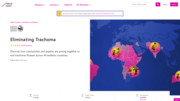
Trachoma is a neglected tropical disease. It occurs in some of the poorest populations with limited access to clean water, sanitation, and healthcare, and is the leading cause of blindness in the world. Based on 2020 data, it is estimated that 137 m
...
illion people are at risk of trachoma in 44 endemic countries.
more
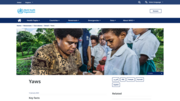
Yaws forms part of a group of chronic bacterial infections commonly known as the endemic treponematoses. These diseases are caused by spiral bacteria of the genus Treponema, which also includes endemic syphilis (bejel) and pinta. Yaws is the most co
...
mmon of these three infections.
more
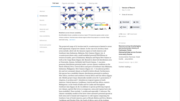
eLife 2020;9:e52072. The Triatominae are vectors for Trypanosoma cruzi, the aetiological agent of the neglected tropical Chagas disease. Their distribution stretches across Latin America, with some species occurring outside of the Americas. In parti
...
cular, the cosmopolitan vector, Triatoma rubrofasciata, has already been detected in many Asian and African countries. We applied an ensemble forecasting niche modelling approach to project the climatic suitability of 11 triatomine species under current climate conditions on a global scale. Our results revealed potential hotspots of triatomine species diversity in tropical and subtropical regions between 21 ̊N and 24 ̊S latitude. We also determined the climatic suitability of two temperate species (T. infestans, T. sordida) in Europe, western Australia and New Zealand. Triatoma rubrofasciata has been projected to find climatically suitable conditions in large parts of coastal areas throughout Latin America, Africa and Southeast Asia, emphasising the importance of an international vector surveillance program in these regions.
more
Chagas disease is a neglected tropical disease caused by the protozoan parasite Trypanosoma cruzi. It is a significant public health problem, affecting millions of people worldwide. And although it was described 110 years ago, only two old nitrohete
...
rocyclic drugs, benznidazole and nifurtimox, are currently available for the treatment of Chagas disease and both have several limitations. Besides the clear unmet medical need, many challenges preclude the development of new treatments, some of them related to a lack of understanding of the pathophysiology of the disease and parasite-host interactions. New knowledge and tools are becoming available, but the number of new chemical entities progressing through the preclinical pipeline is inadequate. Therefore, it is still uncertain whether safe, effective and accessible new drugs will be available in the near future. The Chagas disease research community must commit to even greater collaboration to ensure that patients eventually benefit from better treatments.
more
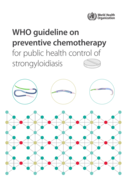
WHO guideline on preventive chemotherapy for public health control of strongyloidiasis
recommended
Human strongyloidiasis is a chronic parasitic disease caused by infection with Strongyloides stercoralis, a soil-transmitted helminth that is estimated to infect 300–600 million people worldwide. This neglected tropical disease (NTD) is endemic gl
...
obally, predominately in the South-East Asia, African and Western Pacific regions, and in South and Central America. Strongyloidiasis has a wide range of clinical presentations, including subclinical disease, symptomatic disease (often with diarrhoea, abdominal pain and urticaria) and a rare but deadly complication of hyperinfection with disseminated disease. The feared complication of disseminated strongyloidiasis can occur in the setting of immunocompromising conditions (e.g. human T-cell lymphotropic virus type 1 infection and malignancies) or immunosuppressive medications (e.g. steroids) and has an estimated case-fatality rate exceeding 60%. The standard treatment for chronic S. stercoralis infection is oral medication with ivermectin.
more
Chagas disease is a parasitic, systemic, and chronic disease caused by the protozoan Trypanosoma cruzi, with risk factors strongly link to low socioeconomic factors. Chagas disease is considered a neglected tropical disease. It is endemic in 21 coun
...
tries in the Americas, although the migration of infected people can transport the disease to non-endemic countries of America and the world.
more
Buruli ulcer (BU), a neglected tropical disease (NTD), is an infection of the skin and subcutaneous tissue caused by Mycobacterium ulcerans. The disease has been documented in many South American, Asian, and Western Pacific countries and is widesp
...
read throughout much of Africa, especially in West and Central Africa.
more
Leishmaniasis is a neglected tropical disease that predominantly affects impoverished populations. It remains a significant health issue in four eco-epidemiological regions: the Americas, East Africa, North Africa, and West Asia and Southeast Asia.
...
According to WHO’s Weekly epidemiological record (WER), 99 countries and territories are endemic for leishmaniasis. The cutaneous form of the disease, which is widespread globally, is endemic in 90 countries, while the more severe visceral form is endemic in 80 countries.
more
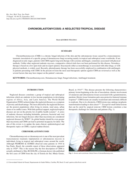
Chromoblastomycosis (CMB) is a chronic fungal infection of the skin and the subcutaneous tissue caused by a transcutaneous traumatic inoculation of a specific group of dematiaceous fungi occurring mainly in tropical and subtropical zones worldwide. If not diagnosed at early stages, patients with CBM
...
require long term therapy with systemic antifungals, sometimes associated with physical methods. Unlike other neglected endemic mycoses, comparative clinical trials have not been performed for this disease. Nowadays, therapy is based on a few open trials and on expert opinion. Itraconazole either as monotherapy or associated with other drugs, or with physical methods, is widely used. Recently, photodynamic therapy has been successfully employed in combination with antifungals in patients presenting with CBM. In the present revision the most used therapeutic options against CBM are reviewed as well as the several factors that may have impact on the patient's outcome.
more


Fexinidazole and Human African Trypanosomiasis: good news for this important neglected tropical disease
Bayão T.S., Cupertino M.C., Gomes A.P. et al
Journal of the Brazilian Society of Tropical Medicine
(2019)
C2
Human African trypanosomiasis (HAT), or sleeping sickness, is an endemic disease in 36 sub-Saharan African countries, typically occurring in underdeveloped areas, where
health systems face significant difficulties of diverse natures.
