
Filter
2913
Text search:
Family
Welfare
Featured
Recommendations
184
New Publications
985
Language
Document type
No document type
1958
Studies & Reports
353
Guidelines
252
Manuals
127
Strategic & Response Plan
70
Training Material
43
Fact sheets
35
Infographics
29
Situation Updates
19
Resource Platforms
12
Videos
9
Brochures
5
App
1
Countries / Regions
India
568
Bangladesh
126
Liberia
98
Tanzania
89
Global
66
Myanmar / Burma
65
Sierra Leone
61
Nepal
60
Western and Central Europe
55
Kenya
54
Namibia
46
Zambia
43
Malawi
43
Nigeria
42
Ghana
41
Philippines
40
South Africa
39
Lesotho
38
Zimbabwe
37
Uganda
34
Ethiopia
31
Indonesia
31
Rwanda
25
Africa
24
Germany
23
South–East Asia Region
23
Asia
23
Botswana
18
Ukraine
17
Latin America and the Carribbean
17
Syria
16
South Sudan
15
Cambodia
14
Mozambique
13
Eswatini/ Swaziland
13
Eastern Europe
13
Guinea
12
Congo, Democratic Republic of
12
Senegal
11
Pakistan
10
Vietnam
8
East and Southern Africa
7
Venezuela
7
Cameroon
6
Haiti
6
Thailand
6
Colombia
6
West and Central Africa
6
Middle East and North Africa
6
Western Pacific Region
6
Eastern Europe and Central Asia
6
Sudan
5
Brazil
5
Sri Lanka
5
Paraguay
5
Laos
5
Lebanon
4
Papua New Guinea
4
Yemen
4
Albania
4
Russia
4
Burkina Faso
3
Jordan
3
Benin
3
Peru
3
Ecuador
3
Bolivia
3
Greece
3
Southern Africa
3
Iraq
2
Gambia
2
China
2
Singapore
2
Central African Republic
2
North Macedonia
2
Other region
2
Bhutan
2
Poland
2
Tajikistan
2
Lithuania
2
Moldova
2
Iran
2
Jamaica
2
Mauritius
2
Mali
1
Guinea-Bissau
1
USA
1
Togo
1
Afghanistan
1
Turkey
1
Chad
1
Malaysia
1
Hungary
1
Burundi
1
El Salvador
1
Angola
1
Mexico
1
Chile
1
Fiji
1
Canada
1
Bulgaria
1
Romania
1
Kazakhstan
1
North America
1
Turkmenistan
1
Japan
1
Denmark
1
Belarus
1
Israel
1
Authors & Publishers
Publication Years
Category
Countries
1565
Women & Child Health
160
Public Health
122
Key Resources
101
Clinical Guidelines
94
Capacity Building
32
Pharmacy & Technologies
5
Annual Report MEDBOX
2
Toolboxes
Mental Health
300
COVID-19
207
Disability
200
HIV
149
TB
89
Refugee
88
Ebola & Marburg
71
Caregiver
70
Conflict
59
Global Health Education
48
Planetary Health
47
NTDs
47
Natural Hazards
32
AMR
29
Social Ethics
26
Pharmacy
26
NCDs
19
Rapid Response
18
Health Financing Toolbox
16
Malaria
14
Specific Hazards
8
Polio
6
Zika
6
2.0 Rapid Response
4
Cholera
3
Education of children with disabilities in India and Pakistan: An analysis of developments since 2000 | Background paper prepared for the Education for All Global Monitoring Report 2015 | Education for All 2000-2015: achievements and challenges
Recommandations pour une Approche de Santé publique.
Juin 2013.
Psychatry & Pediatrics
Chapter I.3
2nd Generation HIV Surveillance in Pakistan, Round 5
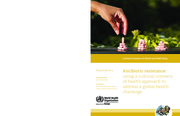
This policy brief has been developed in response to the contemporary challenge of antibiotic resistance (ABR). ABR poses a formidable threat to global health and sustainable development. It is now increasingly recognized that the systematic neglect of cultural factors is one of the biggest obs
...
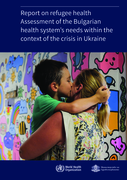
Since the beginning of the Ukraine crisis on 24 February 2022, WHO has supported Government-led efforts and initiatives alongside key partners on the ground. Building on efforts to date, and working alongside Bulgaria’s health authorities to bring added value to existing mechanisms, the WHO Countr
...

In Kenya, the bacterial infections that contribute most to human disease are often those in which re-‐sistance is most evident. Examples are multidrug-‐resistant enteric bacterial pathogens such as typhoid,
...

Globalization and Health201612:63; DOI: 10.1186/s12992-016-0195-3
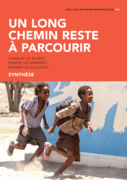
Combler les écarts
Rompre les barrières
Réparer les injustices
Synthèse
The number of COVID-19 cases is on the rise again, with South Africa nearing half of all confirmed cases in the WHO African Region. Threats of new variants loom and low vaccination coverage raises questions on the future of the response to COVID-19. Prevention remains the key strategy in most sub-Sa
...
Interim emergency guidelines
The guide book provides a set of tools and methods to assess existing structures and capacities of national, district and local institutions with responsibilities for Disaster Risk Management (DRM) in order to improve their effectiveness and the integration of DRM concerns into development planning,
...

People younger than 20 years comprise 35% of the global population and 40% of the global population of least-developed nations. The number of children - neonates, infants, children, and adolescents up to 19 years of age - who need pediatric palliative care (PPC) each year may be as high as 21 millio
...

Rabies is a fatal viral zoonosis and serious public health problem.1 All mammals are believed to be susceptible to the disease, and for the purposes of this document, use of the term animal refers to mammals. The disease is an acute, progressive encephalitis caused by viruses in the genus Lyssavirus
...
In 2022, WFP continued to implement its Country Strategic Plan (CSP) 2017-2023 in Namibia, contributing to the achievement of Sustainable Development Goals (SDG) 2 (Zero Hunger) and 17 (Partnerships for the Goals). Through WFP’s projects in 2022, a total of 32,610 people were reached, which is ne
...
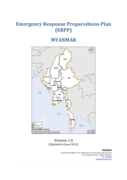
Myanmar is prone to various natural hazards that include earthquakes, floods, cyclones, droughts, fires, tsunamis, some of whichhave the potential to impact large numbers of people. In the event that large numbers of people are affected (such as was the case in 2008 following cyclone Nargis), the go
...
International Journal of Infectious Diseases 32 (2015) 111–117
This annual report outlines achievements and challenges of delivering these partnerships. NUDOR takes this opportunity to thank all organizations, individuals and decision makers who have supported NUDOR to contribute to the promotion, respect and realization of the rights of persons with disabiliti
...
- Twenty-two joint integrated rapid response mechanism (IRRM) missions were conducted in 11 counties and reached 305,887 people including 65,432 children under 5 years of age.
- UNICEF’s Integrated Community Mobilization Network reached 345,219 households (total population 2.1 million) advoca ...
- UNICEF’s Integrated Community Mobilization Network reached 345,219 households (total population 2.1 million) advoca ...
