
Filter
2518
Text search:
national
adherence
guidelines
Featured
301
732
Language
2462
35
31
29
14
10
9
2
2
2
1
1
1
1
1
1
1
1
1
1
1
1
1
1
1
1
1
Document type
1360
448
359
146
116
48
22
8
4
2
2
1
Countries
145
112
93
89
79
71
68
65
63
54
53
48
44
41
37
35
30
29
28
27
23
22
20
19
18
17
17
15
14
14
13
12
11
10
10
10
9
9
9
9
8
8
8
7
7
6
6
5
5
5
4
4
4
4
4
4
3
3
3
3
3
3
3
3
2
2
2
2
2
2
2
2
2
2
2
2
2
2
2
1
1
1
1
1
1
1
1
1
1
1
1
1
1
1
1
1
1
1
1
1
1
1
1
1
1
1
1
1
1
1
Authors & Publishers
363
122
84
52
49
46
43
36
33
33
27
25
21
21
19
17
16
16
16
15
15
15
13
12
12
12
11
11
10
10
10
10
10
9
9
9
8
8
8
8
8
8
8
7
7
7
7
7
7
7
7
6
6
6
6
6
6
6
6
6
6
6
6
6
6
6
5
5
5
5
5
5
5
5
5
5
5
5
5
5
5
5
5
5
5
5
5
5
5
4
4
4
4
4
4
4
4
4
4
4
4
4
4
4
4
4
4
4
4
4
4
4
4
4
3
3
3
3
3
3
3
3
3
3
3
3
3
3
3
3
3
3
3
3
3
3
3
3
3
3
3
3
3
3
3
3
3
3
3
3
3
3
3
3
3
3
3
3
3
3
3
3
3
3
3
3
3
3
3
3
3
2
2
2
2
2
2
2
2
2
2
2
2
2
2
2
2
2
2
2
2
2
2
2
2
2
2
2
2
2
2
2
2
2
2
2
2
2
2
2
2
2
2
2
2
2
2
2
2
2
2
2
2
2
2
2
2
2
2
2
2
2
2
2
2
2
2
2
2
2
2
2
2
2
2
2
2
2
2
2
2
2
2
2
2
2
2
2
2
2
2
2
2
2
2
2
2
2
2
2
2
2
2
2
2
2
2
2
2
2
2
2
2
2
2
2
2
2
2
2
2
2
2
2
2
2
2
2
2
2
2
2
2
2
2
2
2
2
2
2
2
2
2
2
2
2
2
2
2
2
1
1
1
1
1
1
1
1
1
1
1
1
1
1
1
1
1
1
1
1
1
1
1
1
1
1
1
1
1
1
1
1
1
1
1
1
1
1
1
1
1
1
1
1
1
1
1
1
1
1
1
1
1
1
1
1
1
1
1
1
1
1
1
1
1
1
1
1
1
1
1
1
1
1
1
1
1
1
1
1
1
1
1
1
1
1
1
1
1
1
1
1
1
1
1
1
1
1
1
1
1
1
1
1
1
1
1
1
1
1
1
1
1
1
1
1
1
1
1
1
1
1
1
1
1
1
1
1
1
1
1
1
1
1
1
1
1
1
1
1
1
1
1
1
1
1
1
1
1
1
1
1
1
1
1
1
1
1
1
1
1
1
1
1
1
1
1
1
1
1
1
1
1
1
1
1
1
1
1
1
1
1
1
1
1
1
1
1
1
1
1
1
1
1
1
1
1
1
1
1
1
1
1
1
1
1
1
1
1
1
1
1
1
1
1
1
1
1
1
1
1
1
1
1
1
1
1
1
1
1
1
1
1
1
1
1
1
1
1
1
1
1
1
1
1
1
1
1
1
1
1
1
1
1
1
1
1
1
1
1
1
1
1
1
1
1
1
1
1
1
1
1
1
1
1
1
1
1
1
1
1
1
1
1
1
1
1
1
1
1
1
1
1
1
1
1
1
1
1
1
1
1
1
1
1
1
1
1
1
1
1
1
1
1
1
1
1
1
1
1
1
1
1
1
1
1
1
1
1
1
1
1
1
1
1
1
1
1
1
1
1
1
1
1
1
1
1
1
1
1
1
1
1
1
1
1
1
1
1
1
1
1
1
1
1
1
1
1
1
1
1
1
1
1
1
1
1
1
1
1
1
1
1
1
1
1
1
1
1
1
1
1
1
1
1
1
1
1
1
1
1
1
1
1
1
1
1
1
1
1
1
1
1
1
1
1
1
1
1
1
1
1
1
1
1
1
1
1
1
1
1
1
1
1
1
1
1
1
1
1
1
1
1
1
1
1
1
1
1
1
1
1
1
1
1
1
1
1
1
1
1
1
1
1
1
1
1
1
1
1
1
1
1
1
1
1
1
1
1
1
1
1
1
1
1
1
1
1
1
1
1
1
1
1
1
1
1
1
1
1
1
1
1
1
1
1
1
1
1
1
1
1
1
1
1
1
1
1
1
1
1
1
1
1
1
1
1
1
1
1
1
1
1
1
1
1
1
1
1
1
1
1
1
1
1
1
1
1
1
1
1
1
1
1
1
1
1
1
1
1
1
1
1
1
1
1
1
1
1
1
1
1
1
1
1
1
1
1
1
1
1
1
1
1
1
1
1
1
1
1
1
1
1
1
1
1
1
1
1
1
1
1
1
1
1
1
1
1
1
1
1
1
1
1
1
1
1
1
1
1
1
1
1
1
1
1
1
1
1
1
1
1
1
1
1
1
1
1
1
1
1
1
1
1
1
1
1
1
1
1
1
1
1
1
1
1
1
1
1
1
1
1
1
1
1
1
1
1
1
1
1
1
1
1
1
1
1
1
1
1
1
1
1
1
1
1
1
1
1
1
1
1
1
1
1
1
1
1
1
1
1
1
1
1
1
1
1
1
1
1
1
1
1
1
1
1
1
1
1
1
1
1
1
1
1
1
1
1
1
1
1
1
1
1
1
1
1
1
1
1
1
1
1
1
1
1
1
1
1
1
1
1
1
1
1
1
1
1
1
1
1
1
1
1
1
1
1
1
1
1
1
1
1
1
1
1
1
1
1
1
1
1
1
1
1
1
1
1
1
1
1
1
1
1
1
1
1
1
1
1
1
1
1
1
1
1
1
1
1
1
1
1
1
1
1
1
1
1
1
1
1
1
1
1
1
1
1
1
1
1
1
1
1
1
1
1
1
1
1
1
1
1
1
1
1
1
1
1
1
1
1
1
1
1
1
1
1
1
1
1
1
1
1
1
1
1
1
1
1
1
1
1
1
1
1
1
1
1
1
1
1
1
1
1
1
1
1
1
1
1
1
1
1
1
1
1
1
1
1
1
1
1
1
1
1
1
1
1
1
1
1
1
1
1
1
1
1
1
1
1
1
1
1
1
1
1
1
1
1
1
1
1
1
1
1
1
1
1
1
1
1
1
1
1
1
1
1
1
1
1
1
1
1
1
1
1
1
1
1
1
1
1
1
1
1
1
1
1
1
1
1
1
1
1
1
1
1
1
1
1
1
1
1
1
1
1
1
1
1
1
1
1
1
1
1
1
1
1
1
1
1
1
1
1
1
1
1
1
1
1
1
1
1
1
1
1
1
1
1
1
1
1
1
1
1
1
1
1
1
1
1
1
1
1
1
1
1
1
1
1
1
1
1
1
1
1
1
1
1
1
1
1
1
1
1
1
1
1
1
1
1
1
1
1
1
1
1
1
1
1
1
1
1
1
1
1
1
1
1
1
1
1
1
1
1
1
1
1
1
1
1
1
1
1
1
1
1
1
1
1
1
1
1
1
1
1
1
1
1
1
1
1
1
1
1
1
1
1
1
1
1
1
1
1
1
1
1
1
1
1
1
1
1
1
1
1
1
1
1
1
1
1
1
1
1
1
1
1
1
1
1
1
1
1
1
1
1
1
1
1
1
1
1
1
1
1
1
1
1
1
1
1
1
1
1
1
1
1
1
1
1
1
1
1
1
1
1
1
1
1
1
1
1
1
1
1
1
1
1
1
1
1
1
1
1
1
1
1
1
1
1
1
1
1
1
1
1
1
1
1
1
1
1
1
1
1
1
1
1
1
1
1
1
1
1
1
1
1
1
1
1
1
1
1
1
1
1
1
1
1
1
1
1
1
1
1
1
1
1
1
1
1
1
1
1
1
1
1
1
1
1
1
1
1
1
1
1
1
1
1
1
1
1
1
1
1
1
1
1
1
1
1
1
1
1
1
1
1
1
1
1
1
1
1
1
1
1
1
1
1
1
1
1
1
1
1
1
1
1
1
1
1
1
1
1
1
1
1
1
1
1
1
1
1
1
1
1
1
1
1
1
1
1
1
1
1
1
1
1
1
1
1
1
1
1
1
1
1
1
1
1
1
1
1
1
1
1
1
1
1
1
1
1
1
1
1
1
1
1
1
1
1
1
1
1
1
1
1
1
1
1
1
1
1
1
1
1
1
1
1
1
1
1
1
1
1
1
1
1
1
1
1
1
1
1
1
1
1
1
1
1
1
1
1
1
1
1
1
1
1
1
1
1
1
1
1
1
1
1
1
1
1
1
1
1
1
1
1
1
1
1
1
1
1
1
1
1
1
1
1
1
1
1
1
1
1
1
1
1
1
1
1
1
1
1
1
1
1
1
1
1
1
1
1
1
1
1
1
1
1
1
1
1
1
1
1
1
1
1
1
1
1
1
1
1
1
1
1
1
1
1
1
1
1
1
1
1
1
1
1
1
1
1
1
1
1
1
1
1
1
1
1
1
1
1
1
1
1
1
1
1
1
1
1
1
1
1
1
1
1
1
1
1
1
1
1
1
1
1
1
1
1
1
1
1
1
1
1
1
1
1
1
1
1
1
1
1
1
1
1
1
1
1
1
1
1
1
1
1
1
1
1
1
1
1
1
1
1
1
1
1
1
1
1
1
1
1
1
1
1
1
1
1
1
1
1
1
1
1
1
1
1
1
1
1
1
1
1
1
1
1
1
1
1
1
1
1
1
1
1
1
1
1
1
1
1
1
1
1
1
1
1
1
1
1
1
1
1
1
1
1
1
1
1
1
1
1
1
1
1
1
1
1
1
1
1
1
1
1
1
1
1
1
1
1
1
1
1
1
1
1
1
1
1
1
1
1
1
1
1
1
1
1
1
1
1
1
1
1
1
1
1
1
1
1
1
1
1
1
1
1
1
1
1
1
1
1
1
1
1
1
1
1
1
1
1
1
1
1
1
1
1
Publication Years
696
1613
198
10
1
Category
1088
238
159
149
124
75
31
Toolboxes
294
190
157
143
97
93
84
61
46
44
42
42
35
30
26
25
24
19
16
14
11
10
5
5
5

The objective of the evaluation is to understand whether the CHW program has achieved its intended objectives, thus contributing to the overarching objectives defined in the HSSP III of improving the health status of the population by “Ensuring universal accessibility of quality health services fo
...
r all Rwandans”.
This evaluation has focused on CHWs, who are selected, trained and deployed by the MoH to deliver a defined set of tasks at community level. CHWs are the central element of the Community Health Policy and of the community health strategy plan (CHSP) of the MoH.
more
Technical report
This manual aims to provide information about the methods for investigating outbreaks of hepatitis E, and measures for their prevention and control. In addition, the manual gives information about the causative agent – known as the hepatitis E virus (HEV) – its epidemiology ... , clinical manifestations of the disease and diagnosis. more
This manual aims to provide information about the methods for investigating outbreaks of hepatitis E, and measures for their prevention and control. In addition, the manual gives information about the causative agent – known as the hepatitis E virus (HEV) – its epidemiology ... , clinical manifestations of the disease and diagnosis. more
Journal of the International AIDS Society, vol. 21 Issue no. 6 e 25142
Weaknesses in care programmes providing anti‐retroviral therapy (ART) persist and are often instigated by late HIV diagnosis and poor linkage to care. We investigated the potential for a home‐based counselling and testin ... g (HBCT) campaign to be improved through the optimal timing and enhancement of testing rounds to generate greater health outcomes at minimum cost.
Countries implementing HBCT can reduce costs by optimally timing rounds and generate greater health outcomes through improving linkage, coverage, and retention. Tailoring HBCT campaigns to individual settings can enhance patient outcomes for minimal cost.
https://doi.org/10.1002/jia2.25142 more
Weaknesses in care programmes providing anti‐retroviral therapy (ART) persist and are often instigated by late HIV diagnosis and poor linkage to care. We investigated the potential for a home‐based counselling and testin ... g (HBCT) campaign to be improved through the optimal timing and enhancement of testing rounds to generate greater health outcomes at minimum cost.
Countries implementing HBCT can reduce costs by optimally timing rounds and generate greater health outcomes through improving linkage, coverage, and retention. Tailoring HBCT campaigns to individual settings can enhance patient outcomes for minimal cost.
https://doi.org/10.1002/jia2.25142 more
Census Report Volume 4-K
The results of the 2014 Census collected only relates to four of the six types of disability domains recommended by the Washington Group on Disability Statistics, namely: seeing, hearing, walking, and remembering or concentrating.
Out of a total of 50.3 million pe ... rsons enumerated in the 2014 Census, there were 2.3 million persons (4.6 per cent of the total population) who reported some degree of difficulty with either one or more of the four functional domains. Of this number, over half a million (representing over 1 per cent of the population as a whole) reported having a lot of difficulty or could not do one or more of the four activities at all (referred to as severe disability). Among those with the severest degree of disability, 55 thousand were blind, 43 thousand were deaf, 99 thousand could not walk at all and 90 thousand did not have the capability to remember or concentrate.
The Census shows that disability is predominantly an old age phenomenon with its prevalence remaining low up to a certain age, after which rates increase substantially. more
The results of the 2014 Census collected only relates to four of the six types of disability domains recommended by the Washington Group on Disability Statistics, namely: seeing, hearing, walking, and remembering or concentrating.
Out of a total of 50.3 million pe ... rsons enumerated in the 2014 Census, there were 2.3 million persons (4.6 per cent of the total population) who reported some degree of difficulty with either one or more of the four functional domains. Of this number, over half a million (representing over 1 per cent of the population as a whole) reported having a lot of difficulty or could not do one or more of the four activities at all (referred to as severe disability). Among those with the severest degree of disability, 55 thousand were blind, 43 thousand were deaf, 99 thousand could not walk at all and 90 thousand did not have the capability to remember or concentrate.
The Census shows that disability is predominantly an old age phenomenon with its prevalence remaining low up to a certain age, after which rates increase substantially. more
The Republic of the Union of Myanmar is at a historic moment, with a new civilian government assuming power in 2016. The country graduated to lower-middle-income status in 2015, and has made significant progress in reducing poverty, improving food security and addressing malnutrition.
The remai ... ning challenges to food and nutrition security and achievement of Sustainable Development Goal 2 targets include continued population displacements resulting from conflict, vulnerability to extreme weather events, poverty, limited social protection coverage, high malnutrition and persistent gender inequalities. more
The remai ... ning challenges to food and nutrition security and achievement of Sustainable Development Goal 2 targets include continued population displacements resulting from conflict, vulnerability to extreme weather events, poverty, limited social protection coverage, high malnutrition and persistent gender inequalities. more

Overview:
- Part A is an introductory part which will give you background information about CBDRR in Myanmar. It has a small section about the importance of CBDRR in Myanmar, the stakeholders of CBDRR in Myanmar, as well as an overview about the challenges that are faced when implementing CBDRR ... in Myanmar.
- Part B contains the instructions on how to conduct the 9-step process agreed upon and described in detail in the step-by-step methodology document. These nine (9) steps are considered the minimum required activities to be followed by all MRCS community based initiatives regardless of their budget or time frame.
- Part C includes all the implementation steps of CBDRR programs namely step 6 (Action Plan Development), and step 7 (Implementation of Action Plan).
- Part D includes all the steps that finalize a CBDRR program namely step 4 and step 8 (Baseline and Endline Study) as well as step 9 (Handover & Exit Strategy). more
- Part A is an introductory part which will give you background information about CBDRR in Myanmar. It has a small section about the importance of CBDRR in Myanmar, the stakeholders of CBDRR in Myanmar, as well as an overview about the challenges that are faced when implementing CBDRR ... in Myanmar.
- Part B contains the instructions on how to conduct the 9-step process agreed upon and described in detail in the step-by-step methodology document. These nine (9) steps are considered the minimum required activities to be followed by all MRCS community based initiatives regardless of their budget or time frame.
- Part C includes all the implementation steps of CBDRR programs namely step 6 (Action Plan Development), and step 7 (Implementation of Action Plan).
- Part D includes all the steps that finalize a CBDRR program namely step 4 and step 8 (Baseline and Endline Study) as well as step 9 (Handover & Exit Strategy). more
The first important change is a new priority ranking of the available medicines for MDR-TB treatment, based on a careful balance between expected benefits and harms. Treatment success for MDR-TB is currently low in many countries. This could be increased by improving access to the highest-ranked med
...
icines for all patients with MDR-TB.
more

The Journal of Infectious Diseases, jiy435, https://doi.org/10.1093/infdis/jiy435.
Many outbreaks reported high proportions of infected HWs. Similar HW infection rates and exposure risk factors in both past and recent EVD and MVD outbreaks emphasize the need to improve the implementation of approp
...
riate infection control measures consistently across all healthcare settings.
more

Anaesthesia Handbook
recommended
The aim of this handbook is to provide guidance for trained anaesthetists working for the ICRC and to offer advice in areas where practice will differ from that in their home country. It is designed to supplement the practical training given in ICRC war-surgery seminars and to support the work of th
...
e ICRC in war surgery
more
Summary
Inequality of access to palliative care and symptom relief is one of the greatest disparities in global health care (1). Currently, there is avoidable suffering on a massive scale due to lack of access to palliative care and symptom relief in low- and middle-income countries (LMICs) (1). Yet basic p
...
alliative care that can prevent or relieve most suffering due to serious or life-threatening health conditions can be taught easily to generalist clinicians, can be provided in the community and requires only simple, inexpensive medicines and equipment. For these reasons, the World Health Assembly (WHA) resolved that palliative care is "an ethical responsibility of health systems"(2). Further, most patients who need palliative care are at home and prefer to remain there. Thus, it is imperative that palliative care be provided in the community as part of primary care. This document was written to assist ministries of health and health care planners, implementers and managers to integrate palliative care and symptom control into primary health care (PHC).
more
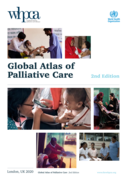
The second edition of the WHPCA Global Atlas of Palliative Care was launched during World Hospice & Palliative Care Day 10 October. The Atlas is an update of the original WHPCA/WHO Global Atlas of Palliative care at the end of life published in 2014. It is full of useful facts and figures to support
...
palliative care advocacy and development. In this edition we have switched from using the WHO methodology for need for palliative care to the evolving Lancet Commission on Palliative Care and Pain Relief methodology. As a result the number of people needing palliative care has gone from 40 million per year to almost 57 million and more accurately reflects the need for palliative care globally models of palliative care worldwide? What resources are devoted to palliative care? What is the way forward?
more
Rehabilitation in health systems provides recommendations for Member States and other relevant stakeholders to strengthen and expand the availability of quality rehabilitation services. Currently, there is a significant unmet need for rehabilitation services and it is frequently undervalued in the h
...
ealth system. As populations age and the prevalence of noncommunicable diseases and injuries increases, and the demand for rehabilitation grows, strengthening rehabilitation in health systems becomes ever more paramount.
more
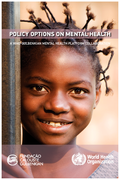
"This is the final report of the six-year collaboration between the WHO Department of Mental Health and Substance Abuse and the Gulbenkian Global Mental Health Platform, an initiative of the Calouste Gulbenkian Foundation aimed at reducing the global burden of mental health through the development a
...
nd application of evidence and good practices to global mental health."
more
Best Practice for the Care of Patients with Tuberculosis: a Guide for Low-Income Countries
recommended
G. Williams, E. Alarcón, S. Jittimanee et al.
The International Union Against Tuberculosis and Lung Disease
(2017)
CC
2nd edition.
The practical aspects of TB patient care from the onset of symptoms to the completion of treatment are covered in this guide
2nd edition. The 2018 Roadmap incorporates an additional critical population: adolescents. Despite making up 1 in 6 of the world’s people, adolescents have been largely overlooked as global momentum to address TB has grown. Spanning the ages of 10–19 years, adolescents are both at risk of TB and
...
represent an important population for TB control. They often present with infectious TB and frequently have multiple contacts in congregate settings, such as schools and other educational institutions. Nevertheless, few countries capture TB data in suitably age-disaggregated ways to allow full understanding of its impact in this group and even fewer provide the adolescent-friendly services our young people need to access diagnosis and care.
more
The purpose of the landscape analysis is ultimately to facilitate improved engagement of private providers, thereby contributing to universal access to quality and affordable TB care and the end of the TB epidemic. It focuses on the role of private for-profit providers and on specific challenges and
...
experiences in engaging them for TB prevention and care.
more
