
Filter
739
Text search:
syria
Featured
90
201
Language
Document type
294
187
67
44
37
32
29
16
16
7
5
3
2
Countries
330
74
65
45
42
29
29
27
23
20
18
16
15
13
13
12
11
10
10
9
9
9
9
9
9
8
8
8
7
7
7
7
6
6
6
6
6
5
5
5
5
5
5
4
4
4
4
4
4
4
4
4
4
3
3
3
3
3
3
3
2
2
2
2
2
2
2
2
2
2
2
2
1
1
1
1
1
1
1
1
1
1
1
1
1
1
1
1
1
1
1
Authors & Publishers
Publication Years
Category
230
69
28
17
13
7
2
1
Toolboxes
237
124
96
52
26
23
23
22
22
16
15
10
10
8
7
6
6
5
5
4
2
2
2
1
Available in Arabic and Turkish
https://reliefweb.int/report/syrian-arab-republic/syrian-arab-republic-idp-movements-january-2021-enartr
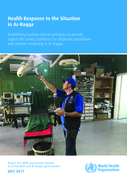
Establishing trauma referral pathways to provide urgent life-saving assistance for displaced populations and civilians remaining in Ar-Raqqa.
In July 2017, a WHO team comprising an external trauma care specialist and two WHO staff members visited the governorates of Ar-Raqqa and neighbouring Al-Ha
...
املعالجة الرسيرية
لالضطرابات النفسية والعصبية واستخدام مواد اإلدمان
يف حاالت الطوارئ اإلنسانية
Mhgap Humanitarian Intervention Guide (mhGAP-HIG): Clinical management of mental, neurological and substance use cond
...

WHO has developed a new health kit to support treatment for chronic disease patients in emergency settings. The prevalence of NCDs is increasing worldwide, including in emergency/crisis-prone areas. Yet current humanitarian response has not accounted for this emerging burden. The NCD kit attends to
...
Gaps in data covering refugees, asylum seekers, migrants and internally displaced populations are endangering the lives and wellbeing of millions of children on the move, warned five UN and partner agencies today. In 'A call to action: Protecting children on the move starts with better data', UNICEF
...
"Le Manuel de l’OMS pour la gestion de l’aspect santé publique des accidents chimiques a pour objet de passer en revue l’ensemble des principes et des rôles qui sont ceux de la santé publique dans la gestion des accidents et des situations d’urgence d’origine chimique. Tout en apportant
...
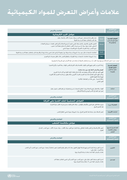
A chemical release may not always be immediately apparent given the fact that many agents are odourless and colourless, and some cause no immediately noticeable effects or symptoms. Be alert to the possible presence of a chemical.
Arabic version available: http://www.who.int/environmental_health_e
...

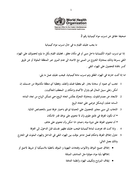
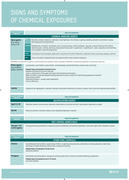
Signs and symptoms of chemical exposure
recommended
Arabic version available: http://www.who.int/environmental_health_emergencies/deliberate_events/signs_symptoms_ar.pdf
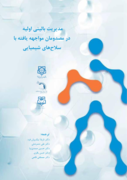
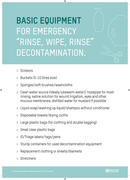
Arabic version available: http://www.who.int/environmental_health_emergencies/deliberate_events/decontamination_poster_ar.pdf
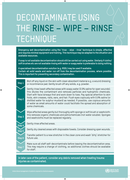
Initial clinical management of patients exposed to clinical weapons: Emergency wet decontamination using the 'rinse-wipe-rinse' technique is simple, effective and requires minimal equipment and training. This technique may be adapted to the situation and available resources.
Also available in Arab
...
