
Filter
270
Text search:
FAO
and
OIE
Featured
Recommendations
14
New Publications
46
Language
Document type
Studies & Reports
98
Guidelines
61
No document type
43
Strategic & Response Plan
29
Manuals
17
Fact sheets
15
Training Material
3
Situation Updates
2
Brochures
1
Resource Platforms
1
Countries / Regions
Global
11
Kenya
8
Latin America and the Carribbean
6
Africa
6
Nigeria
5
Ghana
4
India
4
Bolivia
4
Congo, Democratic Republic of
3
Cameroon
3
Uganda
3
Tanzania
3
Guinea
2
Burkina Faso
2
Sierra Leone
2
Senegal
2
Côte d’Ivoire / Ivory Coast
2
Ethiopia
2
Zimbabwe
2
Nepal
2
Thailand
2
South Africa
2
Namibia
2
Colombia
2
Madagascar
2
West and Central Africa
2
Uruguay
2
Liberia
1
Mali
1
Morocco
1
Niger
1
Haiti
1
Philippines
1
Pakistan
1
Jordan
1
Afghanistan
1
Germany
1
Lebanon
1
Zambia
1
Turkey
1
Chad
1
Rwanda
1
Indonesia
1
Bangladesh
1
Sudan
1
Benin
1
Central African Republic
1
Argentina
1
Peru
1
Brazil
1
Honduras
1
El Salvador
1
Libya
1
Angola
1
Guatemala
1
Mexico
1
Nicaragua
1
Myanmar / Burma
1
Sri Lanka
1
East and Southern Africa
1
Middle East and North Africa
1
Western Pacific Region
1
Western and Central Europe
1
Paraguay
1
Asia
1
Venezuela
1
Eastern Europe
1
Laos
1
Congo-Brazzaville
1
Tajikistan
1
Turkmenistan
1
Denmark
1
France
1
Maldives
1
Mauritius
1
Tunisia
1
Spain
1
Authors & Publishers
Publication Years
Category
Countries
50
Clinical Guidelines
10
Public Health
9
Key Resources
8
Capacity Building
1
Toolboxes
AMR
147
Planetary Health
39
Rapid Response
16
NTDs
16
Global Health Education
10
2.0 Rapid Response
10
COVID-19
8
HIV
4
Ebola & Marburg
3
TB
2
Health Financing Toolbox
2
Polio
1
Specific Hazards
1
The Strategic Framework for Emergency Preparedness is a unifying framework which identifies the principles and elements of effective country health emergency preparedness. It adopts the major lessons of previous initiatives
...
Antimicrobial resistance (AMR) has become a global public health concern and Lebanon is of no exception to this issue. The spread of antimicrobial-resistant bacteria is considered an alarming public health threat, with a potential extent similar to
...
Global Action Plan on Antimicrobial Resistance
recommended
The goal of the draft global action plan is to ensure, for as long as possible, continuity of successful treatment and prevention of infectious diseases with effective and safe medicines that are qu
...
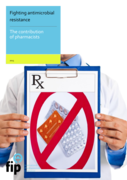
The International Pharmaceutical Federation (FIP) is a global federation of national associations of pharmacists and
pharmaceutical scientists. In order to support these associations in their fight against AMR, FIP has prepared this
briefing docum
...

Antimicrobial resistant (AMR) organisms are increasing globally, threatening to render existing treatments ineffective against many infectious diseases. In Africa, AMR has already been documented to be a problem for HIV and the pathogens that cause
...

The report reflects on the trends, achievements and challenges in global health over the past decade during which Dr Margaret Chan has been Director-General of WHO. It discusses the role of WHO in dealing with such issues as the rise of noncommunica
...

This guideline provides advice in regards to applications for Marketing Authorisations for antimicrobial veterinary medicinal products (VMPs) on the data required and the methodology to be used for performing an assessment of the risk to public heal
...

In May 2015, the Sixty-eighth World Health Assembly recognized the importance of the public health problem posed by antimicrobial resistance by adopting the global action plan on antimicrobial resistance (“global action plan”). The global action plan proposes interve
...
Third edition.
The main changes within the third edition of the JEE tool include the split of the technical area National legislation, policy, and financing into two technical areas (Legal instruments and
...
The threat posed by antimicrobial resistance (AMR) to public health as well as global health security has been reiterated in umerous World Health Assembly (WHA) resolutions. AMR is also prioritized under the Global Health Security Agenda (GHSA), and
...

2016-2018 Early implementation,
This report presents 2015 data on the consumption of systemic antibiotics from 65 countries and areas, contributing to our understanding of how antibiotics are used in these countries. In addition, the report documen
...

Antimicrobial resistance (AMR) is a serious public health concern with economic, social and political implications that are global in scope, and cross all environmental
...

The increasing global trend of Antimicrobial resistance (AMR) has gradually emerged as a major public health challenge for the entire world. AMR has spread to almost all countries and regions, including Pakistan owing to the “misuse
...
Leptospirosis is a zoonotic disease with epidemic potential, especially after a heavy rainfall,
caused by a bacterium called Leptospira. Leptospira interrogans is pathogenic to humans and
animals, with more than 200 serologic variants or serovars.
...

The strategic plan reflects shared commitments to enhance collaboration between environmental, animal (wildlife and domestic) and human health, and
...
The increasing amounts of official development assistance (ODA) for health have been aimed primarily at fighting HIV/AIDS, malaria and tuberculosis. Neglected tropical diseases (NTD), one of the most serious public health burdens among the most depr
...

The purpose of this publication is to to provide a practical, stepwise approach to the implementation of the national action plans on AMR within the human health sector; and to provide a process and
...
This companion document to Ending the neglect to attain the Sustainable Development Goals: a road map for neglected tropical diseases 2021-2030 ("the road map") aims to support a range of stakeholders - including countries in which neglected tropical diseases (NTDs) are endemic, international organi
...
