
Filter
289
Text search:
right
of
children
in
ethnic
minorities
Featured
28
71
Language
Document type
180
52
27
18
6
3
2
1
Countries
21
17
12
10
8
5
5
5
4
4
4
3
3
3
2
2
2
2
2
2
2
2
2
2
2
2
1
1
1
1
1
1
1
1
1
1
1
1
1
1
1
1
1
1
1
1
1
1
1
1
1
Authors & Publishers
Publication Years
Category
71
31
24
19
14
7
Toolboxes
46
46
25
19
17
13
11
10
6
5
5
3
2
2
2
2
2
1
1
1
1
1
1
According to 2014 Census data, almost a third of the population in Myanmar do not have adequate identity and civil documentation. Of these, 54 perc
...
In northern Myanmar, nearly 100,000 people continue to live in displacement camps in Kachin and northern Shan States. Most were first displaced by
...
Based on Human Rights Watch (HRW)'s reporting on the human rights dimensions of the COVID-19 pandemic (see Related Summary, and the video, below), this document presents 40 questions to provoke thinking about a rights-respecting response to the cris
...

As countries aim to progress towards the Sustainable Development Goals (SDGs) and achieving universal health coverage, health inequities driven by racial discrimination and intersecting factors remain pervasive. Inequities experienced by indigenous peoples as well as people
...
The Barefoot Guide 5: Mission Inclusion - Stories and practices of building a world where all belong
From 2011 until 2016, a multi-actor programme was run in five countries to improve the life chances and living conditions of people experiencing exclusion and marginalisation
...
Making education more inclusive requires schools and education authorities to remove the barriers to education experienced by the most excluded children - often the poorest, children with disabiliti
...

Education in emergencies is a young area; the evidence of its impact is often anecdotal, and although its status as a humanitarian concern has gained legitimacy
...

What does the future hold for the world’s children?
In many ways, the future is now. Today’s actions and decisions will determine the future child
...
A 2013 Plan study across 30 countries found that children with disabilities were on average 10 times less likely to go to school than children without disabilities. This report presents the findings
...
The principle of “the best interest of the child” should guide decisions by politicians whenever
children are affected. This is one
...
This guideline consists of two main parts:
i.) Guidelines for Red Cross and Red Crescent national societies on how to start up and engage with other stakeholders in country ...
i.) Guidelines for Red Cross and Red Crescent national societies on how to start up and engage with other stakeholders in country ...
This report presents the findings from a ‘deep dive’ undertaken by UNICEF East Asia and the Pacific Regional Office to consider the experiences in Cambodia, Indonesia, the Lao People’s Democratic Republic, Malaysia, Myanmar, the Philippines an
...
A systematic literature review of education systems in low-and middle income countries commissioned by CBM
In the present report, the Special Rapporteur on the sale and sexual exploitation of children, including child prostitution, child
...
Young children are especially susceptible to exposure to trauma. Rates of abuse and neglect among this population are staggering. This article presents a review
...
Experience from Save the Children and partners globally
demonstrates that improvements in education quality go hand-in-hand
with inclusion and ac
...

This report aims to raise awareness about the role that the reform of public health laws can play in advancing the right to health and
...
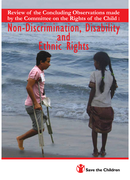
Non-discrimination disability and ethnic rights
The right to the enjoyment of the highest attainable standard of physical and mental health is enshrined
...
