
Filter
531
Text search:
radiological
Featured
67
102
Language
Document type
285
121
50
45
11
9
5
3
2
Countries / Regions
60
17
17
16
11
8
8
8
8
7
7
7
6
6
5
5
5
4
4
4
4
4
3
3
3
3
3
2
2
2
2
2
2
2
2
2
2
2
2
1
1
1
1
1
1
1
1
1
1
1
1
1
1
1
1
1
1
1
1
1
1
Authors & Publishers
Publication Years
Category
186
56
47
20
14
13
10
Toolboxes
98
50
42
29
20
18
16
16
16
13
11
9
9
7
7
6
5
5
4
4
2
1
1
This pocket guide is designed for clinicians, including physicians, nurses, and other health care professionals, who will provide emergency care following a radiological event. It should be used as a supplement to training and practice drill
...
A brief, 17-minute video covering key radiation principles and radiological procedures. Includes demonstrations on application of these principles and procedures in several patient care scenarios in an emergency services setting.
The purpose of this training is to prepare clinicians in first receiver settings to: (1) Identify factors impacting immediate medical response to mass casualties following major types of radiological incidents, and (2) Demonstrate appropriate patien
...
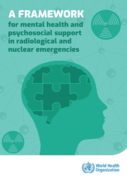
The health impact of radiological and nuclear emergencies can last for decades. Lessons learned from past radiological and nuclear accidents have demonstrated that the mental health and psychosocial
...
IAEA Safety Standards for protecting people and the environment
IAEA Safety Standards for protecting people and the environment
IAEA Safety Standards for protecting people and the environment
The aim of this publication is to provide practical guidance for the first responders who will respond during the first few hours to a radiological emergency and for the national officials who would support this early response. This publication prov
...
These guidelines provide a recommendation on iodine thyroid blocking (ITB), via oral administration of stable iodine, as an urgent protective action in responding to a nuclear accident. This recommendation aims to support emergency planners, policy makers, public health specialists, clinicians and o
...
These materials are designed for use at a training course on medical preparedness and response for a nuclear or radiological emergency. They contain a wide range of lectures and supporting materials, which cover the basic topics an
...
Welcome! This tool provides you as a first responder with action guides and instructions for use in a radiological emergency.
Also available in Russian: https://www-pub.iaea.org/MTCD/Publications/PDF/EPR-FirstRespondersPDA-2009/html/default.htm
The aim of this publication is to provide practical guidance for public information officers on the preparation for and response to a nuclear or radiological emergency, and to fulfil in part functions assigned to the IAEA in th
...
On January 14-16, 2003, the Centers for Disease Control and Prevention (CDC) held a communications roundtable in Atlanta, Georgia, to explore hospitals' challenges in communicating with internal and external audiences in communitywide emergencies involving radioactive materials. The roundtable, Hosp
...
The aim of this publication is to provide a practical resource for emergency planning in the area of public communication in the development of a national radiation emergency communication plan (RECP). The term ‘public communication’ is defined as any activity that communicates info
...

The risks of the use of nuclear, radiological, biological or chemical (NRBC) weapons are heterogeneous. Each risk has its own implications for developing and deploying any capacity to assist victims of an NRBC event and, in parallel, for the health
...
IAEA Safety Standards for protecting people and the environment
Mounting an effective international humanitarian response to a chemical, biological, radiological or nuclear (CBRN) event, especially if the response is undertaken on an ad hoc basis, would be extremely difficult and would pose many risks to the res
...
