
Filter
292
Text search:
identity
cards
Featured
24
99
Language
Document type
187
37
34
19
8
3
2
2
Countries
29
15
14
12
10
9
8
8
7
7
6
5
4
4
4
3
3
3
3
3
3
3
2
2
2
2
2
2
2
2
2
2
2
2
2
1
1
1
1
1
1
1
1
1
1
1
1
1
1
1
1
1
1
1
1
1
1
1
1
Authors & Publishers
Publication Years
Category
132
22
19
11
11
7
6
Toolboxes
27
20
18
15
12
11
10
9
7
6
5
4
4
3
2
2
2
1
1

According to 2014 Census data, almost a third of the population in Myanmar do not have adequate identity and civil documentation. Of these, 54 percent are women.
Women who live in remote or conflict affected areas, who are displaced or belong to ...
Women who live in remote or conflict affected areas, who are displaced or belong to ...
You can download the handbook, worksheets and quick reference cards from the website!
The HHEAT is an ethical analysis tool designed to help humanitarian healthcare workers make ethical decisions. It consists of 3 components: (1) a summary card hig
...

It is the policy of the GoR to ensure that children’s rights are met through the provision of basic needs and services for all children in the country, and protect them from abuse and exploitation. Children are defined as persons below the age of 18 years and the ICRP covers children from the time
...

The coastal regions of Bangladesh are hit by cyclones regularly. The country has evolved, in the face of repetitious calamities, a disaster preparedness programme. The major response to cyclones has been the building of cyclone shelters, which also double as community centers and schools. While thes
...
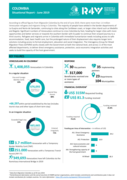
According to official figures from Migración Colombia by the end of June 2019, there were more than 1.4 million Venezuelan refugees and migrants living in Colombia. The majority of people have settled in the border departments of La Guajira and Norte de Santander, continuing to cities along the Car
...
2nd edition. There have been many requests over the past few years for advice about what information should be included in a patient record for leprosy. The patient record should contain the essential information for the clinical management of the patients, for monitoring adherence to MDT, and for r
...
This chapter is concerned primarily with situations where there are large numbers of deaths following a disaster, requiring organized services for handling the dead.
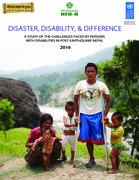
A STUDY OF THE CHALLENGES FACED BY PERSONS WITH DISABILITIES IN POST-EARTHQUAKE
NEPAL.


This study aimed to estimate the cost-effectiveness of a community-based rehabilitation (CBR) programme known as Inspire2Care (I2C), implemented in Nepal by Karuna Foundation Nepal. In the absence of any gold standard methodology to measure cost-effectiveness, the authors developed a new methodology
...

This checklist will help child psychosocial support and Child Friendly Space supervisors adhere to quality standards during program implementation. This checklist was developed by consultant Nicole Bohl, based on her previous work with Plan International and Save the Children. It has been adapted wi
...
UNAIDS 2018 / Guidance
Guidance for policy-makers, and people living with, at risk of or affected by HIV
Due to Nepal’s difficult geographic structure, rapid urbanization, varied groundwater level, and increasing population the country is prone to earthquakes, floods, landslides, fires, lightning, hailstone, drought, epidemic, and other disasters. These disasters cause a huge
loss of li
...
The Sphere Project strategy for working with regional partners, country focal points and resource persons.

