Search database
Filter
118
Text search: diet and eating patterns
Featured
Language
Document type
No document type
55
Studies & Reports
34
Guidelines
11
Manuals
10
Training Material
3
Strategic & Response Plan
3
Fact sheets
2
Countries / Regions
Global
15
India
10
Nigeria
6
Nepal
4
Ethiopia
3
South Africa
3
Malawi
3
Western and Central Europe
3
Ghana
2
Kenya
2
Mozambique
2
South–East Asia Region
2
Eastern Europe
2
Moldova
2
Senegal
1
Uganda
1
Haiti
1
Lebanon
1
Zambia
1
Turkey
1
Tanzania
1
Indonesia
1
Bangladesh
1
Singapore
1
Namibia
1
Middle East and North Africa
1
Western Pacific Region
1
Other region
1
Kazakhstan
1
Azerbaijan
1
Authors & Publishers
World Health Organization WHO
14
World Health Organization
7
World Health Organisation (WHO)
5
World Health Organization (WHO)
4
et al.
3
UN Environment Programme
3
4Children
2
Action against hunger
2
Catholic Relief Services CRS
2
Federal Ministry of Health, Nigeria
2
ICF International
2
Ministry of Health, Malawi
2
National Institute for Health and Care Excellence (NICE)
2
UNICEF
2
WHO
2
World Health Organization (WHO), Regional Office for South-East Asia
2
ACC
1
Action Contre la Faim (ACF) International,
1
Adolescent Division, Ministry of Health and Social Welfare, Government of India
1
Allied Publishers Private LTD.
1
Anne Griffin, Patricia A. Potter
1
Arens-Azevêdo U.
1
Assaf, Shireen, Wenjuan Wang, and Lindsay Mallick
1
Bernard van Leer Foundation
1
Bhatnagar, A.
1
Bloomberg Philanthropic
1
Budreviciute, A.
1
Carla Silva-Matos
1
CDC
1
Circulation Research
1
Cook B.
1
Damasceno, A
1
Damiati, S.
1
DATER House
1
David Beran
1
Deutsche Gesellschaft für Internationale Zusammenarbeit (GIZ)
1
Dey, B. and .Krishnaswamy
1
DHS
1
Diabetes Research and Clinical Practice
1
Eastern Mediterranean Region
1
EAT Lancet Commission
1
Elsevir
1
EQUINET
1
et al
1
Ethiopian Public Health Institute (EPHI), International Potato Center (CIP)and International Livestock Research Institute (ILRI)
1
FAO, IFAD, UNICEF, WFP and WHO
1
FDI World Dental Federation
1
Food and Agriculture Organization of the United Nations
1
Food and Agriculture Organization of the United Nations (FAO)
1
Food and Agriculture Organization of the United Nations FAO
1
GAIN & Johns Hopkins University
1
Government of People’s Republic of Bangladesh, Ministry of Health and Family Welfare, Directorate General of Health Services ...
1
Hanas, R.
1
Hassanein M., Afandi B. et al.
1
HEART
1
IACAPAP
1
ICAP
1
ICF Macro
1
ICMR Indian Council of Medical Research
1
IMA World Health
1
Indian Council of Medical Research
1
InHealth, et al.
1
International Diabetes Federation
1
International Federation of Red Cross and Red Crescent Societies
1
International Pharmaceutical Federation (FIP)
1
J. Dodos
1
J. J. Hudziak
1
J. Perry, L. Palmer, P. Thom, et al.
1
J. Wolf, C. Corvalán, et al.
1
K. O’Loughlin
1
Kenya Ministry of Health
1
Khdr Sabir, D. et al.
1
Kontsevaya A, Farrington J, Balcılar M, Ergüder T
1
M. J. Sagrado
1
M. Sonego
1
Measure
1
MEASURE DHS
1
Mercado, S.
1
Mercy Corps
1
Middlehurst, A.
1
Ministry of Agricultur al Development (MOAD)
1
Ministry of Health & Family Welfare, India
1
Ministry of Health and Social Services (MOHSS)
1
Ministry of Health Ghana
1
Ministry of Health, Division of Community Health Services, Division of Non-Communicable Diseases
1
Ministry of Health, Zambia
1
National AIDS Control Organization (NACO), Ministry of Health and Family Welfare, Government of India
1
National Department of Health South Africa
1
National Women's Council of Ireland
1
Neuropsychiatric hospital, Aro, Abeokuta, Nigeria
1
Nunes da Cunha I., Autry E. et al
1
OCHA
1
Ogle, G.
1
Padrão P
1
Pan American Health Organisation PAHO
1
Pan American Health Organization PAHO
1
Piernas C.
1
PLOS ONE
1
Province of Kwa-Zulu Natal, Department Health
1
Prüss-Ustün, A.
1
R Loewenson
1
R. Martín-Cañavate
1
R. R. Althoff
1
Rangarajan, S. et al.
1
Ranjita Misra
1
Reliefweb
1
Renner B.
1
Republic of Ghana
1
Republic of Lebanon, Ministry of Health
1
Rosengren, A.
1
Royal College of Psychiatrists
1
S. Chatterjee and N. Chowdhary
1
Sangath
1
Sarity Dodson, Suvajee Good and Richard Osborne
1
Scottish Intercollegiate Guidelines Network
1
Shrimpton R., Atwood S.
1
Silink, M.
1
Silva-Matos, C
1
Smyth, A.
1
Statistics Indonesia (Badan Pusat Statistik—BPS), National Population and Family Planning Board (BKKBN), and Kementerian Kesehatan (Kemenkes—MOH), and ICF International
1
Stewart C.
1
Substance Abuse and Mental Health Services Administration SAMHASA
1
The Community Care For People With Schizophrenia In India (COPSI) Study
1
the Essential Drugs Programme, the PHC
1
The Johns Hopkins and the International Federation of Red Cross and Red Crescent Societies
1
The Lancet Global Health
1
The Sphere Project
1
The Union
1
TOPS
1
University Teaching Hospital, et al.
1
US Agency for International Development
1
USAID
1
Watzel B.
1
WHO, Path, et al.
1
Winter, Rebecca, Akinlo, Ambrose, and Lia Florey
1
World Health Organization (Europe)
1
World Health Organization (Pacific Region)
1
World Health Organization - Regional Office South-East Asia
1
World Health Organization WHO, et al.
1
World Health Organization WHO, Regional Office of Europe
1
World Health Organization, Regional Office for South-East Asia, Health Situation and Trend Assessment Unit of Health System Department
1
World Health Organization. Regional Office for Europe
1
World Vision
1
World Vision Singapore
1
Publication Years
Category
Countries
46
Public Health
13
Key Resources
13
Women & Child Health
9
Clinical Guidelines
6
Capacity Building
2
Toolboxes
Planetary Health
16
NCDs
14
Mental Health
12
Caregiver
6
Global Health Education
4
COVID-19
4
Refugee
2
HIV
2
Disability
1
Ebola & Marburg
1
Cholera
1
Conflict
1
Pharmacy
1
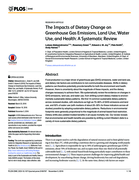
PLOS ONE | https://doi.org/10.1371/journal.pone.0196380 May 15, 2018
NICE guideline Published: 23 May 2017
On the global scale, the impacts of the current food system on the environment are severe. The agro-industrial revolution has made it possible to increase food production at a price.
High meat consumption, particularly red meat and processed meat, negatively affects our health, while meat production is one of the largest contributors to global warming and environmental degradati ... more
While “sustainability” has become a central aspect of social action and responsibility around the world, its complex and multi-di- mensional nature requires further explanation.
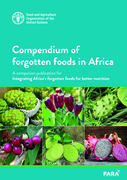
The Food and Agriculture Organization of the United Nations has launched a new Compendium of forgotten foods in Africa which is a first-of-its-kind comprehensive collection of 100 African forgotten food crops. Also referred to as neglected, under ... more
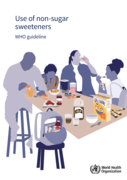
This guideline provides evidence-informed guidance on the use of non-sugar sweeteners to reduce the risk of unhealthy weight gain and diet-related noncommunicable diseases in adults ... more
To implement the set of recommendations on the marketing of foods and non-alcoholic beverages to children
With the growing obesity crisis among children, WHO and other public health advocates ... more

Diabetes and Ramadan: Practical guidelines 2021

Hassanein M., Afandi B. et al. Diabetes Research and Clinical Practice (2016) CC2
The document "Diabetes and Ramadan: Practical Guidelines 2021," published by Elsevier, provides updated guidance for managing diabetes during Ramadan fasting. Developed by the International Diabetes Federation (IDF) ... more

A Manual for Medical Officer Developed under the Government of India – WHO Collaborative Programme 2008-2009 Accessed: 11.03.2019
The documents focus on promoting healthier nutrition by addressing issues like sugar, salt, and fat intake, emphasizing their role in non-communicable diseases such as obesity, diabetes, and heart d ... more
In 2016, the risk of premature mortality1 from noncommunicable diseases (NCDs) in Ethiopia was 18.3%. The economic costs of NCDs are significant and are due principally to their impact on the non-health sector (reduced workforce ... more
Noncommunicable diseases (NCDs) such as cancer, cardiovascular diseases, diabetes and chronic respiratory diseases and their risk factors are an increasing public health ... more
Non-communicable diseases (NCDs) are of increasing concern for society and national governments, as well as globally due to their high mortality rate. The main risk factors of NCDs can be classified into the categories of self-management, genetic fa ... more
This year’s report should dispel any lingering doubts that the world is moving backwards in its efforts to end hunger, food insecurity and malnutrition in all its forms. We are now only eight years away from 2030, but the distance to reach many of ... more
This revision covers the main non-communicable diseases in Mozambique as well as the National Strategic Plan's aim to create a positive environment to minimize or eliminate the exposure to risk factors and guarantee access to care.
Results from the 2008 Ghana Demographic and Health Survey