
Filter
1857
Text search:
chemical
Featured
226
456
Language
Document type
827
338
313
177
75
46
45
10
9
7
7
2
Countries
105
80
61
41
38
35
32
27
27
27
26
25
25
25
23
23
23
21
21
20
16
14
14
13
13
11
10
10
9
9
7
7
7
6
6
6
6
5
5
5
5
5
4
4
4
4
4
4
3
3
3
3
3
3
3
3
3
2
2
2
2
2
2
2
2
2
2
2
2
2
2
2
2
2
1
1
1
1
1
1
1
1
1
1
1
1
1
1
1
1
1
1
1
1
1
1
1
1
1
1
1
1
1
1
1
1
1
1
1
1
1
1
1
1
1
1
1
1
1
1
Authors & Publishers
Publication Years
Category
622
223
114
106
54
47
43
Toolboxes
148
124
116
109
95
85
79
79
65
59
49
48
47
38
38
37
28
22
20
19
14
13
6
5
2
1
The message contained in this publication is clear: countries need a
public health system that can respond to the deliberate release of
chemical and biological agents. Regrettable though this message may
be, the use of poison gas in the war betwe
...
Nice, quick accessible database with guidelines and technical information!
"The NIOSH Pocket Guide to Chemical Hazards Mobile Web App (mNPG) works on any mobile device with an HTML5-compliant web browser. The app can be used offline when no inter
...
This Guide contains information, guidelines, diagrams and other materials addressed to medical practitioners who are engaged in the treatment of casualties of chemical weapons. It is made available to the public for information purposes, but is not
...
"Patient decontamination principles are set forth here from a strategic perspective, rather than a tactical
one. The principles are meant to guide, but not specify, operational practices. The guidance is evidencebased
to the extent possible and the supporting evidence is documented and briefly dis
...
A fact sheet from the National Academies and the U.S. Department of Homeland Security

Quick guide on chemical terrorism incl a short overview on chemical terrorism agents and biological toxins

The potential for terrorist use of chemical agents is a noted concern highlighted by the Tokyo sarin gas attacks of 1995. The events of September 11, 2001, increased congressional attention towards reducing the vulnerability of the United States to
...
Key Features:
• Module Users: Disaster Management Trainers
• Training Targets: State Government and District
officials / Disaster Management Authorities / Disaster
Management Planners and Responders
• Training Duration: 5 working days (one week)
• Trainers Input: Multi-disciplinary
â€
...

Mounting an effective international humanitarian response to a chemical, biological, radiological or nuclear (CBRN) event, especially if the response is undertaken on an ad hoc basis, would be extremely difficult and would pose many risks to the res
...
The purpose of the WHO Manual for the Public Health Management of Chemical Incidents is to provide a comprehensive overview of the principles and roles of public health in the management of chemical
...
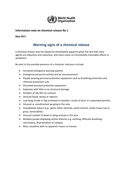
A chemical release may not always be immediately apparent given the fact that many agents are odourless and colourless, and some cause no immediately noticeable effects or symptoms. Be alert to the possible presence of a
...
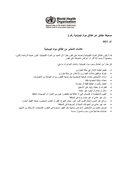

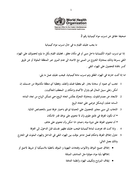
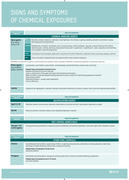
Signs and symptoms of chemical exposure
recommended
Arabic version available: http://www.who.int/environmental_health_emergencies/deliberate_events/signs_symptoms_ar.pdf
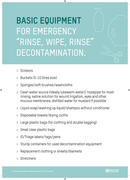
Arabic version available: http://www.who.int/environmental_health_emergencies/deliberate_events/decontamination_poster_ar.pdf
In 2005, the World Health Organization (WHO) Member States adopted the revised International
Health Regulations (IHR) (2005). The Regulations provide a unique public health framework in the
form of obligations and recommendations that enable countries to better p
...
