
Filter
289
Text search:
World
Health
Organization
(Cambodia)
Featured
Recommendations
20
New Publications
64
Language
Document type
No document type
186
Studies & Reports
45
Guidelines
29
Manuals
10
Strategic & Response Plan
7
Situation Updates
3
Resource Platforms
3
Fact sheets
3
Training Material
2
Infographics
1
Countries / Regions
Global
21
Cambodia
19
Myanmar / Burma
8
South–East Asia Region
8
Asia
6
Philippines
4
India
4
Kenya
4
Nepal
3
Western and Central Europe
3
Guinea
2
Sierra Leone
2
Liberia
2
Ethiopia
2
Cameroon
2
Pakistan
2
Tanzania
2
Indonesia
2
Bangladesh
2
Malawi
2
Ukraine
2
Eastern Europe
2
Russia
2
Nigeria
1
Ghana
1
Uganda
1
Haiti
1
South Sudan
1
Zambia
1
Syria
1
Chad
1
Thailand
1
Rwanda
1
South Africa
1
Benin
1
Eswatini/ Swaziland
1
Sri Lanka
1
Yemen
1
East and Southern Africa
1
West and Central Africa
1
Middle East and North Africa
1
Western Pacific Region
1
Latin America and the Carribbean
1
Eastern Europe and Central Asia
1
Africa
1
Laos
1
Vietnam
1
Turkmenistan
1
Authors & Publishers
Publication Years
Category
Countries
57
Clinical Guidelines
27
Women & Child Health
20
Key Resources
19
Public Health
18
Capacity Building
5
Pharmacy & Technologies
3
Toolboxes
HIV
49
TB
26
Disability
25
Mental Health
24
Planetary Health
11
AMR
10
Global Health Education
9
NTDs
9
COVID-19
8
Pharmacy
7
Caregiver
6
Rapid Response
5
Ebola & Marburg
4
Natural Hazards
4
Conflict
3
Health Financing Toolbox
3
NCDs
3
Refugee
2
Malaria
2
2.0 Rapid Response
2
Polio
1
Typhoon
1
Specific Hazards
1
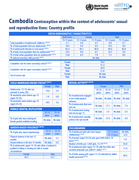
Country profile: Cambodia
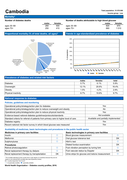
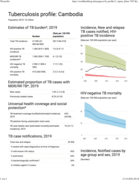

This report includes analysis from informal regional consultations in the African Region, the Caribbean and North America, Latin America, South-East Asia Region, European Region, Eastern Mediterranean Region, alongside three forums in the Western Pacific Region. It analyses the overarching similarit
...
The Asia Pacific Observatory on Health Systems and Policies is a collaborative partnership which supports and promotes evidence-based health policy making in the Asia Pacific Region. Based in WHO’
...
The 2020 Report analyzes global health spending for 190 countries from 2000 to 2018 and provides insights as to the health spending trajectory from the MDG era to the SDG era prior to the crisis of
...
Global concerns: Implications for the future
Child Mental Health Atlas
This timely report comes at a decisive moment in history where
we can reshape urban environments and health systems for the
majority of the world’s population that live in cities. Enabling
this
...
Every year, around 830 000 children die from unintentional or "accidental" injuries. The vast majority of these injuries occur in low-income and middle-income countries. However, dozens of prevention strategies and programmes exist. If they were integrated into other child survival programmes and im
...

In 2015, 5.9 million children under age five died (1). The major causes of child deaths globally are pneumonia, prematurity, intrapartum-related complications, neonatal sepsis, congenital anomalies, diarrhoea, injuries and malaria (2). Most of these diseases and conditions are at least partially cau
...

The 2030 health-related Sustainable Development Goals call on countries to end AIDS as a public health threat and also to achieve universal health
...
The 10 recommendations in the COP26 Special Report on Climate Change and Health propose a set of priority actions from the global health community to governments and policy makers, calling on them t
...
The primary audience for the guideline is health programme managers, including governmental and non-governmental organizations, and policy makers who are responsible for designing maternal, newborn and child
...
The purpose of the landscape analysis is ultimately to facilitate improved engagement of private providers, thereby contributing to universal access to quality and affordable TB care and the end of the TB epidemic. It focuses on the role of private for-profit providers and on specific challenges and
...
