Filter
24
Text search:
United
Nations
Office
for
Disaster
Risk
Reduction
(UNDRR)
Featured
Recommendations
1
Language
Document type
Studies & Reports
8
Strategic & Response Plan
5
Guidelines
4
Manuals
3
Situation Updates
1
Resource Platforms
1
Fact sheets
1
No document type
1
Countries / Regions
Global
7
Guinea
1
Nigeria
1
Guinea-Bissau
1
Haiti
1
India
1
Pakistan
1
Chad
1
Central African Republic
1
Latin America and the Carribbean
1
Asia
1
Moldova
1
Authors & Publishers
Publication Years
Category
Key Resources
7
Countries
5
Public Health
2
Women & Child Health
1
Toolboxes
Planetary Health
8
Natural Hazards
3
COVID-19
3
Disability
2
Global Health Education
2
Refugee
1
Mental Health
1
Health Financing Toolbox
1
2.0 Rapid Response
1
This policy brief explores the challenges faced in disaster risk governance in relation to the climate emergency.
he statistics in this report are from the Emergency Events Database (EM-DAT) maintained by the Centre for Research on the Epidemiology of Disasters (CRED) which records disasters which have killed ten or more people; affected 100 or more people; res
...
PreventionWeb, the global knowledge-sharing platform for disaster risk reduction and resilience
According to the International Science Council, the report focuses on identifying the scope of hazards that should be considered in risk reduction efforts, and provides scientifically robust and int
...

The guide aims to provide health and DRM practitioners, planners and policymakers across sectors with targeted information to help them strengthen national health systems and integrate the risks of disease outbreaks in national DRR strategies
The following are some of the principles and approache
...
The current effort on fighting COVID-19 cannot conceal the fact that climatic and geological hazards affect Latin-America and the Caribbean every year. At a time when countries of the region are actively responding to the pandemic, they also need to prepare
...
The Guidance Notes seek to help operationalize, simplify and standardize the collection and reporting of data through the application of common language and methods. They provide information on the key issues to take into account in the collection of health data and the types of data that should be
...

Climate change is one of the most urgent challenges for people and ecosystems worldwide. The recently published sixth Assessment Report (AR6) of the Intergovernmental Panel on Climate Change (IPCC) stresses the occurrence of widespread adverse impac
...

Technical Note
Recently, the approach to hazardous events has undergone a considerable shift, away from reactive activities focused on managing and responding to events and towards a more proactive process of emergency and disaster
...

The 2020 Financing for Sustainable Development Report, the fifth report of the Inter-agency Task Force on Financing for Development, provides a comprehensive assessment of the state of sustainable f
...
Health facilities in the Region of the Americas frequently suffer the effects of health emergencies and disasters, which jeopardize their ability to provide services to the population. The STAR-H methodology helps staff responsible for health emerge
...

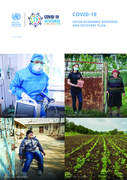
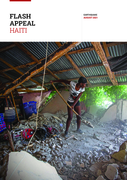
Strategical plan

The impact of disasters and crises on agriculture and food security: 2021
Food and Agriculture Organization of the United Nations
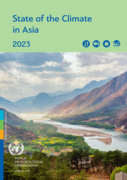
State of the Climate in Asia 2023
recommended
Asia remained the world’s most disaster-hit region from weather, climate and water-related hazards in 2023. Floods and storms caused the highest number of reported casualties and economic losses, whilst the impact of heatwaves became more severe,
...
The guidance in this publication consists of generic definitions and methodologies for the characterization of extreme weather and climate events. This publication contribute to ensuring consistent exchange of information that underpins the WMO Stat
...
English Analysis on World about Disaster Management and Protection and Human Rights; published on 12 Jan 2021 by IFRC
Young people living in the Central African Republic, Chad, Nigeria, Guinea, and Guinea-Bissau are the most at risk of the impacts of climate change, threatening their health, education, and protection, and exposing them to deadly diseases. The repor
...