Filter
286
Text search:
UNICEF
Bangladesh
Featured
Recommendations
35
New Publications
84
Language
Document type
No document type
166
Studies & Reports
51
Guidelines
34
Manuals
19
Strategic & Response Plan
5
Situation Updates
4
Training Material
3
Resource Platforms
2
Fact sheets
2
Countries / Regions
Global
24
Bangladesh
23
Nepal
14
Myanmar / Burma
11
India
7
Asia
6
South–East Asia Region
5
Ethiopia
4
Uganda
4
Zimbabwe
3
Tanzania
3
Senegal
2
Philippines
2
Pakistan
2
South Sudan
2
Kenya
2
Cambodia
2
Indonesia
2
Malawi
2
Mozambique
2
Sri Lanka
2
Guinea
1
Sierra Leone
1
Liberia
1
Nigeria
1
Niger
1
Haiti
1
Somalia
1
Afghanistan
1
Zambia
1
Syria
1
Thailand
1
Rwanda
1
Central African Republic
1
Eswatini/ Swaziland
1
Other region
1
Africa
1
Bhutan
1
Venezuela
1
Laos
1
Russia
1
Authors & Publishers
Publication Years
Category
Countries
71
Women & Child Health
46
Key Resources
39
Clinical Guidelines
23
Public Health
12
Capacity Building
5
Pharmacy & Technologies
2
Toolboxes
COVID-19
32
Disability
22
HIV
16
Mental Health
15
Planetary Health
14
Caregiver
13
Conflict
9
Global Health Education
9
Natural Hazards
8
TB
7
Health Financing Toolbox
7
Refugee
6
NTDs
4
Ebola & Marburg
3
AMR
3
2.0 Rapid Response
3
Pharmacy
2
Rapid Response
1
Zika
1
Specific Hazards
1
AN ANALYSIS OF UNICEF MICS 3 SURVEY DATA FROM BANGLADESH, LAO PDR, MONGOLIA AND THAILAND
In response to COVID-19, UNICEF continues to support the Ministry of Health and Sports’ Health Literacy Promotion Unit to translate and disseminate messages including in ethnic languages for the border areas on good hygiene and handwashing. Social
...
Public Health Situation Analysis and Interventions 10 October 2017

Country profile: Bangladesh
Level of stunting among Bangladeshi children <5years declined from 51% in 2004 to 36% and underweight from 41% in 2007 to 33% (BDHS 2014). But the decrease in wasting rate is not as expected, which is only from 17% to 14.3 % over last decade. Approximately 3.1 % (BDHS 2014) of under-5 children suffering from SAM only b
...
Notable progress has also been made on other key health indicators such as reducing maternal, infant and child deaths and malnutrition, increasing immunization coverage, eliminating infectious diseases such as polio and reducing the incidence of malaria, tuberculosis and diarrhoeal diseases.
But
...
DHS Comparative Reports No. 41
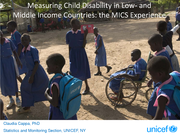
UNICEF’s support for data collection: the Multiple Indicator Cluster Surveys (MICS)