
Filter
789
Text search:
Pan
American
Health
Organization
PAHO
Featured
63
146
Language
Document type
229
175
146
65
39
36
28
20
15
12
8
7
5
4
Countries / Regions
179
47
41
23
21
19
16
16
16
15
9
7
6
6
5
3
3
3
3
3
3
2
2
2
2
2
2
2
1
1
1
1
1
1
1
1
1
1
1
1
1
1
1
1
1
1
1
1
1
1
1
1
1
1
1
1
Authors & Publishers
Publication Years
Category
209
80
69
51
49
14
13
Toolboxes
150
80
67
48
41
39
27
27
22
21
20
18
16
16
12
10
8
8
7
6
5
5
4
2
2
1
Trachoma is one of oldest infectious diseases known to humans. It is caused by the bacteria Chlamydia trachomatis, which is transmitted through contact with eye secretions of infected people (shared use of towels and handkerchiefs, contact with fingers, etc.), as well by flies that help spread it.

The burden of diabetes is enormous, positioning it as one of the main challenges facing public health today. Currently, it is estimated that 62 million people are living with diabetes in the Region of the Americas and projections show its prevalence
...

This plan, approved by the Organization’s 62nd Directing Council, was shaped by extensive consultations with countries and stakeholders, and commits to transformative health outcomes over the next
...

Under the theme Equity at the Heart of Health, this Plan seeks to catalyze efforts in Member States to reduce inequities in health within and between countries and territories in order to improve
...

Unmet mental health needs in the Region of the Americas are a leading source of morbidity and mortality, which result in tremendous health, social, and economic consequences. The COVID-19 pandemic h
...
Rev Panam Salud Publica. 2014;35(3):179–85
Making the Case for Alcohol as a Public Health Threat in the Region. The purpose of this document is to explain the need for making alcohol a top public health priority in the region and the need fo
...
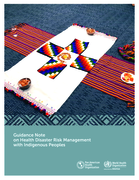
For centuries, indigenous peoples around the world have used their traditional knowledge to prepare for, cope with and survive disasters. Their methods and practices originated within their communities and have been maintained and passed down over generations. Until recently, policy makers have larg
...
This document provides countries with recommendations for structuring a public health entomology laboratory network. The document will help countries to identify their areas of need and determine how the entomology network can be strengthened, espec
...
Evaluating the Return on Investment of Scaling Up Treatment for Depression, Anxiety, and Psychosis
Climate-related disasters, heatwaves, climate-sensitive diseases, and severe droughts and floods are taking lives and harming health, livelihoods, and ecosystems across the countries of the Caribbean, as in other Small Island Developing States (SIDS
...
As a public good, antimicrobial medicines require rational use if their effectiveness is to be preserved. However, up to 50% of antibiotic use is inappropriate, adding considerable costs to patient care, and increasing morbidity and mortality. In addition, there is compelling evidence that antimicro
...
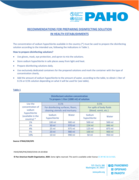
The concentration of sodium hypochlorite available in the country must be used to prepare the disinfecting solution according to the intended use, following the indications presented in this document.
This publication presents a comprehensive methodology to support the Member States of the Pan American Health
...
This Strategy and Plan of Action on Health Promotion within the Context of the Sustainable Development
Goals 2019-2030 seeks to renew health promotion (HP) through social, political, and technical
...
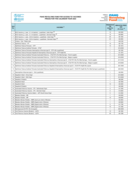
PAHO Revolving Fund Vaccine Prices for 2023

This Handbook is primarily for educators, to help them learn about mental health issues and better support them in educational environments. The Handbook aims to provide training to teachers, administrators, and people involved in the education of p
...
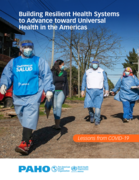
This brochure presents a summary of the situation of health systems and services in the Americas as they progress toward the achievement of universal access to health and universal
...
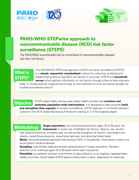
Noncommunicable diseases (NCDs) are responsible for 81% of all deaths in the region of the Americas, of which 34% befall prematurely in people between 30- 69 years old. The burden of theses diseases and their common risk factors jeopardize the health
...
