
Filter
332
Text search:
Nurturing
care
Featured
Recommendations
29
New Publications
78
Language
Document type
No document type
192
Studies & Reports
69
Guidelines
31
Manuals
11
Fact sheets
10
Strategic & Response Plan
8
Training Material
7
Brochures
2
Situation Updates
1
Infographics
1
Countries / Regions
Global
18
South Africa
11
Myanmar / Burma
10
Uganda
8
India
7
Rwanda
7
Nepal
6
Liberia
5
Ethiopia
5
Kenya
5
Syria
4
Malawi
4
Mozambique
4
Namibia
4
Lesotho
4
Sierra Leone
3
Nigeria
3
Congo, Democratic Republic of
3
Tanzania
3
Bangladesh
3
Senegal
2
Ghana
2
Zimbabwe
2
Haiti
2
South Sudan
2
Lebanon
2
Zambia
2
Indonesia
2
Ukraine
2
Botswana
2
Yemen
2
South–East Asia Region
2
Western and Central Europe
2
Africa
2
Burkina Faso
1
Philippines
1
Somalia
1
Pakistan
1
Iraq
1
Jordan
1
Germany
1
Cambodia
1
Ireland
1
Sudan
1
Central African Republic
1
Greece
1
West and Central Africa
1
Latin America and the Carribbean
1
Eastern Europe and Central Asia
1
Asia
1
Canada
1
United Kingdom
1
Authors & Publishers
Publication Years
Category
Countries
114
Women & Child Health
57
Key Resources
15
Public Health
11
Clinical Guidelines
11
Capacity Building
8
Pharmacy & Technologies
1
Toolboxes
Mental Health
66
Disability
22
Caregiver
19
COVID-19
16
Planetary Health
15
Social Ethics
13
HIV
11
Global Health Education
10
Conflict
8
Refugee
8
TB
7
Ebola & Marburg
3
Natural Hazards
2
AMR
2
NCDs
2
2.0 Rapid Response
2
Polio
1
Rapid Response
1
Pharmacy
1
NTDs
1
Health Financing Toolbox
1
The Framework provides a roadmap for creating a stable environment that is sensitive to children’s
health and nutritional needs, with protection from threats, opportunities for early learning, and interactions that are responsive, emotionally supportive and developmentally stimulating
This Guide responds to requests from practitioners and country teams who have learned about the Nurturing care framework and want to understand how to adapt health and nutrition services to be suppo
...
In 2018, the National Department of Health launched the Side-By-Side campaign for pregnant women and caregivers of children under five years, with the goal of ensuring that all children receive the nurturing
...
Accessed on 22.11.2020
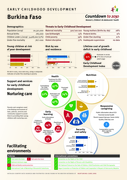
Early Childhood Development - Burkina Faso
Parents and caregivers need
a facilitating environment of
laws, policies, services and
community support to assist
them in providing their young
children with nurturing
...
Enabling young children to achieve their full developmental potential is a human right and an essential requisite for sustainable development. Given the critical importance of enabling children to make the best start in life, the health sector, among other sectors, has an important role and responsi
...
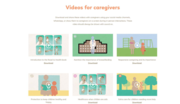
Video is a very effective way to communicate complex concepts – like the inter-relational models Side-by-Side rests on – quickly and effectively. Side-by-Side has a small but growing collection of videos. Download and share these videos with caregivers using your social media channels, WhatsApp,
...
No se puede subestimar la importancia de crecer en un ambiente familiar nutritivo y de apoyo. Criar a niños en un ambiente cálido y amoroso los sitúa en una trayectoria de desarrollo positiva para el éxito en su vida posterior. Por el contrario, los niños criados con parentalidad inconsistente
...
WHO recommendations on maternal and newborn care for a positive postnatal experience. Presentation
recommended
This guideline aims to improve the quality of essential, routine postnatal care for women and newborns with the ultimate goal of improving maternal and newborn health and well-being. It recognizes a “positive postnatal experience” as a significa
...
This first edition of our national neonatal care clinical guidelines is an initiative that aims to ensure that all the neonates in the Kingdom of Eswatini are offered standard, best quality of care
...

The National Guideline for Neonatal Care and Establishment of Neonatal Care Unit aims to provide health workers with all basics and necessary knowledge and skills to provide appropriate
...
This brief summarizes current evidence and guidance for maintaining safe and effective care across the spectrum of maternal, newborn and infant care while protecting mother and child and health
...
MAMI refers to the management of small and nutritionally at risk infants under six months of age (infants u6m) and their mothers.
This guideline aims to improve the quality of essential, routine postnatal care for women and newborns with the ultimate goal of improving maternal and newborn health and well-being. It recognizes a “positive postnatal experience” as a significa
...

Community-based health care, including outreach and campaigns,in the context of the COVID-19 pandemic
recommended
The COVID-19 pandemic is challenging health systems across the world. Rapidly increasing demand for care of people with COVID-19 is compounded by fear, misinformation and limitations on the movement of people and supplies that disrupt the delivery o
...

This document puts forward the joint position and vision of an expert, global, multistakeholder working group on implementing Kangaroo Mother Care (KMC) for all preterm or low birth weight (LBW) infants as the foundation for small and/or sick newbor
...
This s a systematic review of English language literature from 2000 to 2010 covering spiritual care in end of life care settings which includes spiritual assessment tools and ongoing intervention m
...
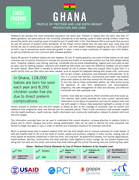
The information provided here can be used to understand the current situation, increase attention to preterm births in Rwanda and to inform dialogue and action among stakeholders. Data can be used to identify the most important risk factors to target and gaps in
...

The standards for the care of small and sick newborns in health facilities define, standardize and mainstream inpatient care of small and sick newborns, building on essential newborn
...
