
Filter
113
Topics:
Strategy
Featured
3
2
Language
Document type
54
30
15
3
2
2
2
2
1
1
1
Countries / Regions
26
14
8
6
3
3
2
2
2
2
2
2
1
1
1
1
1
1
1
1
1
1
1
1
1
1
1
1
1
1
1
1
1
1
1
1
1
1
1
1
Authors & Publishers
Publication Years
Category
17
16
15
12
8
7
6
3
3
2
2
2
1
1
1
1
1
1
1
1
1
1
1
1
1
1
1
1
1
1
Toolboxes
15
10
7
6
6
6
4
3
2
2
2
2
2
2
2
2
2
2
2
2
2
2
2
2
2
1
1
1
1
1
1
1
1
1
1
1
1
1
1
1
1
1
1
1
1
1
1
1
1
1
1
1
1
1
1
1
1
1
1

The Global Aids Strategy 2026-2031
recommended
United- Towards Ending AIDS. The Global AIDS Strategy 2026-2031 focuses global efforts for the future of the AIDS response to end AIDS as a public health threat by 2030 and sustain the HIV response after 2030. This is a strategy uniting the world.
The Strategy will shape the June 2026 United Natio
...

United- Towards Ending AIDS. The Global AIDS Strategy 2026-2031 focuses global efforts for the future of the AIDS response to end AIDS as a public health threat by 2030 and sustain the HIV response after 2030. This is a strategy uniting the world.
The Strategy will shape the June 2026 United Natio
...
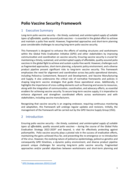
Long-term polio vaccine security – the timely, sustained, and uninterrupted supply of suitable types of affordable, quality-assured polio vaccines – is essential in the global effort to achieve and maintain a polio free world. However, fragmented approaches and short-term planning pose considera
...

Addressing comorbidities and risk factors for tuberculosis (TB) is a crucial component of the World Health Organization (WHO)’s End TB Strategy. This WHO operational handbook on tuberculosis. Module 6: tuberculosis and comorbidities aims to support countries in scaling up people-centred care, base
...

The development of the Country Cooperation Strategy (CCS) was based on a consultative and participatory process with strong commitment and support from the Ministry of Health of Ghana. The CCS draws on lessons from the implementation of the first, and second generation CCSs, the country focus strate
...

The South African WHO Country Cooperation Strategy (CCS) 2023–2027 focuses on four key strategic priorities based on the country’s health needs and disease epidemiology, while also considering the need for building resilient health systems for UHC and health security in the post pandemic period.
...

The Social and Behaviour Change Communication (SBCC) Strategy for the Prevention of the Re-establishment of Malaria Transmission in Timor-Leste forms part of the National Strategic Plan (NSP) for 2021–2025. The strategy aims to support Timor-Leste's efforts to sustain malaria elimination by promot
...
Accessed July 2025. Malaria social and behavior change (SBC) professionals are often asked to justify investments in malaria SBC. Making the case for malaria SBC requires global-level and national-level advocacy, especially given the limited resources available for malaria control and elimination an
...
National malaria social and behavior change (SBC) and social and behavior change communication (SBCC) strategies are effective for describing the priorities and focus of a country’s malaria behavior change efforts. The strategy indicates how partners will work to influence specific behaviors and i
...
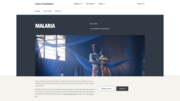
The Bill & Melinda Gates Foundation is committed to eradicating malaria, a disease that continues to cause hundreds of thousands of deaths every year, primarily in sub-Saharan Africa.
Malaria No More is a non-profit organisation dedicated to eradicating malaria, a preventable and treatable disease, in our lifetime. Through innovative partnerships, advocacy and data-driven solutions, Malaria No More works globally to ensure access to prevention tools, diagnostics and treatment, pa
...

This plan, approved by the Organization’s 62nd Directing Council, was shaped by extensive consultations with countries and stakeholders, and commits to transformative health outcomes over the next six years, tackling noncommunicable diseases (NCDs), mental health, health security, fragmented healt
...

Epidemic Intelligence from Open Sources (EIOS) is the world’s leading initiative for open-source intelligence for public health decision-making. It is led by the WHO as part of its constitutional mandate as the directing and coordinating authority on international health work. EIOS is built on
...

Integrated Disease Surveillance and Response (IDSR) is a strategy adopted by countries in the WHO African Region for implementing comprehensive public health surveillance and response systems for priority diseases, conditions and events at all levels of health systems. Successful implementation will
...
In order to improve access to malaria services in remote mining areas of Guyana, the Ministry of Health and PAHO implemented a community case management programme, training workers in mining camps to test for and treat uncomplicated malaria. However, formative research by Breakthrough ACTION Guyana
...

The Polio Transition1
Monitoring and Evaluation (M&E) Framework was designed to monitor progress towards achieving the strategic and operational outcomes of the post-2023 Strategic Action Plan on Polio Transition (2018– 2023), as outlined in the Global Vision to use polio investments to build st
...
This publication describes the history of malaria in Uzbekistan. It evaluates the policies and strategies applied after the re-establishment of local transmission to contain malaria outbreaks in the 1990s and early 2000s, and highlights the interventions subsequently used to eliminate malaria in the
...
Disability inclusive shelter programming enables persons with disabilities to contribute more to their communities, participate more in consultations and decision-making, and facilitate their own protection. The key concepts include: Disability inclusive shelter programming is both a process and an
...

This Guidance was developed in response to the increase in HIV-related human rights crises and the shrinking civic space for rights-related responses to HIV in recent years across the world. This document builds upon existing guidance documents, offering updated guidance for country-based United Nat
...
