
Filter
48
Topics:
Drugs
Featured
Recommendations
1
Language
Document type
Studies & Reports
21
Resource Platforms
6
Brochures
5
Fact sheets
4
Guidelines
3
Infographics
2
No document type
2
Manuals
1
Training Material
1
Dashboards/Maps
1
Online Courses
1
Strategic & Response Plan
1
Countries / Regions
Global
8
Africa
3
Malawi
2
India
1
Tanzania
1
Asia
1
Authors & Publishers
Publication Years
Category
Non-communicable Diseases
4
Public Health
3
Capacity Building
2
Drugs & Medical Equipment
2
Information, Education and Communication (IEC)
2
Studies & Reports
2
Malaria
2
Pharmacy & Technologies
2
Diabetes
1
Planetary Health
1
Community Health
1
Policies & Guidelines HIV & TB
1
Community Health
1
Statistics
1
Women & Child Health
1
Disease Prevention & Control
1
Key Resources
1
Toolboxes
Drug Abuse
15
Alcohol Consumption
7
Drug Resistance
7
Substance Use Disorders & Addiction
5
Alcohol
5
Essential Medecines & Medical Devices
4
Opoids
2
Studies & Reports
2
Resource Platform
2
Chemoprevention/preventive Treatment
2
Drugs
1
Databases & Maps
1
Cannabis
1
Attention deficit hyperactivity disorder (ADHD)
1
Postexposure Prophylaxis (PEP), Pre-Exposure Prophylaxis (PrEP)
1
General
1
HIV and coinfection
1
International
1
Pharmacovigilance
1
Capacity Building & Resources
1
Statistics & Facts
1
Clinical Aspects & Diagnosis
1
Capacity Building & Resources
1
Roadmaps, Action Plans & Strategies
1
Clinical Guidelines
1
Malaria and co-infection
1
Capacity Building & Resources
1
Online Courses & Webinars
1
Epidemiology
1
ART Drug Resistance, treatment failure
1

WHO recommends artemisinin-based combination therapies for treating uncomplicated malaria, alongside studies to monitor treatment effectiveness. Given the threat of antimalarial resistance, including partial resistance in several African countries, molecular tools are vital for tracking resistance.
...
The webinars aim to create awareness and convene discussion, bringing together Malaria Consortium technical experts and programmes teams with other actors working on the effective delivery of national and global health interventions worldwide.
The Severe Malaria Observatory (SMO) is a global knowledge platform designed to enable professionals working on severe malaria, such as researchers, clinicians, public health experts, programme managers, policymakers and technical partners, to access, share and analyse reliable data on malaria compl
...
The ACT Consortium was an international research collaboration dedicated to evaluating the effectiveness, safety and implementation of artemisinin-based combination therapies (ACTs) for treating malaria. Operating across multiple countries in Africa and Asia, the consortium conducted over 25 studies
...
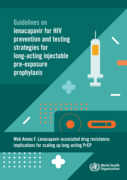
Guidelines on lenacapavir for HIV prevention and testing strategies for long-acting injectable pre-exposure prophylaxis. Web Annex F
In November 2022, WHO launched a strategy to address antimalarial drug resistance in Africa, emphasizing the need for stronger surveillance. While regional monitoring networks have been active in other regions, most in Africa have not convened since 2017–2018. To renew collaboration, WHO organized
...
This table summarises the drugs used for malaria prevention, including adult and paediatric dosages, timing and special considerations. The medications listed are atovaquone/proguanil, chloroquine, doxycycline, hydroxychloroquine, mefloquine, primaquine and tafenoquine. The guidance covers the use o
...
En 2024, le Cap-Vert et l’Égypte ont été certifiés exempts de paludisme, ce qui prouve qu'il est possible d'éliminer la maladie avec une volonté politique et des ressources adaptées. Cependant, en Afrique, où se concentrent 95 % des cas mondiaux et 97 % des décès (en 2023), les progrès
...
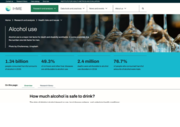
The IHME webpage discusses alcohol use as a significant global health risk, responsible for over 1.8 million deaths annually. It highlights age-related differences in alcohol's health impacts, with no benefits for individuals aged 15–39 and potential small benefits for those aged 40 and above unde
...
The World Health Organization (WHO) launched the SAFER initiative in 2018 to address the global health and societal challenges posed by alcohol-related harm. The initiative outlines five key strategies aimed at reducing alcohol consumption and its associated consequences. These include strengthening
...
The Federal Centre for Health Education (BZgA) emphasizes the critical role of drug prevention in enhancing public health in Germany. Annually, the country faces significant premature mortality due to substance use: at least 110,000 deaths from smoking, 40,000 from harmful alcohol consumption, and a
...
The World Health Organization's Eastern Mediterranean Regional Office (WHO EMRO) highlights the significant health and social consequences of harmful alcohol use. Excessive alcohol consumption is linked to over 200 diseases and injuries, including liver cirrhosis, pancreatitis, various cancers, hemo
...
The OECD's "Alcohol Consumption" indicator measures the annual sales of pure alcohol in liters per person aged 15 and older. This metric helps assess long-term trends in alcohol consumption across countries. It's important to note that the methodology for converting alcoholic beverages to pure alcoh
...

Psychoactive drugs are substances that, when taken in or administered into one's system, affect mental processes, e.g. perception, consciousness, cognition or mood and emotions. Psychoactive drugs belong to a broader category of psychoactive substances that include also alcohol and nicotine. “Psy
...
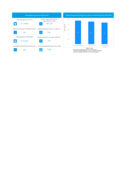
Demographic and socioeconomic data Progress towards HIV testing and treatment cascade targets by 2025 (2023) Health sector cascade (2023) Estimated number of people newly infected with HIV
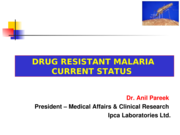
Presentation

Meeting report, Kampala, Uganda,
7–8 November 2023
Malaria Journal (2024) 23:255. Seasonal malaria chemoprevention (SMC) is a World Health Organization-recommended intervention for the prevention of malaria among children at high risk in areas with seasonal transmission. During the coronavirus disease 2019 (COVID-19) pandemic, SMC drug distribution
...
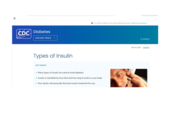
The CDC webpage "Types of Insulin" provides an overview of the various insulin types used in diabetes management, categorized by their onset, peak time, and duration of action. It explains terms like onset (how quickly insulin lowers blood sugar), peak time (when insulin is at maximum strength), and
...
The World Health Organization's fact sheet on opioid overdose highlights the significant global health issue posed by opioids, which include natural, semi-synthetic, and synthetic compounds used primarily for pain management. Misuse and unsupervised use can lead to dependence and severe health probl
...
