
Filter
65
Topics:
Climate Change
Featured
1
4
Language
Document type
32
8
6
6
5
3
2
1
1
1
Countries / Regions
14
3
3
2
2
1
1
1
1
1
1
Authors & Publishers
Publication Years
Category
7
5
3
2
1
1
1
1
1
1
1
1
Toolboxes
10
8
6
6
5
5
4
4
4
4
3
2
2
2
2
1
1
1
1
1
1
1
1
1
1
1
1
1
1
1
1
1
1
1
1
1
1
1
1
The UNDP webpage “Climate Information and Early Warning Systems” explains how climate information and early warning systems help countries and communities better prepare for and respond to climate-related hazards such as extreme weather events, floods, heatwaves and droughts. It describes UNDPâ€
...

This report examines how clinical trials contribute to environmental impacts and outlines key considerations for integrating environmental sustainability into trial design, conduct and oversight. It explores the carbon footprint and resource use associated with clinical research activities – inclu
...
Monitoring air quality (for example collecting continuous and quality data) is integral and critical to detecting air pollutants and to ensuring information sharing with the public, policy-makers, and regulatory compliance. Air quality monitoring is also one of the first and necessary steps for quan
...
Los combustibles fósiles (carbón, petróleo y gas) son, con diferencia, los que más contribuyen al cambio climático mundial, ya que representan más del 75 % de las emisiones mundiales de gases de efecto invernadero y casi el 90 % de todas las emisiones de dióxido de carbono.
l cambio climático se refiere a los cambios a largo plazo de las temperaturas y los patrones climáticos. Estos cambios pueden ser naturales, debido a variaciones en la actividad solar o erupciones volcánicas grandes. Pero desde el siglo XIX, las actividades humanas han sido el principal motor del
...
El cambio climático ya está aquí. En la actualidad, alrededor de 3600 millones de personas (casi la mitad de la población mundial) son muy vulnerables a los efectos del cambio climático, desde las sequías, inundaciones y tormentas hasta el estrés térmico e inseguridad alimentaria y, mientras
...
More than a quarter of the global population still cook meals over open fires and/or on simple stoves fuelled by firewood, agricultural waste, dried dung, charcoal, and coal. This practice results in the emission of harmful and dangerously high levels of household air pollution.
Exposure to this h
...
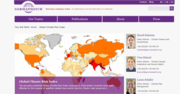
The Climate Risk Index (CRI) ranks countries by the human and economic toll of extreme weather. The latest edition highlights increasing losses and the urgent need for stronger climate resilience and action.
This report explores the intersection of tuberculosis (TB) and climate change, highlighting how climate-related challenges such as food and water insecurity, displacement, and disrupted healthcare access amplify TB risk. Intended as a resource for policymakers, researchers, development partners, fin
...
The webinar presented a new, comprehensive scoping review, published in Transactions of the Royal Society of Tropical Medicine and Hygiene, which summarises over a decade of research exploring how climate shifts may affect disease dynamics. The review emphasises the need for expanded research to bet
...
Atmosphere 2025, 16, 71. https://doi.org/10.3390/atmos16010071
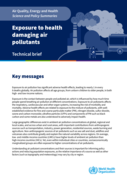
Exposure to air pollution has significant adverse health effects, leading to nearly 1 in every 8 deaths globally. Air pollution affects all age groups, from unborn children to older people, in both high- and low-income nations.
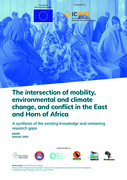
This report synthesizes the state of knowledge on the interlinkages between environmental degradation climate change conflict and mobility in the East and Horn of Africa, focusing on Burundi, Djibouti, Ethiopia, Kenya, Somalia, South Sudan, Tanzania, and Uganda.
The health of refugees and migrants is directly related to their access to quality, effective and appropriate health care along all their routes of travel. Refugees and migrants face challenges in accessing health care, including financial, legal and cultural barriers, that are well documented.

WHO, as the coordinating authority on international health, supports countries in protecting public health through evidence-based policies and actions. Considering the significant health burden and the multiple potential benefits of interventions, the WHO Air Quality, Energy and Health Unit aims to
...

The health impacts of climate change are no longer a distant threat. They are being felt here and now and becoming more extreme.
To address these threats, the WHO Asia-Pacific Centre for Environment and Health in the Western Pacific Region (ACE) was established in 2019 through a partnership with
...

This Climate terminology bank provides key definitions and facts related to climate and resilience for Uganda’s refugee response. Its goal is to build a common understanding among stakeholders and support the integration of climate-smart practices in humanitarian efforts.

All India Disaster Mitigation Institute (AIDMI) has been a signatory to the Climate and Environment Charter since 2021 and has worked extensively in advancing the commitments to the Charter through its programs and operations, as well as an advocacy partner within India and regionally.

All India Disaster Mitigation Institute (AIDMI) has been a signatory to the Climate and Environment Charter since 2021 and has worked extensively in advancing the commitments to the Charter through its programs and operations, as well as an advocacy partner within India and regionally.

All India Disaster Mitigation Institute (AIDMI) has been a signatory to the Climate and Environment Charter since 2021 and has worked extensively in advancing the commitments to the Charter through its programs and operations, as well as an advocacy partner within India and regionally.
