
Filter
47
Featured
2
1
Language
Document type
10
8
6
6
6
4
2
2
2
1
Countries / Regions
2
1
1
1
1
1
1
1
1
Authors & Publishers
Publication Years
Category
4
2
1
1
1
Toolboxes
11
10
10
10
9
9
1
1
1
1
1
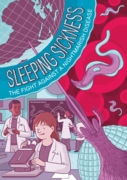

As countries presented their epidemiological and programmatic situations, and WHO summarized the global status of HAT, the central message was one of satisfaction with the remarkable progress towards elimination. A historically low number of cases was reported, despite maintaining high levels of act
...
Key facts
Resource Platform
Learning sheet no. 4
Accessed March, 2025
DPDx Laboratory Identification of Parasites of Public Health Concerns
Including Life cycle
Chapter in Clinical guidelines -Diagnosis and Treatment manual
Accessed March, 2025
The Global Health Observatory

The Global Health Observatory
The Lancet Infectious Disease Volume 25, Issue 2e77-e85February 2025
Human African trypanosomiasis (HAT), or sleeping sickness, is caused by trypanosome parasites that are transmitted by tsetse flies. HAT is found only in sub-Saharan Africa. Two subspecies of Trypanosoma brucei cause disease: T. b. gambiense in West and Central Africa, and T. b. rhodesiense in East A
...
The present guidelines incorporate all these changes, leading to a substantial reconfiguration of therapeutic choices for both disease forms.
HAT is a serious, life-threatening disease and the efficacy of fexinidazole depends on swallowing the medicine after an appropriate intake of food as well as
...
PLOS Neglected Tropical Diseases 18(5): e0012091. https://doi.org/10.1371/journal.pntd.0012091
PLOS Neglected Tropical Diseases 18(4): e0012111. https://doi.org/10.1371/journal.pntd.0012111
Guidelines for the treatment of human African trypanosomiasis. Web Annex A. Commissioned by WHO Cochrane Response

WHO Guidelines for the Treatment of Human African Trypanosomiasis. Web Annex B

Weekly epidemiological record.
Chad was validated for the elimination of gambiense HAT as a public health problem in April 2024, and the work continues towards interrupting transmission further.
