
Filter
46
Featured
2
Language
Document type
9
8
6
6
6
4
2
2
2
1
Countries / Regions
2
1
1
1
1
1
1
1
1
Authors & Publishers
Publication Years
Category
4
2
1
1
1
Toolboxes
10
10
10
9
9
9
1
1
1
1
1
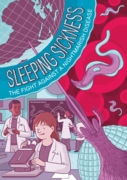
Key facts
Resource Platform
Learning sheet no. 4
Accessed March, 2025
DPDx Laboratory Identification of Parasites of Public Health Concerns
Including Life cycle
Chapter in Clinical guidelines -Diagnosis and Treatment manual
Accessed March, 2025
The Global Health Observatory

The Global Health Observatory

The Lancet Infectious Disease Volume 25, Issue 2e77-e85February 2025
Human African trypanosomiasis (HAT), or sleeping sickness, is caused by trypanosome parasites that are transmitted by tsetse flies. HAT is found only in sub-Saharan Africa. Two subspecies of Trypanosoma brucei cause disease: T. b. gambiense in West and Central Africa, and T. b. rhodesiense in East A
...

The present guidelines incorporate all these changes, leading to a substantial reconfiguration of therapeutic choices for both disease forms.
HAT is a serious, life-threatening disease and the efficacy of fexinidazole depends on swallowing the medicine after an appropriate intake of food as well as
...
PLOS Neglected Tropical Diseases 18(5): e0012091. https://doi.org/10.1371/journal.pntd.0012091
PLOS Neglected Tropical Diseases 18(4): e0012111. https://doi.org/10.1371/journal.pntd.0012111

Guidelines for the treatment of human African trypanosomiasis. Web Annex A. Commissioned by WHO Cochrane Response

WHO Guidelines for the Treatment of Human African Trypanosomiasis. Web Annex B

Weekly epidemiological record.
Chad was validated for the elimination of gambiense HAT as a public health problem in April 2024, and the work continues towards interrupting transmission further.
The number of reported cases of acute African trypanosomiasis (sleeping sickness). The disease is caused by parasitesthat are spread by tsetse flies and other insects. The disease is typically fatal if not treated.
