
Filter
24
Featured
3
Language
Document type
7
7
4
2
1
1
1
1
Countries / Regions
10
2
1
1
1
Authors & Publishers
Publication Years
Category
10
5
1
1
1
1
1
1
1
1
Toolboxes
6
5
2
2
2
2
1
1
1
1
1
1
1
1
The war in Gaza has resulted in many hundreds of spinal cord injuries (SCI), which will have a devastating impact on those injured and their families for the rest of their lives.
The optimal management of SCI requires effective pre-hospital care, early specialized imaging (using CT or MRI) and in
...

The war in Gaza has resulted in thousands of amputations, including early estimates of over 1000 children, all of whom have immediate and life-long needs. Surgical amputations performed under extremely difficult conditions are likely to be sub-optimal, meaning many of those amputated will require fu
...

This publication provides an overview of the rehabilitation landscape in Armenia as of 1 November 2022. It summarizes notable accomplishments, identifies requirements and highlights opportunities for improvement within the rehabilitation sector in Armenia. The assessment was carried out under the gu
...
The World Health Organization (WHO) provides a collection of case studies titled "Stories from the Field," highlighting global efforts to prevent and control noncommunicable diseases (NCDs) such as cancer, diabetes, heart, and lung diseases. These narratives showcase how various countries implement
...
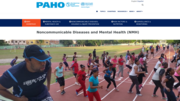
The Department of Noncommunicable Diseases and Mental Health (NMH) is responsible for promoting, coordinating, and implementing technical cooperation activities related to the prevention, control, and surveillance of noncommunicable diseases, all forms of malnutrition, mental health, neurological an
...

Medical devices are used for the prevention, diagnosis and treatment of illness and diseases and for rehabilitation. WHO developed guidance on medical device donation in 2011, which has been now reviewed, with new evidence, new references on considerations for medical device solicitation and provisi
...

The Implementation toolkit for accessible telehealth services provides practical guidance to support governments, industry partners, health service providers and civil society groups in the use and implementation of the WHO-ITU Global standard for accessibility of telehealth services. The toolkit is
...

An estimated 1.3 billion people globally experience significant disability. This figure has grown over the last decade and will continue to rise due to demographic and epidemiological changes. In 2022, the World Health Organization launched the Global report on health equity for persons with disabil
...

The Disability inclusion guide for action supports ministries of health and their partners in both advancing health equity for persons with disabilities by identifying entry points, and planning appropriate actions that strengthen the health system through disability inclusion. It focuses on address
...

The World Health Organization (WHO) fact sheet on Chronic Obstructive Pulmonary Disease (COPD) provides an overview of this common lung condition characterized by persistent respiratory symptoms and airflow limitation.
The World Health Organization (WHO) fact sheet on Chronic Obstructive Pulmonary Disease (COPD) provides an overview of this common lung condition characterized by persistent respiratory symptoms and airflow limitation.
The World Health Organization (WHO) fact sheet on Chronic Obstructive Pulmonary Disease (COPD) provides an overview of this common lung condition characterized by persistent respiratory symptoms and airflow limitation.
The World Health Organization (WHO) fact sheet on Chronic Obstructive Pulmonary Disease (COPD) provides an overview of this common lung condition characterized by persistent respiratory symptoms and airflow limitation.
The World Health Organization (WHO) fact sheet on Chronic Obstructive Pulmonary Disease (COPD) provides an overview of this common lung condition characterized by persistent respiratory symptoms and airflow limitation.

The World Health Organization (WHO) fact sheet on Chronic Obstructive Pulmonary Disease (COPD) provides an overview of this common lung condition characterized by persistent respiratory symptoms and airflow limitation.

The document outlines a comprehensive package of interventions for the rehabilitation of cardiopulmonary conditions, emphasizing assessments, treatments, and support mechanisms aimed at improving patients' quality of life and functional ability, provided by a multidisciplinary team.
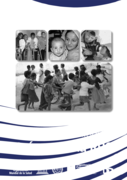
Guía para la rehabilitación basada en la comunidad (RBC)
En el 2003, una Consulta Internacional para Revisar a Rehabilitación Basada en la Comunidad, celebrada en Helsinki, hizo un número de recomendaciones. Seguidamente, la rehabilitación basada en la comunidad se volvió a posicionar con una
...
Recommendations to develop guidelines on community-based rehabilitation (CBR) were made during the International Consultation to Review Community-based Rehabilitation which was held in Helsinki, Finland in 2003. WHO; the International Labour Organization; the United Nations Educational, Scientific a
...
Available in: English, French, Chinese, Spanish, Russian, Arabic, Thai, Korean, Tajik, Vietnamese, Uzbek
http://www.who.int/disabilities/cbr/guidelines/en/

Diretrizes RBC
