Filter
61
Breadcrumb:
Hygiene
Featured
11
14
Language
Document type
23
12
12
3
2
2
2
1
1
1
1
Countries
5
5
5
4
4
3
2
2
1
1
1
1
1
1
1
Authors & Publishers
Publication Years
Category
30
5
3
3
2
1
1
1
1
1
1
1
1
1
Toolboxes
29
23
22
20
14
10
9
9
6
6
5
4
4
3
3
3
2
2
2
2
2
1
1
1
1
1
1
1
1
1
1
1
1
1
1
1
1
1
Le Groupe spécial mondial de lutte contre le choléra (GTFCC) a lancé Mettre fin au choléra : Une feuille de route mondiale pour 2030 (la Feuille de route mondiale. Cette stratégie vise à réduire de 90 % le nombre de décès dus au choléra dans le monde et à mettre fin à la maladie dans a
...
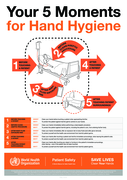
All health-care workers require clear and comprehensive training and education on the importance of hand hygiene, the "My 5 Moments for Hand Hygiene" approach and the correct procedures for handrubbing and handwashing. The following tools and resources are meant to support bridging the knowledge gap
...

The Cholera Q&A Fact Sheet provides essential information about cholera, including its causes, symptoms, treatment, and prevention. Cholera is an acute diarrheal disease caused by Vibrio cholerae, which spreads through contaminated water and food. It leads to rapid dehydration and can be fatal if un
...
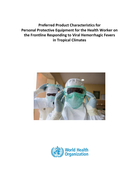
The scope of this PPC document is to serve as a guide to address the unmet public health need for a PPE system that protects the HW-F in tropical climate
s while caring for patients and providing heavy duty essential health services.
The characteristics described in this guidance are targeted fo
...
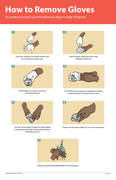
To protect yourself, use the following steps to take off gloves
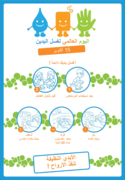
This poster, designed for children, shows they key times for handwashing and demonstrates how to properly wash hands

Hygiene Awareness Manual (Arabic) - GIZ
recommended
The "Hygiene Awareness Manual" focuses on promoting improved hygiene practices within communities, emphasizing personal and household hygiene, water safety, and environmental health. It highlights the importance of handwashing, oral hygiene, and maintaining cleanliness of the skin and clothing as ke
...
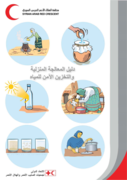
The document focuses on household water treatment methods to ensure access to safe drinking water, particularly in areas with limited access to clean water sources. It highlights the importance of safe water, noting that contaminated water is a major cause of waterborne diseases such as diarrhea and
...
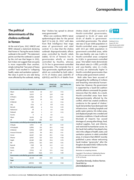
The Lancet Global Health, published online 18 August 2017;
http://dx.doi.org/10.1016/S2214-109X(17)30332-7
The article "The Political Determinants of the Cholera Outbreak in Yemen" examines how the ongoing civil war has contributed to Yemen’s severe cholera outbreak. The 2017 epidemic was des
...
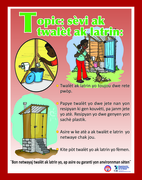
Topic: sèvi ak twalèt ak latrin
Organización Panamericana de la Salud (2016)
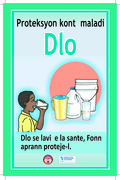
The document "Proteksyon Maladi" focuses on preventing waterborne and hygiene-related diseases through practical measures. It emphasizes the importance of personal hygiene, including washing hands with soap and clean water before eating, after using the toilet, and during food preparation. Maintaini
...
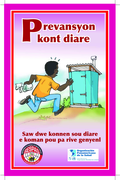
The document "Prevansyon kont Diare" provides guidance on preventing and managing diarrhea. It explains that diarrhea, caused by pathogens like viruses, bacteria, and parasites, can lead to severe dehydration if untreated. Symptoms include vomiting, fever, and loss of appetite, with severe cases req
...
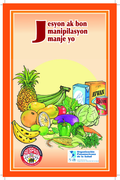
The document "J-esyon ak bon manipilasyon manje yo" focuses on proper food handling and hygiene practices to prevent contamination and foodborne illnesses. It provides comprehensive guidelines for individuals and communities, emphasizing the importance of food safety. Key recommendations include kee
...
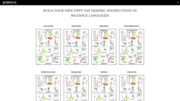
The brochure "How to Build Your Own Tippy Tap", published by SPRING in 2015, provides step-by-step instructions for creating a simple handwashing device called a tippy tap. It highlights the importance of hand hygiene and demonstrates how to construct the device using locally available, low-cost mat
...
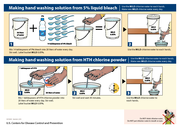
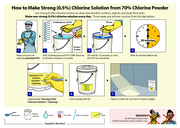
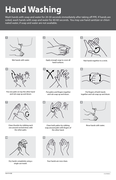
Hand Washing
recommended
Wash hands with soap and water for 20-30 seconds immediately after taking off PPE. If hands are soiled, wash hands with soap and water for 40-60 seconds. You may use hand sanitizer or chlorinated water, if soap and water are not available.
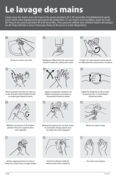
Le lavage des mains
recommended
Lavez-vous les mains avec de l'eau et du savon pendant 20 à 30 secondes immédiatement après avoir retiré votre équipement personnel de protection. Si vos mains sont souillées, lavez-les avec de l'eau et du savon pendant 40 à 60 secondes. Vous pouvez utiliser une solution hydro-alcoolique ou d
...