
Filter
49
Breadcrumb:
Emergency healthcare
Featured
8
2
Language
Document type
14
9
6
5
4
3
2
2
2
1
1
Countries
3
2
2
2
1
1
1
1
1
1
1
1
1
1
1
Authors & Publishers
Publication Years
Category
4
4
3
3
3
2
2
2
2
2
2
2
1
1
1
1
1
1
1
1
1
1
1
1
1
Toolboxes
15
13
3
3
3
3
2
2
2
2
2
2
2
2
2
1
1
1
1
1
1
1
1
1
1
1
1
1
1
1
1
1
1
1
1
1
1
1
1
1
1
1
1
1
1
1
1
1
1
1
1
1
1
1
1
1

The Coronavirus Disease 2019 (COVID-19) has had a continuous and robust impact on world health. The resulting COVID-19 pandemic has had a devastating physical, mental and fiscal impact on the millions of people living with noncommunicable diseases (NCDs), as they have a higher risk of severe illness
...
World Health Organization’s (WHO) presence in Sierra Leone throughout 2023 has been fulfilling. Out attention has been focused on advancing Universal Health Coverage and strengthening emergency preparedness and response. Collaborating closely with the Ministry of Health, our donor partners, and va
...
In 2023, the World Health Organization was responding to 72 health emergencies, including 19 grade-3 emergencies which required the highest level of activation, reaching millions of people. The annual report on WHO’s response to health emergencies in 2023 outlines the increasingly critical role of
...
WHO Director-General Dr Tedros Adhanom Ghebreyesus has determined that the upsurge of mpox in the Democratic Republic of the Congo (DRC) and a growing number of countries in Africa constitutes a public health emergency of international concern (PHEIC) under the International Health Regulations (2005
...

The active participation and engagement of health and care workers (HCWs) in health emergency preparedness, readiness and response is crucial to support risk communication, community engagement and infodemic management (RCCE-IM) interventions during emergencies. HCWs hold unique position
...
UThe UNDAC Handbook is intended as an easily accessible reference guide for members of an UNDAC team before and during a mission to a disaster or emergency. The Handbook is not an authoritative instruction, but rather represents an accumulation of institutional memory related to processes and proced
...
Les conflits et les guerres ont des effets catastrophiques sur la santé et le bien-être des nations, et ils ont considérablement évolué au cours des dernières décennies. Avec la forte augmentation des crises humanitaires, y compris de la violence urbaine, de plus en plus de gens sont touchés
...

Medical care for people caught up in armed conflict and other insecure environments saves lives and alleviates suffering. It is one of the most immediate and high priority needs of an affected population and is often the first type of response activated and/or requested by authorities and affected c
...
Emergency medical teams (EMT) are first response health care providers – doctors, nurses, paramedics, and others – during outbreaks and emergencies or disasters, working with governments, charities such as nongovernmental organizations (NGOs), armies, and international organizations such as the
...
Preparedness and Resilience for Emerging Threats in English, Spanish and French
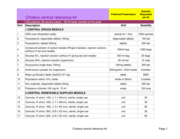
The document lists the components of various cholera kits designed for managing cholera outbreaks. It includes items for rehydration therapy (e.g., oral rehydration salts and IV fluids), medications, sanitation supplies, diagnostic tools, and logistical materials such as cholera beds and water purif
...

The workshop aimed to support countries in the prioritization and acceleration of NCD prevention and management with a specific focus on accelerating the prevention and control of hypertension and diabetes, identifying the most impactful NCD interventions within their context, closing the gaps in ca
...
The WHO document, "High-level technical meeting on noncommunicable diseases and mental health in small island developing states: summary brief," outlines the outcomes of a January 2023 meeting in Barbados, focusing on NCDs and mental health challenges in small island developing states (SIDS). Key to
...

Emergency Medical Teams 2030 strategy
recommended
The Emergency Medical Teams (EMT) initiative plays a vital role in building this stronger and
more resilient global health emergency architecture, both by driving its formation and by
contributing to a rapidly deployable global health emergency corps. The Initiative and EMTs
bring something uniqu
...
En esta publicación, también conocida como Libro rojo, se ofrece un marco de orientación y se introducen requisitos de verificación adicionales para los equipos médicos que estén en fase de preparación o que ya estén participando en la respuesta a emergencias de salud, en conflictos armados
...
Emergency health kits
recommended
WHO has developed standardized health kits of medicines and medical supplies to meet different health needs in humanitarian emergencies and disasters.
These kits are developed to provide reliable and affordable medicines and supplies quickly to those in need. The kits are used by United Nations age
...
Preparedness planning is essential in order to respond effectively to outbreaks, including single case occurrences of highconsequence infectious diseases (HCID), such as the importation of a viral haemorrhagic fever (VHF) case
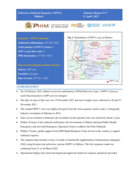
On 16 February 2022, Malawi received confirmation of Wild Poliovirus Type 1 (WPV1) from an acute flaccid paralysis (AFP) case in Lilongwe.
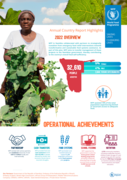
WFP in Namibia collaborated with partners to strategically transition from emergency food relief interventions towards transformative and sustainable food systems assistance. As part of this plan, WFP aims to transfer management of these projects to the Namibian government, thereby contributing to t
...
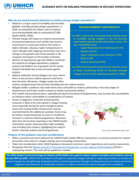
This UNHCR guidance note provides comprehensive recommendations for the prevention and control of malaria in refugee settings worldwide. Aligned with the WHO Global Technical Strategy for Malaria, it outlines strategies to ensure access to effective prevention, diagnosis and treatment, implement sus
...
