
Filter
80
Featured
Language
Document type
36
11
9
8
7
3
2
1
1
1
1
Countries / Regions
56
7
2
2
1
1
1
1
1
Authors & Publishers
Publication Years
Category
58
2
2
1
1
1
1
1
1
1
Toolboxes
11
10
9
8
8
4
3
3
2
2
2
2
2
2
2
2
2
2
2
1
1
1
1
1
1
1
1
Chronic noncommunicable diseases (NCDs) are the number one cause of death and disability in the world.
The term NCDs refers to a group of conditions that are not mainly caused by an acute infection, result in long-term health consequences and often create a need for long-term treatment and care.
...
Noncommunicable diseases (NCDs) or Chronic noncommunicable diseases (NCDs) are the 1st cause of death and disability worldwide.
The term NCDs refers to a group of conditions that are not mainly caused by an acute infection, result in long-term health consequences and often create a need for long-
...

This module covers common Non-Communicable Diseases such as Hypertension, Diabetes and three common cancers (Cervical,
Breast and Oral cancer). The focus of this module is on building the knowledge and skills of the Multi-Purpose Workers (MPW) in
undertaking Population Based Screening, identifi ca
...
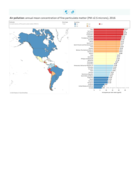
The webpage from the Pan American Health Organization (PAHO) focuses on the significant health impacts of air pollution in the Americas. It explains how exposure to air pollutants contributes to various health issues, including respiratory and cardiovascular diseases, leading to premature deaths. Th
...
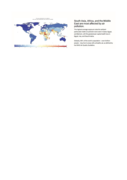
The webpage from the Institute for Health Metrics and Evaluation (IHME) provides an analysis of air pollution as a significant global health risk. It details how air pollution contributes to severe health problems, including respiratory diseases and increased mortality rates. The site explains diffe
...
South Africa has possibly the highest incidence of malignant mesothelioma anywhere, thanks to more than a century of mining asbestos in the Northern Cape, North- West, Limpopo and Mpumulanga provinces. There are three types of asbestos and all were mined in South Africa; the most carcinogenic is cro
...
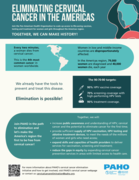
This flyer invites to join PAHO in the path to elimination and make the region of the Americas the first to be free from cervical cancer.
Protection from a Single Dose of HPV Vaccine A major public health impact from IARC studies of vaccine efficacy.
The article "The Rising Burden of Non-Communicable Diseases in the Americas and the Impact of Population Aging" examines how the aging population in the Americas is contributing to the growing burden of non-communicable diseases (NCDs), despite improvements in disease prevention and health care. Usi
...

The workshop aimed to support countries in the prioritization and acceleration of NCD prevention and management with a specific focus on accelerating the prevention and control of hypertension and diabetes, identifying the most impactful NCD interventions within their context, closing the gaps in ca
...

This report is one of the first major products of the newly established Precision Public Health Metrics unit of the UCN cluster of the WHO Regional Office for Africa. The report presents national trends in communicable and non-communicable disease burden and control in the WHO African region. It tra
...
The Noncommunicable Diseases (NCD) Data Portal provides comprehensive information on NCDs, including cardiovascular diseases, cancer, diabetes, and chronic respiratory diseases. It offers country-specific data on mortality rates, risk factors, and national responses, enabling analysis and comparison
...
The NCD Alliance website provides information and resources on preventing and controlling non-communicable diseases (NCDs), including cardiovascular diseases, cancer, respiratory diseases, diabetes, and mental health conditions. The Alliance advocates for global health policies, supports countries i
...
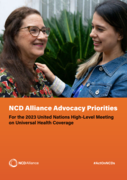
The document is a policy brief by the NCD Alliance for the 2023 United Nations High-Level Meeting on Universal Health Coverage (UHC). It highlights the importance of integrating non-communicable diseases (NCDs) into UHC efforts, with the goal of ensuring equitable health access worldwide.

The document, "Sustainable Management of Radiotherapy Facilities and Equipment," by WHO and IAEA, provides guidelines for managing radiotherapy equipment and facilities to ensure effective and safe cancer treatment. It covers essential aspects like preventive and corrective maintenance, funding, inf
...

The document, titled "Prevention and Control of Noncommunicable Diseases: Guidelines for Primary Health Care in Low-Resource Settings," provides the World Health Organization's (WHO) recommendations for managing noncommunicable diseases (NCDs) such as cancer, heart disease, diabetes, and chronic res
...

The document, titled "Prevention and Control of Noncommunicable Diseases: Guidelines for Primary Health Care in Low-Resource Settings," provides the World Health Organization's (WHO) recommendations for managing noncommunicable diseases (NCDs) such as cancer, heart disease, diabetes, and chronic res
...
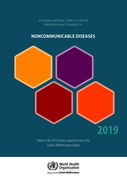
The report "Assessing National Capacity for the Prevention and Control of Noncommunicable Diseases" provides an overview of the capacities of countries in the Eastern Mediterranean Region to address noncommunicable diseases (NCDs) based on a 2019 survey. It evaluates the progress of 22 countries in
...
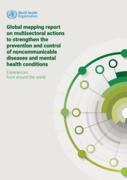
The "Global mapping report on multisectoral actions to strengthen the prevention and control of noncommunicable diseases (NCDs) and mental health conditions" by the WHO provides insights into how different countries are implementing multisectoral approaches to address NCDs and mental health issues.
...
Noncommunicable diseases (NCDs) – chief among them, cardiovascular diseases (heart disease and stroke), cancer, diabetes and chronic respiratory diseases – cause nearly three-quarters of deaths in the world. Their drivers are social, environmental, commercial and genetic, and their presence is g
...
