
Filter
64
Breadcrumb:
Outbreak Control
Featured
3
2
Language
Document type
22
12
8
7
7
3
2
1
1
1
Countries
19
8
4
3
3
2
1
1
1
1
1
Authors & Publishers
Publication Years
Category
4
2
1
1
1
1
Toolboxes
13
11
9
6
5
4
4
4
4
3
3
3
2
2
2
2
2
2
1
1
1
1
1
1
1
1
1
1
1
1
1
1
1
1
1
1
1
1
1
1
1
1
Several tools are available to support and guide outbreak preparedness, investigation and response activities. These are open access and free to use.
A number of restricted platforms support early detection of public health threats and coordinate response activities between EU Member States, the E
...
On May 17, 2026, the World Health Organization (WHO) declared the Ebola outbreak in the Democratic Republic of Congo (DRC) and Uganda as a Public Health Emergency of International Concern (PHEIC). This was followed by Africa Centres for Disease Control and Prevention (Africa CDC) declaration on 18 M
...

The webpage introduces the “Health Cluster Coordination” channel on World Health Organization’s OpenWHO platform, focusing on training and resources for coordinating health-cluster operations in humanitarian emergencies. It outlines how participants can learn about setting up and managing heal
...
The website presents the CDC Field Epidemiology Manual, a practical resource developed by the Centers for Disease Control and Prevention (CDC). It provides guidance for epidemiologists and public health professionals on how to investigate and respond to disease outbreaks and other public health even
...
The WHO Global Respiratory Syncytial Virus (RSV) Surveillance page describes a World Health Organization initiative under the Global Influenza Programme to monitor RSV infections worldwide. It explains that WHO uses the existing Global Influenza Surveillance and Response System (GISRS) to collect st
...
The WHO “Surveillance” page on the Emergencies section explains how the World Health Organization supports disease surveillance in the context of health emergencies. It highlights that effective surveillance systems are essential to detect disease outbreaks quickly in emergency settings, such as
...
The webpage ”H5 Reference Laboratories” on the WHO Global Influenza Surveillance and Response System (GISRS) site describes a network of specialized laboratories designated by the World Health Organization to support global influenza monitoring — particularly for H5 subtype avian influenza vir
...
The text explains the National Outbreak Reporting System (NORS), a surveillance system used in the United States to collect and analyze data about disease outbreaks. It describes how health departments report outbreaks caused by food, water, person-to-person contact, environmental exposure, or unkno
...

The webpage “Emergency Response Framework” on the OpenWHO platform provides learning materials that introduce the World Health Organization’s (WHO) Emergency Response Framework (ERF). The framework explains how WHO organizes and manages responses to public health emergencies, including how eve
...
Investigating outbreaks caused by non-infectious, toxic agents requires some unique considerations and skills that are different from those used to investigate infectious disease outbreaks. To help public health agencies investigate these outbreaks, CDC’s National Center for Environmental Health (
...
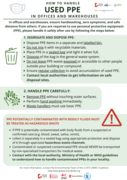
How to Handle PPE in Offices and Warehouses (WREC)
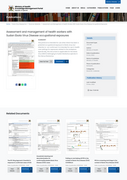
The webpage presents a guidance document developed by Uganda’s Ministry of Health for the assessment and management of healthcare workers who may have been exposed to Sudan Ebola Virus Disease (SVD) in the workplace. The document provides protocols for identifying and evaluating occupational expos
...
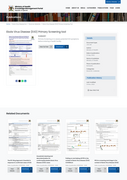
The Ebola Virus Disease (EVD) Primary Screening Tool is a job aid developed to help healthcare workers identify individuals who may have symptoms or risk factors associated with Ebola before they enter a health facility. The tool supports the early detection of suspected Ebola cases through an initi
...
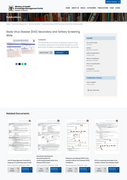
The Ebola Virus Disease (EVD) Secondary and Tertiary Screening Tool provides guidance for healthcare workers on conducting more detailed assessments of individuals who have already been identified as potential Ebola suspects during primary screening. The tool outlines procedures for evaluating sympt
...

This video is a public health awareness message about Ebola. It aims to educate the general population by explaining that Ebola is not transmitted through the air. The video addresses common misconceptions about the disease and provides accurate information about how Ebola spreads, emphasizing that
...
This video provides comprehensive health education about Ebola virus disease. It explains the main symptoms of Ebola, how the virus is transmitted, and the measures people can take to protect themselves from infection. The video also offers practical guidance on how to safely care for a person with
...

The video features Ogallo Ongweno discussing the importance of preventing Ebola Virus Disease (EVD) rather than relying on treatment after infection. It emphasizes that Ebola prevention depends on public awareness, early detection, good hygiene, avoiding contact with infected individuals or animals,
...
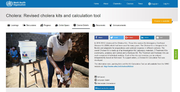
Cholera is an acute diarrhoeal infection caused by ingestion of contaminated water or food. It can lead to dehydration, and death in patients with severe forms of the disease.
The WHO’s Early Warning, Alert and Response System (EWARS) is a tool used in emergencies such as conflicts or natural disasters to quickly detect and respond to disease outbreaks. It helps set up simple and reliable surveillance systems even in places without stable electricity or internet, using
...
Educational materials include resources for children and adolescents, such as children's books, textbooks, lesson plans, activities, games, and online resources on disaster prevention and school safety.
