
Filter
23
Featured
10
Language
Document type
15
4
2
2
Countries
1
1
1
1
1
1
1
1
Authors & Publishers
Publication Years
Category
6
5

WHO's Department for HIV, Tuberculosis, Hepatitis and Sexually Transmitted Infections (STIs) has consolidated all existing normative guidance on STIs into a single publication. Structured around 10 chapters that follow the STI prevention and care cascade, the handbook covers primary prevention, synd
...
The federally approved clinical practice guidelines for HIV/AIDS are developed by panels of experts in HIV care. More information about the panels can be found in each set of guidelines.
The recommendations in these guidelines represent the current, evidence-based consensus of the U.S. Departmen
...
This document highlights the latest WHO recommendations designed to optimize health outcomes, streamline delivery and address persistent barriers to prevention and care. It especially focuses on people often left behind in service delivery, including adolescents and young people, key populations and
...
The information in the brief version is excerpted directly from the full-text guidelines. The brief version is a compilation of the tables and boxed recommendations. The guidelines were updated to comply with Executive Orders

Guidelines for the Prevention and Treatment of Opportunistic Infections in Adults and Adolescents With HIV
recommended
The Guidelines for the Prevention and Treatment of Opportunistic Infections in Adults and
Adolescents With HIV document is published in an electronic format and updated as relevant changes
in prevention and treatment recommendations occur.
Guidelines for the Prevention and Treatment of Opportunistic Infections in Children With and Exposed to HIV
recommended
Full Guidelines

Dosing Recommendations for Prevention and Treatment
Archives of Medicine vo.7 no.5:10
Individuals infected with human immunodeficiency virus (HIV) often develop
multiple complications and comorbidities, among them, opportunistic infections.
The highest incidence of opportunistic infections was reported in the group
of patients with CD4 lymphocyte
...

The Department of Global HIV, Hepatitis and Sexually Transmitted Infections Programmes leads the development and implementation of the global health sector strategies on HIV, viral hepatitis, and sexually transmitted infections for ending AIDS and the epidemics of viral hepatitis and STIs by 2030

IAS–USA Topics in Antiviral Medicine. September 22, 2025
Topics in Antiviral Medicine, volume 33 Issue 2 May 2025

This is the 2025 draft Malawi Guidelines for Syndromic Management of Sexually Transmitted Infections which is yet to be approved by the SMT.
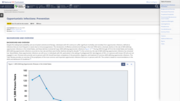
National HIV Curriculum

Here you can find course modules: Antiretroviral therapies, Screening and Diagnosis; Basic HIV Primary Care; Co-occuring conditions, Key Population; Prevention of HIV
J Infect Dev Ctries 2023; 17(7):1022-1029. doi:10.3855/jidc.15105
Opportunistic co-infections are more prevalent in HIV-infected patients with a CD4 + cell count of < 200 cells/mm3, poor drug adherence, and also associated with the occupation. So, regular examination and appropriate medication can reduce the prevalenc
...
July 2023 version .The 2023 ART guideline introduces simplified ART provision and harmonised methods of management of children, adolescents and adults, as well as pregnant women living with HIV/AIDS, TB and other common opportunistic infections.
The guidelines also provide guidance on the use of D
...
The leishmaniases are a group of diseases caused by Leishmania spp., which occur in cutaneous, mucocutaneous and visceral forms. They are neglected tropical diseases (NTDs), which disproportionately affect marginalized populations who have limited access to health care. HIV co-infected patients with
...
Severe bacterial infections are a leading cause of morbidity and mortality among people with advanced HIV disease, after tuberculosis and cryptococcal disease. For countries to reach the end-AIDS targets for 2030, there is a need to establish a roadmap for managing severe bacterial infections and re
...
Cryptococcal disease, particularly cryptococcal meningitis is a significant cause of morbidity and mortality among people living with HIV with advanced HIV disease. It is estimated that it is responsible for nearly 19% of AIDS-related mortality, second only to tuberculosis. Rapid screening, diagnosi
...
The Consolidated guidelines on HIV, viral hepatitis and STI prevention, diagnosis, treatment and care for key populations outline a public health response for 5 key populations (men who have sex with men, trans and gender diverse people, sex workers, people who inject drugs and people in prisons and
...
