
Filter
201
Featured
16
24
Language
Document type
161
13
8
8
7
2
1
1
Countries
3
2
2
2
2
2
1
1
1
1
1
1
1
1
1
1
1
1
1
1
1
1
1
1
1
Authors & Publishers
Publication Years
Category
17
14
14
11
4
1
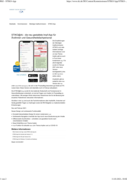
Die STIKO@rki-App wurde für die impfende Ärzteschaft und Fachpersonal im Gesundheitswesen entwickelt, um sie bei Fragen zum Impfen im Praxisalltag zu unterstützen. Mit wenigen Klicks bekommen NutzerInnen die für die Beratung der einzelnen PatientInnen relevanten Informationen.
Abrufbar in der
...
Menstruation is a natural fact of life and a monthly occurrence for 1.8 billion girls and women of reproductive age. Yet millions of menstruators across the world are denied the right to manage their monthly menstrual cycle in a dignified, healthy way. Girls and women with disabilities face even gre
...
Les menstruations sont une réalité naturelle de la vie qui revient tous les mois pour 1,8 milliard de filles et de femmes en âge de procréer. Or, dans le monde entier, des millions de personnes ayant des menstruations1 se voient refuser le droit de gérer leur cycle menstruel mensuel d’une man
...
La menstruación es un hecho natural de la vida y un acontecimiento mensual para 1.800 millones de niñas y mujeres en edad reproductiva. Sin embargo, a millones de menstruantes de todo el mundo se les niega el derecho a gestionar su ciclo mensual de forma digna y saludable. Las niñas y las mujeres
...
Menstrual Health & Hygiene for Girls and Women with Disabilities in Arabic
People experiencing social disadvantage and marginalization are known to be disproportionately impacted by ill-health. In the context of the COVID-19 pandemic, persons with disabilities may have increased risk for exposure, complications, and death
The publication draws on pre-COVID data to highlight how children with disabilities face greater risks in the midst of this pandemic. It documents what has happened to services for children and adults with disabilities across the world and includes examples of what has been done to address disruptio
...
People with disabilities experience significant health inequalities. In Malawi, where most individuals live in low-income rural settings, many of these inequalities are exacerbated by restricted access to health care services. This qualitative study explores the barriers to health care access experi
...
HelpAge has been raising awareness among humanitarian actors and government institutions about the vulnerabilities of older men and women during humanitarian crises in the region since 2009.
This digital learning platform was established for the purpose of remote humanitarian response for hard to r
...
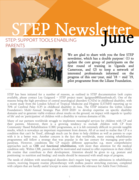
The Liliane Foundation in collaboration with Enablement has been running a pilot focusing on children with neurodevelopmental disorders in 4 African countries called: Support Tools Enabling Parents (STEP). We can share details of the pilot including the evaluation report; report of a research proje
...
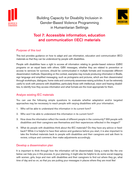
This tool provides guidance on how to adapt and use information, education and communication (IEC) materials so that they can be understood by people with disabilities. People with disabilities have a right to access all information relating to gender-based violence (GBV
...

The NDMS&IP focuses on mainstreaming disability to promote equitable access to services in the six thematic areas of health, education, livelihoods, empowerment, and social inclusion and cross-cutting issues.
The first part of the NDMS&IP outlines incongruences between national and sectoral policie
...

People living with disabilities (PLWDs) have poor access to health services compared to people without disabilities. As a result, PLWDs do not benefit from some of the services provided at health facilities; therefore, new methods need to be developed to deliver these services where PLWDs reside. Th
...
The three week course aims to raise awareness about the importance of health and well-being of people with disabilities in the context of the global development agenda: Leaving no one behind. This course is designed for anyone with a professional or personal
...
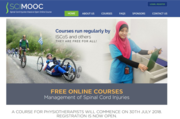
There are different courses for Physiotherapists, Occupational therapists, Nurses, Doctors, others
All courses are based on www.elearnSCI.org and run in conjunction with the International Spinal Cord Society and other affiliated organisations. They run in 5-week blocks and require approx. 5 hour
...
CBM’s approach is based on the principles of the UN Convention on the Rights of Persons with Disabilities (CRPD) and on CBM’s responsibility to promote accessibility and the principles of universal design in all spheres of its work, including CBM’s digital content and communications. With this
...
CBM está comprometida con el principio de que las personas con discapacidad deben poder participar plenamente en la sociedad en igualdad de condiciones. Nuestro planteamiento se basa en los principios de la Convención de Naciones Unidas sobre los Derechos de las Personas con Discapacidad (CDPD) y
...
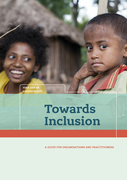
The publication aims to establish the rationale for inclusion and provides technical advice and tools for putting theory into practice. It is intended to be used as a reference during organizational and program/project development with a focus on gender responsiveness and disability inclusion as wel
...
Under the newly established Africa Trust Fund on Disability, World Bank-UNICEF and USAID are jointly organizing a series of 3 webinars on the topic of disability-inclusive education. The series explores essential components of the enabling environment and service delivery that can support efforts to
...

In disaster preparedness, the participation of women, children, older people, persons with disabilities (PWDs), and other minority groups and sectors is important because they are the most vulnerable against disasters. Inclusive disaster preparedness provides technical and logical frameworks that as
...
