

Filter
374
Featured
6
2
Language
Document type
268
81
11
5
3
3
1
1
1
Countries
185
15
8
4
4
3
3
2
2
2
2
2
1
1
1
1
1
1
1
1
1
1
1
1
1
1
1
1
1
1
1
1
1
Authors & Publishers
Publication Years
Category
8
3
1
Report on the PCB Bureau on UNAIDS' funding situation based on the recommendations of the informal multistakeholder task team
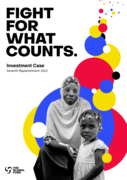
Over the 20 years that followed, this unique partnership has invested more than US$53 billion, saving 44 million lives and reducing the combined death rate from the three diseases by more than half in the countries in which the Global Fund invests.
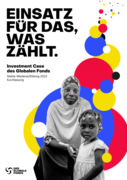
In den vergangenen 20 Jahren hat derGlobale Fonds mehr als 53 MilliardenUS-Dollar investiert und gemeinsam
mit seinen Partnern dazu beigetragen, 44 Millionen Menschenleben zu retten. In den Partnerländern des Globalen
Fonds ist die Zahl der durch diese drei Krankheiten insgesamt verursachten Tode
...
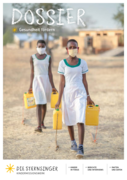
Im Hinblick auf die Finanzierung von Gesundheit im Allgemeinen und von Kindergesundheit im Speziellen ist zunächst zu berücksichtigen, ob die Gelder aus öffentlichen oder privaten Quellen stammen. Denn daraus ergeben sich grundsätzliche Unterschiede. Da private Krankenversicherungen gewinnorient
...

Substantial progress in the fight against HIV has been made over the past decade. Advances in HIV prevention, testing, and treatment have been matched by declines in HIV incidence and HIV-related deaths. The success of Botswana reaching the 95-95-95 targets, despite resource limitations, points to a
...

Analyse und Vorausschau der Official Development Assistance (ODA) für die 20. Legislaturperiode des Deutschen Bundestages
Stellungnahme zu Bundeshaushalt 2022
Fünfte zivilgesellschaftliche Bestandsaufnahme des politischen und
finanziellen Engagements der Bundesregierung für die UN-Ziele
zur weltweiten Gesundheitsversorgung und HIV-Bewältigung
Background: Several countries allocate official development assistance (ODA) for research on global health and development issues that is initiated in the donor country. The integration of such research within domestic research systems aligns with efforts to coordinate ODA investments with science,
...
Health security funding is intended to improve capacities for preventing, detecting, and responding to public health emergencies. Recent years have witnessed substantial increases in the amounts of donor financial assistance to health security from countries, philanthropies, and other development pa
...

A global Pandemic, Preparedness and Response (RRR) architecture

A year ago, the second Special Session of the World Health Assembly (WHASS) unanimously agreed to start a diplomatic process for a new binding instrument aimed at ensuring the international community is better prepared for the next health emergencies. The establishment of an Intergovernmental Negoti
...
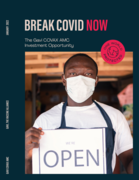
In April 2020, Gavi and COVAX joined the Access to COVID-19 Tools Accelerator (ACT-A) to provide equitable global access to COVID-19 vaccines to tackle the pandemic. In June 2020, the Gavi COVAX Advance Market Commitment (AMC) was launched to finance equitable access in 92 lower-income countries. Si
...
The COVID-19 pandemic has brought the need for well-functioning primary health care (PHC) into sharp focus. PHC is the best platform for providing basic health interventions (including effective management of non-communicable diseases) and essential public health functions. PHC is widely recognised
...
Stellungnahme zur Anhörung im Unterausschuss Globale Gesundheit
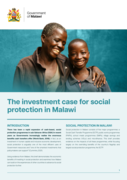
There has been a rapid expansion of cash-based, social protection programmes in sub-Saharan Africa (SSA) in recent years as Governments increasingly realise the enormous benefits cash transfers offer (World Bank, 2018). In fact, as an investment in human capital and inclusive economic development,
...
Tracking development assistance for health from India to low- and middle-income countries, 2009–2020
Development assistance for health (DAH) is an important source of financing for health for many low-income and some middle-income countries. Most DAH has predominantly been contributed by high-income countries. However, in the context of economic progress and changing global priorities, DAH contribu
...
The COVID-19 pandemic demonstrated that
the world was not well prepared to respond
to an infectious disease threat of this magnitude. Countries across all socioeconomic and development categories have struggled
to implement effective national responses. Substantial amounts of additional investmen
...
The faltering of progress towards malaria elimination follows a plateauing in international financing since 2010. Despite calls for increased international financing, this will be hard to achieve. Both developed country donors and developing countries with malaria face severe fiscal constraints in e
...

There has never been a more critical moment to invest in WHO, and strengthen the unique role it plays in global health. Now is the time to sustainably finance WHO and invest in a healthy return for all.
