

Filter
374
Featured
6
2
Language
Document type
268
81
11
5
3
3
1
1
1
Countries
185
15
8
4
4
3
3
2
2
2
2
2
1
1
1
1
1
1
1
1
1
1
1
1
1
1
1
1
1
1
1
1
1
Authors & Publishers
Publication Years
Category
8
3
1
The Coronavirus disease (COVID-19) pandemic has revealed the fragility of pre-crisis African health systems, in which too little was invested over the past decades. Yet, development assistance for health (DAH) more than doubled between 2000 and 2020, raising questions about the role and effectivenes
...
Past the crucial midpoint to the SDGs, the 2024 SDG3 GAP progress report, ‘Aligning for country impact’, focuses on alignment as the overarching principle linking efforts to deliver greater impact in countries on the health-related SDGs. It contributes to the basis for further discussions among
...
En mai 2023, la COVID-19 n’est peut-être plus classifiée en tant qu’urgence de santé publique d’envergure internationale mais nous ne devons pas ignorer les profonds problèmes structurels qu’elle a révélé dans notre économie. La santé est
un droit humain fondamental et le temps est
...

As of May 2023, COVID-19 may no longer be classified as a public health emergency of international concern, but we must not ignore the deep structural problems it has revealed in our economy.
Aunque en mayo de 2023 la pandemia de COVID-19 ya no se consideraba una emergencia de salud pública de alcance internacional, no debemos pasar por alto los profundos problemas estructurales que ha puesto de manifiesto en nuestra economía. La salud es un derecho humano fundamental, y actualmente es
...
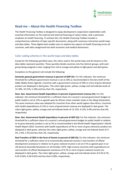
Read me – About the Health Financing Toolbox
recommended
The Health Financing Toolbox is designed to equip development cooperation stakeholders with essential information on the internal and external financing of nation states, with a particular emphasis on health financing. To achieve this, the Health Financing Toolbox includes a comprehensive collection
...
Explore domestic and ODA health financing data for all developing countries and relevant country groups. Navigate directly to information by clicking on a nation’s name in the country list. Methodology and data sources explained on the two final pages
This report summarizes the findings of the Health Financing Progress Matrix assessment for Zambia. Recognizing the remarkable progress towards UHC made by the country over the past twenty years, the report also highlights weaknesses in the current health financing system and, extending from this, th
...
This report summarizes the findings of the Health Financing Progress Matrix assessment for Zambia. Recognizing the remarkable progress towards UHC made by the country over the past twenty years, the report also highlights weaknesses in the current health financing system and, extending from this, th
...
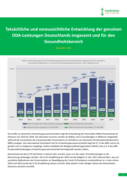
Die Grafik zur deutschen Entwicklungszusammenarbeit zeigt die Entwicklung der finanziellen Mittel Deutschlands im Zeitraum von 2014 bis 2024. Die absoluten Summen werden als Balken und in Eurobeträgen in Millionen dargestellt, während die Kurvenlinien die entsprechenden Prozentwerte im Verhältnis
...
With the COVID-19 pandemic and the ensuing energy and cost-of-living crises, many OECD countries have had to face significant economic and societal challenges over the last five years. The succession of crises has had important implications for health systems and the available resources allocated to
...

The Global Health Expenditure Report delves into the intricate landscape of global economies and health systems. This year, it focuses on health spending in 2022, the third year of the COVID-19 pandemic. It shows how countries around the world responded to the health and economic shocks of the pande
...
The role of evidence in the journey towards universal health coverage is paramount. Financial risk protection monitoring, the major focus of this report, informs where the WHO African Region stands in reducing the financial hardship people face due to health expenses. This report details the status
...
This study aims to provide an overview of health financing in Africa and to examine the impact of the reemergence of mpox on health financing in the region.
As part of the project ‘Equitable health financing for a strong health system in Mozambique’, N’weti and Wemos developed this policy brief with actionable policy recommendations for the Mozambican government and international organizations on how to increase resources for health in a sustainab
...

This paper was commissioned by N´weti and Wemos as part
of the project “Equitable health financing for a strong health
system in Mozambique”. Its purpose is to contribute to the
debate of the Mozambican Ministry of Health’s draft Health
Sector Financing Strategy (HSFS) 2025 – 2034
Strengthening resilient and sustainable systems for health (RSSH) is central to the Global Fund’s strategy, however questions persist about the Global Fund’s role in the health systems strengthening space, and the extent to which investments are designed to achieve strengthening objectives, or j
...
In contrast to bilateral aid, aid disbursed from
multilateral institutions increased significantly at the onset
of the COVID-19 pandemic. Yet, at a time when a coherent
and effective multilateral response is needed most, the
COVID-19 pandemic revealed a shifting landscape of donor
agencies that
...
Over the past decade, countries in the African region experienced slow progress in mobilizing resources for health while facing continued challenges. In their revised estimates published in 2017, Stenberg et al., developed two costs scenarios, termed progress and ambitious, aimed at strengthening co
...
In 2021, global life expectancy at birth was 74 years whereas in sub-Saharan Africa it was 66 years. Yet in that same year, $92 per person was spent on health in sub- Saharan Africa, which is roughly one fifth of what the next lowest geographic region—North Africa and Middle East—spent ($379). T
...
