
Filter
59
Language
Document type
25
9
6
6
5
2
2
2
1
1
Countries
11
4
3
2
1
1
1
Authors & Publishers
Publication Years
Category
4
1
Website accessed Feb. 6, 2025
Website accessed Feb 6, 2025

WEEKLY EPIDEMIOLOGICAL RECORD, NO 23, 7 JUNE 2024, pp.307-318
The most recent estimate of the global number of deaths from dog-mediatedrabies is 59 000 per year.1 Rabies is associated with a 99.9% fatality rate and severe trauma in families in which a rabies death
occurs, and remains a major publ
...
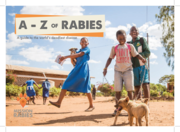
Accessed on 07.03.2023
A – Z of Rabies – A guide to the world´s deadliest disease
Mission Rabies
Children are at high risk of dog bites and contracting rabies. Forty percent of reported rabies cases worldwide are children under the age of fifteen. In our project areas, the proportion of children dying is often even higher. Rabies most often persists in poor communities and rural regions of deve
...
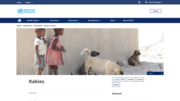
Rabies is a vaccine-preventable, zoonotic, viral disease affecting the central nervous system. Once clinical symptoms appear, rabies is virtually 100% fatal. In up to 99% of cases, domestic dogs are responsible for rabies virus transmission to humans. Yet, rabies can affect both domestic and wild an
...
Website last accessed in 12.03.23
CDC’s Lauren Greenberg writes about building rabies diagnostic capacity in the effort to control rabies in countries that are most affected by the disease.

Rabies is a rare but serious infection that's usually caught from a bite or scratch of an infected animal. It's almost always fatal once symptoms appear, but vaccination and early treatment can prevent it.

Website last accessed on 18.03.2023
GARC provides tools and training to build in-country skills and knowledge on essential elements of rabies control programmes, enabling countries to strengthen their efforts to eliminate rabies in a systematic way. Our most comprehensive in-country capacity bui
...

Website last accessed in 24.03.2023
CDC provides continuing education for professionals involved in rabies prevention and control. While CDC provides some resources directly, others are offered through partnerships and collaborations with other public health entities. This page contains a collec
...

Website last accessed on 14.04.2023
The GARC Education Platform (GEP) is a set of free online courses developed to improve the skills and knowledge of people working in rabies awareness and prevention. Through the GEP, we aim to empower people to become rabies advocates, focal persons, and exper
...

Website last accessed on 08.06.2023

Overview
The aim of this guide is to support national immunization programme managers and others responsible for implementing human rabies vaccine programmes to:
inform policy discussions and operational planning for introducing or expanding rabies post-exposure prophylaxis (PEP) into a nationa
...

Rabies is fatal, vaccine-preventable disease responsible for an estimated 59,000 human deaths each year. Most cases are transmitted by dogs, and most deaths occur in underserved populations in Africa and Asia. Approximately 40% of deaths occur in children.

Rabies is a devastating and societally important zoonotic disease, which is transmitted principally to humans through the bite of infected dogs. This acute, progressive viral encephalitis has the highest case fatality of any infectious disease and kills tens of thousands of people annually, with chi
...

Rabies is a vaccine-preventable viral disease which occurs in more than 150 countries and territories. Dogs are the source of the vast majority of human rabies deaths, contributing up to 99% of all rabies transmissions to humans.
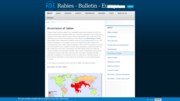
Classical rabies caused by RABV occurs worldwide besides some isolated countries and Western Europe that are regarded rabies free. Carnivores, especially of the canidae family represent the principal reservoir species and are responsible for the maintenance of the infectious cycle and hence for the
...

All lyssaviruses have evolved closely with distinct natural reservoir hosts. The latter are animals species in which a pathogen of an infectious disease are maintained independently. For lyssaviruses, these are a wide range of mammalian species within the Carnivora and Chiroptera (bats) orders with
...

For more than 100 years, the clearest route to elimination of dog-mediated rabies has been via mass vaccination of the animal hosts. It’s worked in plenty of countries. Still, in others, like India, which grapples with a third of the world’s rabies burden, large populations of free-roaming, hard
...

Rabies is a fatal zoonotic disease most often transmitted to people via bites from infected dogs. This course provides a general introduction to rabies, and the One Health approach currently taken to prevent it. It consists of seven video-lectures, demonstration videos, and lessons learnt from peopl
...
