
Filter
1221
Featured
88
46
Language
Document type
378
174
159
111
76
71
57
51
46
30
26
20
14
5
3
Countries
209
41
20
16
16
15
11
8
7
7
7
7
6
6
6
6
5
5
5
5
5
5
5
5
4
4
4
3
3
3
3
3
2
2
2
2
2
2
2
2
2
2
2
2
2
2
2
2
1
1
1
1
1
1
1
1
1
1
1
1
1
1
1
1
1
1
1
1
1
1
1
1
1
1
1
1
Authors & Publishers
Publication Years
Category
131
115
45
18
7
7
1
The development of this target product profile (TPP) was led by the WHO Department of Control of Ne-
glected Tropical Diseases (NTD) following standard WHO guidance for TPP development. In order to
identify and prioritize diagnostic needs, a WHO NTD Diagnostics Technical Advisory Group (DTAG)
was
...

Since 2000, concerted efforts by national programmes, supported by public–private partnerships, nongovernmental organizations, donors and academia under the auspices and coordination of the World Health Organization (WHO), have produced important achievements in the control of human African trypan
...
PLoS Negl Trop Dis 15(8): e0009697. Chagas disease (CD), caused by the parasite Trypanosoma cruzi, affects ~6–7 million people worldwide. Significant limitations still exist in our understanding of CD. Harnessing individual participant data (IPD) from studies could support more in-depth analyses t
...
Human echinococcosis is a zoonotic disease (a disease that is transmitted to humans from animals) that is caused by parasites, namely tapeworms of the genus Echinococcus.
Despite a historical association with poor tolerability, a comprehensive review on safety of antileishmanial chemotherapies is lacking. We carried out an update of a previous systematic review of all published clinical trials in visceral leishmaniasis (VL) from 1980 to 2019 to document any reported
...
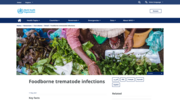
Foodborne trematode infections cause 2 million life years lost to disability and death worldwide every year.
People become infected by eating raw fish, crustaceans or vegetables that harbour the parasite larvae.
Foodborne trematodiases are most prevalent in East Asia and South America.
Foodborne
...
Leptospirosis is a perplexing conundrum for many. In the existing literature, the pathophysiological mechanisms pertaining to leptospirosis is still not understood in full. Considered as a neglected tropical zoonotic disease, leptospirosis is culminating as a serious problem worldwide, seemingly exi
...
Chromoblastomycosis (CBM), represents one of the primary implantation mycoses caused by melanized fungi widely found in nature. It is characterized as a Neglected Tropical Disease (NTD) and mainly affects populations living in poverty with significant morbidity, including stigma and discrimination.
Diagnostic performance, cost-effectiveness, ease of performance, rapidity and in-field applicability of tests for Soil-transmitted helminth infections.
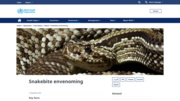
Snake bite is a neglected public health issue in many tropical and subtropical countries. About 5.4 million snake bites occur each year, resulting in 1.8 to 2.7 million cases of envenomings (poisoning from snake bites). There are between 81 410 and 137 880 deaths and around three times as many amput
...
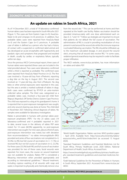
As of 14 December 2021, a total of 19 laboratory-confirmed human rabies cases has been reported in South Africa for 2021. The cases are from Eastern Cape, KwaZuluNatal and Limpopo provinces. In addition, four probable rabies cases were reported from KwaZulu-Natal and the Eastern Cape provinces. A pr
...
Human rabies remains a significant public health problem in Africa with outbreaks reported in most countries. In Nigeria–the most populous country in Africa–rabies causes a significant public health burden partly due to perennial obstacles to implementing a national prevention and control progra
...

Rabies is a zoonotic, vaccine-preventable viral disease that causes damage to the brain and spinal
cord in infected animals and humans. A zoonotic disease is a disease that can be transmitted
between animals and humans. Rabies is nearly 100% fatal once symptoms appear.
To eliminate lymphatic filariasis (LF) by 2020, the World Health Organization (WHO) has launched a campaign against the disease. Since the launch in 2000, significant progress has been made to achieve this ambitious goal. In this article we review the progress and status of the LF programme in Afric
...
Better drug regimens for mass drug administration (MDA) could accelerate the Global Programme to Eliminate Lymphatic Filariasis (LF). This community study was designed to compare the safety and efficacy of MDA with IDA (ivermectin, diethylcarbamazine and albendazole) or DA (diethylcarbamazine and
...
ajtmh.20-1538 Volume 104, 6. Mapping is a prerequisite for effective implementation of interventions against neglected tropical diseases (NTDs). Before the accelerated World Health Organization (WHO)/Regional Office for Africa (AFRO) NTD Mapping Project was initiated in 2014, mapping efforts in man
...
BMJ Open 2021;11:e042279. doi:10.1136/bmjopen-2020-042279. Neglected tropical diseases tend to cluster in the same poor populations, and to make progress with their control, they will have to be dealt with in an integrated manner. Peptide microarrays may be a solution to tese problems, where diagnos
...
In the Indian state of Bihar, visceral leishmaniasis (VL) is a major public health issue that has been aggravated by the rising incidence of new Human immunodeficiency virus (HIV) infections. In endemic areas, the risk of VL infections in patients living with HIV (PLHIV) is higher. It is important t
...
Leishmaniasis is still considered to be a global health problem, which spreads in most countries in the world. Leishmania is an intracellular obligate protistan parasite that causes different clinical symptoms in infected humans and other animals. There are clinically different types of the disease
...
Cutaneous leishmaniasis is a painful disease that exerts a serious toll on societies around the world that are afflicted by it. Although not life-threatening, the skin ulcers and scars it causes can lead to isolation and psychosocial pathologies due to social stigma, and its occurrence is often asso
...
