
Filter
75
Featured
5
1
Language
Document type
40
10
9
5
4
2
1
1
1
1
1
Countries
9
2
1
1
1
1
1
1
1
Authors & Publishers
Publication Years
Category
9
7
1
1
Accessed on 06.03.2022
Air pollution is the biggest environmental health risk in Europe
Air pollution is hard to escape, no matter where you live. It can seriously affect your health and the environment. Even though air quality in Europe has improved over recent decades, the levels of air pollutan
...
Accessed on 06.03.2022
Air pollution is contamination of the indoor or outdoor environment by any chemical, physical or biological agent that modifies the natural characteristics of the atmosphere. Household combustion devices, motor vehicles, industrial facilities and forest fires are common sou
...
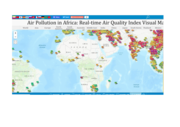
Accessed on 06.03.2022
Webiste
Air Pollution in Africa: Real-time Air Quality Index Visual Map

Accessed on 06.03.2022
Outdoor air quality has improved since the 1990s, but many challenges remain in protecting Americans from air quality problems. Ground-level ozone, the main part of smog, and particle pollution are just two of the many threats to air quality and public health in the United St
...
Accessed on 06.03.2022
This interactive tool provides a snapshot – in the form of a map – of current national air quality standards for classical pollutants (particulate matter, nitrogen dioxide, ozone, carbon monoxide and sulphur dioxide) for various averaging times. The WHO Air Quality G
...
Accessed on 06.03.2022
AirQ+: software tool for health risk assessment of air pollution
Website
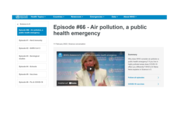
Why does WHO consider air pollution a public health emergency? If you live in highly polluted areas does COVID-19 affect you differently? WHO’s Dr Maria Neira explains in Science in 5.
CO2 emissions
recommended
Carbon dioxide emissions are the primary driver of global climate change. It’s widely recognised that to avoid the worst impacts of climate change, the world needs to urgently reduce emissions. But, how this responsibility is shared between regions, countries, and individuals has been an endless p
...
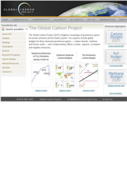
The Global Carbon Project (GCP) integrates knowledge of greenhouse gases for human activities and the Earth system. Our projects include global budgets for three dominant greenhouse gases — carbon dioxide, methane, and nitrous oxide — and complementary efforts in urban, regional, cumulative, and
...
The EEA gathers air pollution data from a wide range of sources. This page provides links to available data and information on Europe's air pollution.
Pollution and health: a progress update
recommended
The Lancet Planetary Health Published:May 17, 2022DOI:https://doi.org/10.1016/S2542-5196(22)00090-0
Every year pollution causes 9 million deaths—1 in every 6 deaths worldwide, according to a Lancet Commission on pollution and health.
While the number of deaths caused by household air pollution a
...

During the first year of the Covid-19 pandemic, the world’s economy slowed. Yet, the global annual average particulate pollution (PM2.5) was largely unchanged from 2019 levels. At the same time, growing evidence shows air pollution—even when experienced at very low levels—hurts human health. T
...
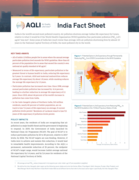
India is the world’s second most polluted country. Air pollution shortens average Indian life expectancy by 5 years,
relative to what it would be if the World Health Organization (WHO) guideline fine particulate pollution (PM2.5) of 5 μg/m3 was met. Some areas of India fare much worse than avera
...
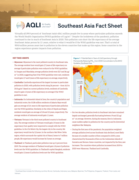
Virtually all (99.9 percent) of Southeast Asia’s 656.1 million people live in areas where particulate pollution exceeds the World Health Organization (WHO) guideline of 5 μg/m³. Despite the lockdowns of the pandemic, pollution continued to rise in much of Southeast Asia in 2020. This pollution c
...
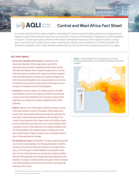
In Central and West Africa, regions together comprising 27 countries and 605 million people, the average person is exposed to particulate pollution levels that are more than 4 times the World Health Organization’s (WHO) guideline of 5 μg/m³1. If these particulate pollution levels persist, averag
...
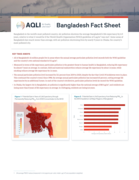
Bangladesh is the world’s most polluted country. Air pollution shortens the average Bangladeshi’s life expectancy by 6.9 years, relative to what it would be if the World Health Organization (WHO) guideline of 5 μg/m³ was met. Some areas of Bangladesh fare much worse than average, with air poll
...
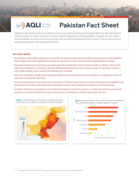
Pakistan is the world’s fourth most polluted country. Air pollution shortens the average Pakistani’s life expectancy by 3.8 years, relative to what it would be if the World Health Organization (WHO) guideline of 5 μg/m3 was met.1 Some areas of Pakistan fare much worse than average, with air pol
...
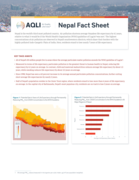
Nepal is the world’s third most polluted country. Air pollution shortens average Nepalese life expectancy by 4.1 years, relative to what it would be if the World Health Organization (WHO) guideline of 5 μg/m3 was met.1 The highest concentrations of air pollution are observed in Nepal’s southwes
...
Air pollution’s impact on life expectancy in Nigeria is greater than that of HIV/AIDS and almost on par with malaria and unsafe water and sanitation, shortening the average Nigerian’s life expectancy by 1.8 years, relative to what it would be if the World Health Organization (WHO) guideline of 5
...

Air Pollution Data Explorer
recommended
Explore historical emissions of air pollutants from fuel use globally.
