
Filter
2053
Filtered Results: 2053
Text search:
TB/HIV
co-infection
Featured
Recommendations
185
New Publications
598
Language
Document type
No document type
1367
Guidelines
226
Studies & Reports
224
Manuals
62
Strategic & Response Plan
57
Situation Updates
47
Training Material
31
Fact sheets
27
Infographics
8
Resource Platforms
2
Brochures
1
Online Courses
1
Countries / Regions
India
107
South Africa
82
Kenya
77
Tanzania
59
Western and Central Europe
47
Global
43
Namibia
41
Zambia
41
Uganda
40
Malawi
39
Nepal
37
Nigeria
37
Ethiopia
36
Sierra Leone
34
Eastern Europe
34
Ghana
32
Liberia
31
Rwanda
28
Ukraine
27
Africa
23
Asia
23
Lesotho
22
Latin America and the Carribbean
22
Myanmar / Burma
22
Cambodia
21
Congo, Democratic Republic of
20
Bangladesh
20
Senegal
17
Zimbabwe
17
South–East Asia Region
15
Paraguay
15
Botswana
12
Colombia
10
Indonesia
10
Benin
9
Philippines
9
Mozambique
9
Russia
9
Madagascar
9
Haiti
8
Central African Republic
8
Eswatini/ Swaziland
8
Cameroon
7
Albania
7
Venezuela
7
Argentina
7
Georgia
7
Pakistan
7
Tajikistan
6
Burkina Faso
6
Vietnam
6
Laos
5
Peru
5
Guinea
5
Germany
5
East and Southern Africa
5
Bolivia
5
Brazil
5
Ecuador
5
Syria
4
Iran
4
Armenia
4
Papua New Guinea
4
South Sudan
4
Timor Leste/ East Timor
3
El Salvador
3
Jordan
3
Thailand
2
Afghanistan
2
Saudi Arabia
2
West and Central Africa
2
Western Pacific Region
2
Eastern Europe and Central Asia
2
Lebanon
2
Moldova
2
Sri Lanka
2
Sudan
2
Bhutan
2
Iraq
2
Somalia
2
North Macedonia
1
North Korea
1
Switzerland
1
Gambia
1
Kazakhstan
1
Chile
1
Singapore
1
Estonia
1
Niger
1
Burundi
1
Morocco
1
Qatar
1
Bulgaria
1
USA
1
Dominican Republic
1
Middle East and North Africa
1
North America
1
Gabon
1
Uruguay
1
Tunisia
1
Azerbaijan
1
Belarus
1
Djibouti
1
Egypt
1
Yemen
1
Romania
1
Greece
1
Palestine
1
Poland
1
Libya
1
Solomon Islands
1
Authors & Publishers
Publication Years
Category
Countries
971
Clinical Guidelines
170
Women & Child Health
55
Public Health
52
Key Resources
35
Capacity Building
31
Pharmacy & Technologies
16
Annual Report MEDBOX
1
Toolboxes
TB
520
HIV
383
AMR
67
COVID-19
61
Caregiver
28
Pharmacy
26
NTDs
22
Refugee
21
Mental Health
18
Ebola & Marburg
18
Global Health Education
17
Health Financing Toolbox
16
Polio
15
Conflict
14
NCDs
12
Rapid Response
10
Malaria
9
Disability
8
Social Ethics
4
2.0 Rapid Response
4
Natural Hazards
3
Planetary Health
3
Zika
2
Specific Hazards
1
Cholera
1

To better adapt current case management practices and address excess mortality in otherwise treatable
cases will require better knowledge of the demographic characteristics of the patients and comorbidities
which can make severe dehydration harder to tolerate physiologically. With this in mind, a ...
This guidance highlights tangible, evidence-based priority actions in health and WASH programs to achieve the Global Targets for nutrition. Throughout the guidance the importance of cross-sectoral collaboration within and outside the Red Cross Red Crescent Movement to holistically address nutrition ...

The Country Cooperation Strategy is the World Health Organization’s corporate framework developed in response to a country’s needs and priorities. The 2022–2025 CCS is the fourth for WHO in Sierra Leone. It is a medium-term strategic document that defines a broad framework for WHO’s work, at...
En 2023, la nouvelle stratégie de Coopération de l’OMS avec le Niger 2023-2027 a été lancée, assortie d’un plan d’investissement. En outre, l’OMS a soutenu plusieurs initiatives majeures du pays, comme le lancement effectif de la Stratégie nationale de la Couverture Sanitaire Universel...


This comprehensive HPFM report thoroughly explores Kenya’s health financing landscape. It provides an in-depth analysis of the current state of affairs and sheds light on required strategic changes in health financing. The report points out the need to improve public financial management within th...

Uganda hosts approximately 1.1 million refugees making it Africa’s largest refugee hosting country and one of the five largest refugee hosting countries in the world. Most recently, throughout 2016- 2018, Uganda was impacted by three parallel emergencies from South Sudan, the Democratic Republic o...

Noncommunicable diseases (NCDs) – chief among them, cardiovascular diseases (heart disease and stroke), cancer, diabetes and chronic respiratory diseases – along with mental health, cause nearly three quarters of deaths in the world. Their drivers are social, environmental, commercial and geneti...
Measuring progress towards universal health coverage.
This sixth edition of Health at a Glance Asia/Pacific presents a set of key indicators of health status, the determinants of health, health care resources and utilisation, health care expenditure and financing and quality of care across 27 Asia-...

The Regional Action Framework for Noncommunicable Disease Prevention and Control provides a unified vision of objectives and recommended actions to combat the noncommunicable disease (NCD) epidemic in the Western Pacific Region. Implementation should be supported by cross-sectoral coordination...
These standards for the quality of paediatric care in health facilities form part of normative
guidance for improving the quality of maternal, newborn, child and adolescent health care.
In view of the importance of the continuum of both the life-course and service delivery (1),
these standards bu...
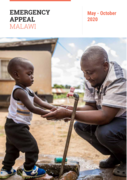
Coronavirus Disease-19 (COVID-19) was declared a global pandemic on 11 March 2020, and Malawi declared its first case on 2 April. As of 30 April, there were 36 confirmed positive cases of COVID-19 and 3 deaths. A State of Disaster was declared by President Arthur Peter Mutharika on 20 March and a 21...
2016-2018 Early implementation,
This report presents 2015 data on the consumption of systemic antibiotics from 65 countries and areas, contributing to our understanding of how antibiotics are used in these countries. In addition, the report documents early efforts of the World Health Organization (...

The WHO country office for Ghana, began the year 2019 with a 4-day staff retreat at the Busua Beach Resort in the Western Region from 04 to 08 March 2019. The theme for the retreat was ‘Impacting the Health and Lives of the people of Ghana through the Triple Billion Goal”. The staff outlined pri...

Food and nutrition security in the Democratic Republic of the Congo is subject to the relentless impact of conflict, epidemics and climate events that have persisted in the country for decades, further compounded by the global COVID-19 pandemic. Lack of infrastructure and investment in agriculture, ...
Midwifery Capacity Building Strategy for Northern Syria
2017-2021
Available in Arabic
