
Filter
8169
Filtered Results: 8169
Text search:
factor
analysis
Featured
Recommendations
635
New Publications
1997
Language
Document type
No document type
4390
Studies & Reports
1729
Guidelines
1011
Manuals
408
Strategic & Response Plan
319
Fact sheets
131
Training Material
85
Situation Updates
53
Resource Platforms
18
Infographics
9
Brochures
7
Dashboards/Maps
6
Online Courses
3
Countries / Regions
Global
423
India
251
Kenya
232
Ethiopia
166
South Africa
157
Western and Central Europe
156
Nepal
148
Uganda
146
Myanmar / Burma
140
Indonesia
138
Sierra Leone
134
Nigeria
132
Latin America and the Carribbean
131
Africa
128
Rwanda
125
Zambia
125
Malawi
122
Liberia
115
Tanzania
106
Bangladesh
106
Syria
91
Ghana
90
Ukraine
87
Namibia
77
Congo, Democratic Republic of
69
Eastern Europe
63
Brazil
58
Zimbabwe
57
Russia
54
Lesotho
52
Philippines
51
Mozambique
50
South Sudan
50
South–East Asia Region
48
Asia
47
Senegal
46
Cambodia
42
Germany
42
Guinea
39
Yemen
38
East and Southern Africa
37
Colombia
35
West and Central Africa
35
Haiti
34
Burkina Faso
33
Botswana
33
Cameroon
32
Middle East and North Africa
30
Pakistan
28
Venezuela
27
Afghanistan
26
Eswatini/ Swaziland
25
Eastern Europe and Central Asia
24
Central African Republic
23
Paraguay
21
Lebanon
21
Sudan
21
Benin
19
Chile
19
Peru
19
Thailand
18
Jordan
18
Somalia
18
Tajikistan
16
China
16
Vietnam
16
Mali
16
Argentina
15
Iraq
14
USA
13
Albania
11
Western Pacific Region
11
Moldova
11
Turkey
10
Sri Lanka
10
Burundi
9
Côte d’Ivoire / Ivory Coast
9
Angola
9
Madagascar
9
Mexico
8
Iran
8
Laos
8
Niger
8
North America
8
Bolivia
8
Georgia
8
Ecuador
8
Kyrgyzstan
7
Guinea-Bissau
7
United Kingdom
7
Spain
7
Egypt
7
Palestine
7
Chad
7
Togo
6
Papua New Guinea
6
Libya
6
North Macedonia
5
Timor Leste/ East Timor
5
Gambia
5
Armenia
5
Portugal
5
Southern Africa
5
Guatemala
5
El Salvador
4
Kazakhstan
4
Canada
4
Turkmenistan
4
Tunisia
4
Honduras
4
Serbia
3
Morocco
3
Italy
3
Dominican Republic
3
Saudi Arabia
3
Jamaica
3
Bosnia and Herzegovina
3
Singapore
2
Uzbekistan
2
Qatar
2
Croatia
2
Lithuania
2
Gabon
2
Japan
2
France
2
Mauritius
2
Azerbaijan
2
Belarus
2
Nicaragua
2
Djibouti
2
Romania
2
Greece
2
Poland
2
Bhutan
2
North Korea
1
Switzerland
1
Fiji
1
Estonia
1
Malaysia
1
Vanuatu
1
Bulgaria
1
Hungary
1
Ireland
1
Uruguay
1
Denmark
1
Belgium
1
Norway
1
Algeria
1
Israel
1
Latvia
1
Belize
1
Costa Rica
1
Panama
1
Solomon Islands
1
Cuba
1
Authors & Publishers
Publication Years
Category
Countries
3034
Key Resources
521
Clinical Guidelines
516
Public Health
499
Women & Child Health
390
Capacity Building
106
Pharmacy & Technologies
72
Toolboxes
COVID-19
673
Mental Health
648
HIV
619
TB
420
Planetary Health
361
Disability
303
NTDs
227
AMR
225
NCDs
220
Conflict
213
Caregiver
192
Ebola & Marburg
173
Refugee
156
Global Health Education
150
Rapid Response
134
Pharmacy
119
Health Financing Toolbox
111
Natural Hazards
103
Malaria
96
2.0 Rapid Response
85
Specific Hazards
47
Cholera
45
Polio
44
Zika
43
Social Ethics
38
Typhoon
3
South Sudan
2
Today more people are exposed to hazards. While humanitarian action to mitigate the impact of disasters will always be vitally important, the community is facing critical challenge- how to better anticipate, manage and reduce - disaster risks by integrating the potential threat into its planning and...

A rapid evidence briefing. Vaccinated people are less likely to develop long COVID, even if they get infected, a rapid review of 15 studies by the UK Health Security Agency shows.
Taking a multisectoral, One Health approach is necessary to address complex health threats at the human-animal-environment interface, such as rabies, zoonotic influenza, anthrax, and Rift Valley fever. Such zoonotic diseases continue to have major impacts on health, livelihoods, and economies, and c...
Mental health is critically important to everyone, everywhere. All over the world, mental health needs are high but responses are insufficient and inadequate. The World mental health report: transforming mental health for all is designed to inspire and inform better mental health for everyone everyw...
Concepte Note, June 2022
Background: A recent report by the Institute for Health Metrics and Evaluation (IHME) highlights that mental health receives little attention despite being a major cause of disease burden. This paper extends previous assessments of development assistance for mental health (DAMH) in two significant w...
The Global Burden of Disease (GBD) 2010 Study has published disability-adjusted life year (DALY) data
at both regional and country levels from 1990 to 2010. Concurrently, the Institute for Health Metrics and Evaluation
(IHME) has published estimates of development assistance for health (DAH) at th...
Weekly epidemiological record WER9948-707-717
In English and French
Guidelines for Management and Therapy of Atrial Fibrillation in Indonesia
Action Plan for Implementation of Recommendations from the Evaluation of PAHO's Response to COVID-19
An external team evaluated PAHO’s response to COVID-19 to provide an independent assessment of the Pan American Sanitary Bureau’s (PASB) performance regarding preparedness for and response to the COVID-19 pandemic. The evaluations’ final report culminates with eight recommendations for actions...

At the time of writing, the novel coronavirus pandemic had reached every region of the world, with millions of infections globally and untold disruptions to nearly every aspect of daily life.
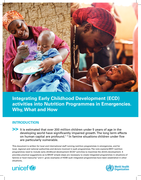
This document is written for local and international staff running nutrition programmes in emergencies, and for local, regional and national authorities and donors involved in such programmes.
The note explains why nutrition programmes need to include early childhood development (ECD) activities t...

The main objective of the 2014-15 RDHS was to obtain current information on demographic and health indicators, including family planning; maternal mortality; infant and child mortality; nutrition status of mothers and children; prenatal care, delivery, and postnatal care; childhood diseases; and ped...

The 2012 NDRMP lays out the Disaster Risk Management (DRM) architecture of the country and provides guidance for DRM intervention at all levels. However, implementation has been slow and resource challenges exist throughout the government.
The PNG government’s policy and institutional framework...
The PNG government’s policy and institutional framework...
n light of the potential risk posed by SARS-CoV-2 variants, in January 2021 WHO organized an ad hoc consultation to discuss the development of an R&D agenda in response to existing and emerging SARS-CoV-2 variants.
The key objectives were to identify the critical research questions related to var...

On September 10, 2022, the Ministry of Health (MOH) announced a cholera outbreak in Aleppo governorate with 15 laboratory confirmed cases reported between August 25 and September 9, 2022. Activities under this plan seek to address the immediate needs stemming from this outbreak and highlight respons...
On 9 February 2021, a first webinar entitled “Expanding our understanding of Post COVID-19 condition” was held under the auspices of WHO and in consultation with the International Severe Acute Respiratory and Emerging Infection Consortium(ISARIC), Global Research Collaboration for Infectious Dis...
Les mises à jour réalisées pour de nombreux pays ont permis d’estimer la faim dans le monde avec une plus grande précision cette année. En particulier, les données nouvellement accessibles ont permis de revoir l’ensemble des estimations annuelles de la sous-alimentation en Chine en remonta...
