
Filter
1221
Featured
88
46
Language
Document type
378
174
159
111
76
71
57
51
46
30
26
20
14
5
3
Countries
209
41
20
16
16
15
11
8
7
7
7
7
6
6
6
6
5
5
5
5
5
5
5
5
4
4
4
3
3
3
3
3
2
2
2
2
2
2
2
2
2
2
2
2
2
2
2
2
1
1
1
1
1
1
1
1
1
1
1
1
1
1
1
1
1
1
1
1
1
1
1
1
1
1
1
1
Authors & Publishers
Publication Years
Category
131
115
45
18
7
7
1
The Global vector control response 2017–2030 (GVCR) provides a new strategy to strengthen vector control worldwide through increased capacity, improved surveillance, better coordination and integrated action across sectors and diseases.
In May 2017, the World Health Assembly adopted resolutio ...
In May 2017, the World Health Assembly adopted resolutio ...
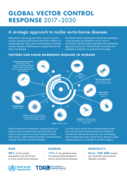
Mosquitoes, flies, bugs and other vectors transmit viruses, parasites and bacteria that infect millions of people globally. They cause many diseases, including malaria, dengue, leishmaniases, Chagas disease and Zika virus disease.
The World Health Organization (WHO) has developed a new strategy to
...
6th edition

The aim of this “model contingency plan” is to assist programme managers and planners in devel-oping a national, context-specific, dengue outbreak response plan in order to: (a) detect a dengue outbreak at an early stage through clearly defined and validated alarm signals; (b) precisely define w
...
Disease Control Division, Standard Management Guideline;Directorate General of Health Services, Ministry of Health & Family Welfare: First Published: 15th May 2017
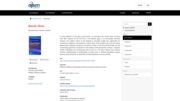
A major objective of this open access book is to summarize the current status of Buruli Ulcer (BU) research for the first time. It will identify gaps in our knowledge, stimulate research and support control of the disease by providing insight into approaches for surveillance, diagnosis, and treatmen
...

In 1997, the Fiftieth World Health Assembly adopted resolution WHA50.29 on the elimination of
lymphatic filariasis as a public health problem. Preliminary guidance from WHO printed in 2011 referred to “verification” as the official process by which the achievements of the Global Programme to El
...
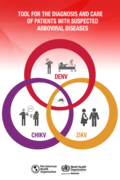
It is Zika virus (ZIKV) that most often causes these neurological effects it appears to be the only arbovirus than can cause congenital malformations such as microcephaly. In any case, more scientific tests are needed to establish the causal relationship between the virus and this malformation (7-10
...
Contemporary data for causes of vision impairment and blindness form an important basis of recommendations in public health policies. Refreshment of the Global Vision Database with recently published data sources permitted modelling of cause of vision loss data from 1990 to 2015, further disaggregat
...
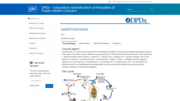
Leishmaniasis is a vector-borne disease that is transmitted by sandflies and caused by obligate intracellular protozoa of the genus Leishmania. Human infection is caused by about 21 of 30 species that infect mammals. These include the L. donovani complex with 3 species (L. donovani, L. infantum, and
...

Rev. Panam Salud Publica. 2017;41:e153. doi: 10.26633/RPSP.2017.153
Worldwide, over 6 million people are infected with Trypanosoma cruzi, the pathogen that causes Chagas disease (CD). In the Americas, CD creates the greatest burden in disability-adjusted life years of any parasitic infection. In Co
...

Video. Human African Trypanosomiasis, also known as sleeping sickness is a devastating parasitic disease. It is a neglected tropical disease affecting communities in Africa. In this video we take a look at the disease, how it presents and and ways to control it.
Leptospirosis is an infectious disease caused by bacteria. It can lead to potentially fatal infections of the kidney, liver, brain, lung or heart.
Leptospirosis is a zoonotic disease with epidemic potential, especially after a heavy rainfall,
caused by a bacterium called Leptospira. Leptospira interrogans is pathogenic to humans and
animals, with more than 200 serologic variants or serovars. Humans usually acquire
leptospirosis through dire
...
Les présentes lignes directrices ont pour objet de préparer les pays d’endémie à arrêter l’AMM à l’issue du traitement, à passer à la surveillance post-thérapeutique ainsi qu’à confirmer l’interruption de la transmission à l’issue de la phase 2 et à débuter la surveillance p
...
The new WHO recommendations for rabies immunization supersede the 2010 WHO position
on pre-exposure prophylaxis (PrEP) and post-exposure prophylaxis (PEP) for rabies. These updated
recommendations are based on new evidence and directed by public health needs that are cost-,
dose- and time-sparing
...

Video
Further OIE Support for African Countries on Rabies vaccines
Rabies is 100% fatal but also 100% preventable with prompt and complete post-exposure prophylaxis (PEP). All animal bites, scratches and licks must be assessed for potential rabies virus exposure.
The Fifty-first World Health Assembly adopted resolution WHA51.11 in 1998, which targets the
global elimination of trachoma as a public health problem by 2020 (1). The strategy recommended
to achieve that goal is encapsulated by the acronym “SAFE”, which represents: Surgery for
individuals wi
...
En 1998, la Cinquante-et-Unième Assemblée mondiale de la Santé a adopté la résolution
WHA51.11 qui vise l’élimination mondiale du trachome en tant que problème de santé publique
à l’horizon 2020 (1). La stratégie recommandée pour atteindre cet objectif est récapitulée dans
le sig
...
